
turtle basking platform floating large sounds straightforward, but in real tanks it often means wobble, drifting, or a ramp your turtle ignores completely.
If your turtle keeps climbing the filter, perching on the heater guard, or basking half-in half-out, it usually isn’t “stubborn,” it’s the platform setup. Size, traction, and waterline height matter more than most product pages admit.
This guide breaks down what “large” should mean, what causes floating docks to fail, how to test your current setup fast, and how to pick (or fix) a platform so basking becomes routine instead of a daily struggle.
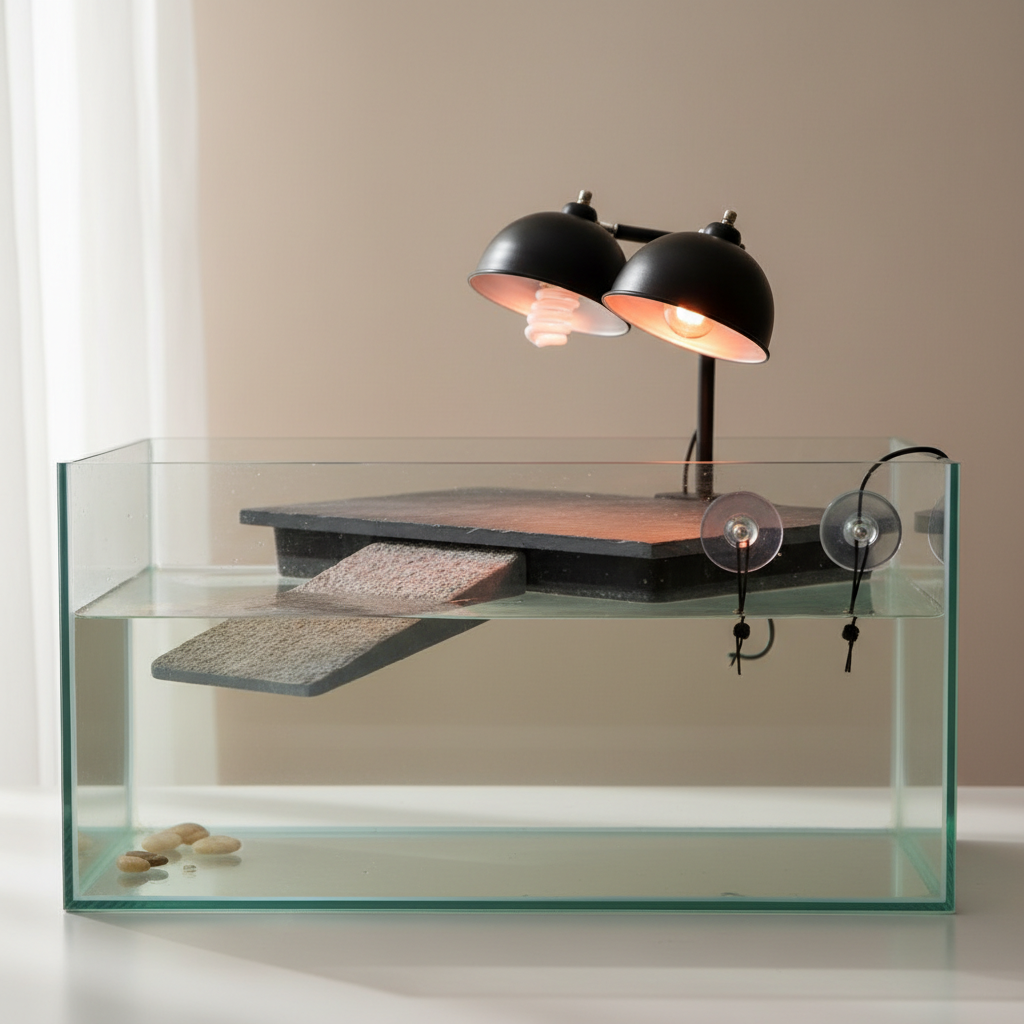
Why floating basking platforms fail in big turtle tanks
Most problems come from a mismatch between platform design and real-world turtle behavior. Turtles don’t step lightly, they lunge, push, and “test” the surface with claws.
- Buoyancy mismatch: a platform rated “large” might still sit too low once it soaks up water or once your turtle climbs on with wet shell weight.
- Weak anchoring: suction cups lose grip on biofilm, algae, or textured glass, then the dock drifts and the turtle quits using it.
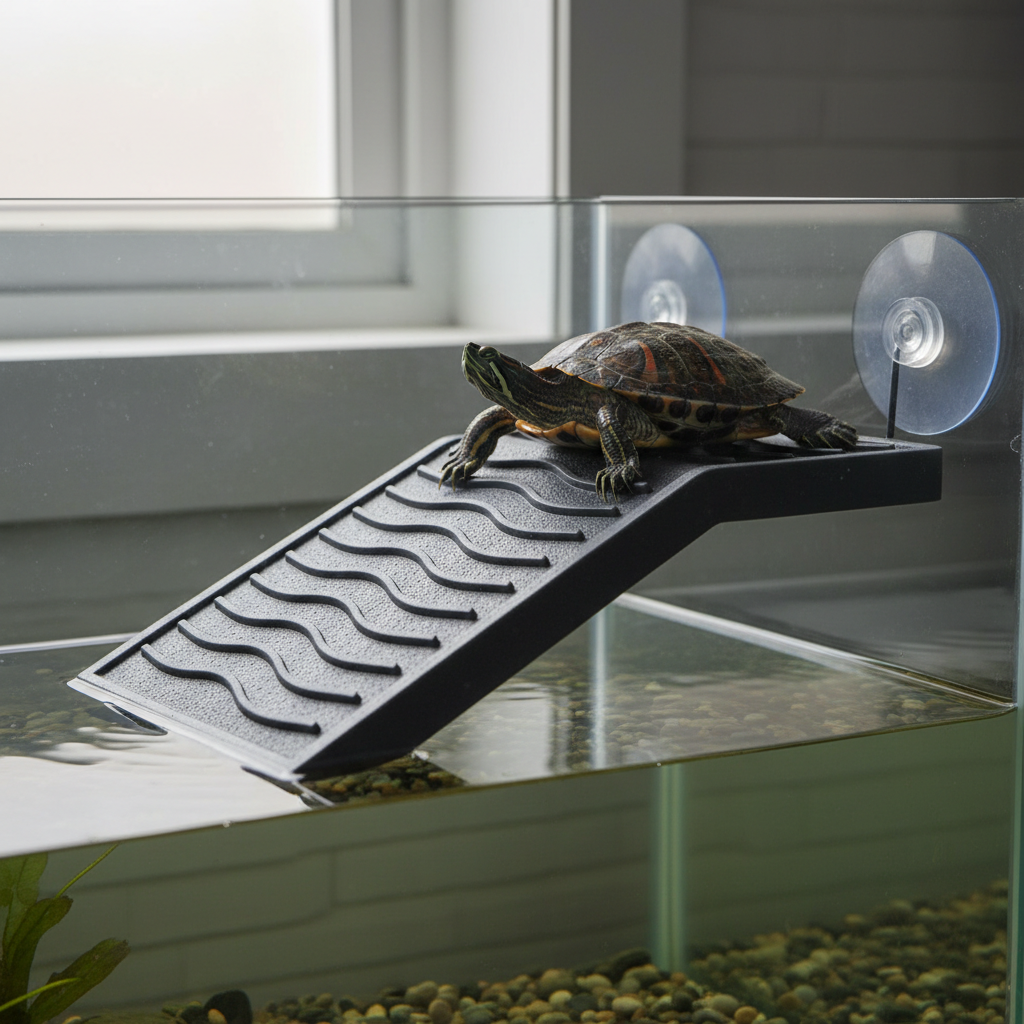
- Ramp angle too steep: many turtles can climb steep ramps, but they often avoid them if traction feels sketchy.
- Wrong waterline: if the water level changes after evaporation or top-offs, the ramp entry can end up “floating away” from the turtle’s approach.
- Surface too smooth: slick plastic looks clean, but it turns into a slip-and-slide once it grows a thin layer of algae.
According to the American Veterinary Medical Association (AVMA), reptiles need species-appropriate husbandry, including proper heat and lighting, and the basking area is part of that environment. If the platform is unstable, turtles may bask less, which can become a health issue over time.
What “large” should mean: sizing and load capacity that feels realistic
“Large” is a label, not a measurement. When choosing a turtle basking platform floating large, you want the platform to match how your turtle actually uses it: climbing, turning, and drying out.
Practical sizing rules that usually work
- Top surface: big enough for your turtle to sit fully out of water without the tail and back feet constantly slipping off.
- Headroom: enough clearance above the dock for a heat lamp at a safe distance, without the turtle being able to touch the bulb.
- Ramp width: wide enough for a straight approach, turtles often dislike squeezing sideways up a narrow ramp.
Load capacity matters more than footprint. If the product listing doesn’t state a weight range, assume it’s for smaller juveniles and be ready to anchor it aggressively or switch designs.
Quick self-check: is your current dock “good enough”?
Before buying anything, check what’s actually failing. Most fixes are basic, but you need to diagnose the right problem.
- Stability test: press down on one corner of the platform, it should not tilt dramatically or detach.
- Dry zone test: after 30 minutes under the heat lamp, the top should feel dry, not puddled.
- Climb test: watch one full climb, if your turtle slides backward more than once, traction or ramp angle is off.
- Drift test: turn your filter on high for 10 minutes, if the dock migrates, it needs better anchoring.
- Behavior clue: if your turtle basks only on décor or the tank rim, the platform likely feels unsafe or awkward to access.
Choosing the right floating platform: materials, anchoring, and traction
For most U.S. setups, people choose floating docks because they adapt to changing water levels. That’s the upside. The downside is they demand better anchoring and surface grip.
Materials and surfaces
- Textured plastic: easy to clean, usually durable, but needs real texture, not cosmetic bumps.
- Foam-based floats: can be stable and buoyant, but some wear over time or get chewed by determined turtles.
- “Natural” resin or rock-look: often heavier and more stable, but check for sharp seams and how it interacts with your filter flow.
Anchoring options that tend to hold better
- Large suction cups with locking brackets usually outperform small, soft suction cups.
- Magnetic mounts can be very stable, but you must ensure the magnet strength matches your glass thickness.
- Secondary tether (a discreet zip tie looped to a tank brace, for example) can prevent sudden drift if a cup fails.
If you’re shopping specifically for a turtle basking platform floating large, look for listings that mention reinforced mounting points, replaceable cups, and a ramp designed for adult turtles, not just hatchlings.
Setup that works: step-by-step for a stable basking zone
Even a solid dock can fail with a sloppy install. The goal is simple: easy access, stable landing, and a predictable dry spot under heat and UVB.
- Clean the glass first: remove algae and biofilm where suction cups attach, rinse well so nothing slick stays behind.
- Set the waterline on purpose: position the dock so the ramp entry stays at a comfortable depth, not barely submerged.
- Anchor, then wait: press cups firmly and give them a few minutes to “set” before testing with your hand.
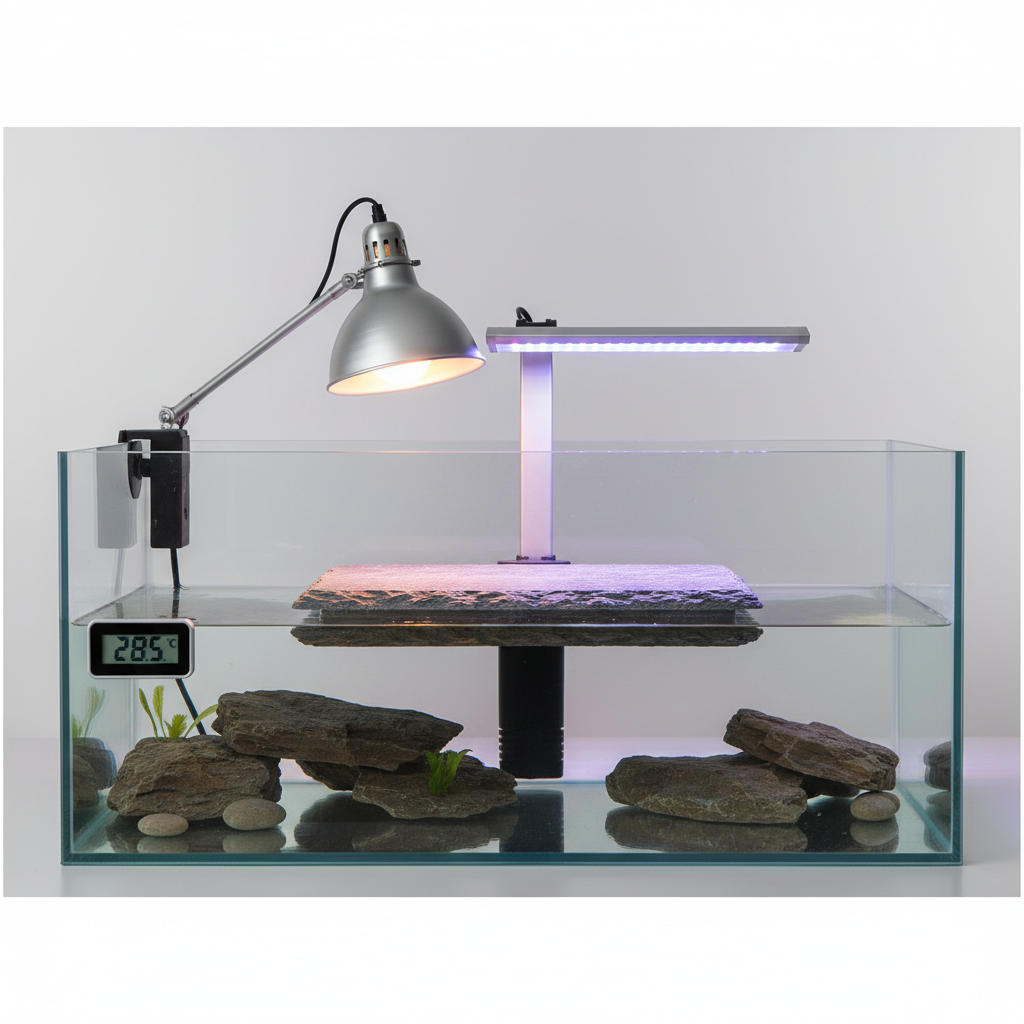
- Place lamps over the platform center: heat and UVB should target the basking surface, not the ramp, so your turtle has a clear “reward.”
- Reduce current at the dock: if filter output pushes the platform, redirect flow or add a baffle near the outflow.
According to the U.S. Food & Drug Administration (FDA), UV lamps can pose risks to eyes and skin when misused. Follow the manufacturer’s directions and consider asking a reptile-savvy vet if you’re unsure about safe placement for your specific enclosure.
Comparison table: common large floating dock styles (and who they fit)
Not every “large” option suits every turtle. This quick table helps you narrow choices based on the problem you’re trying to solve.
| Dock style | Strengths | Common drawbacks | Best for |
|---|---|---|---|
| Plastic float with suction cups | Affordable, adjustable with water level | Cups fail on dirty glass, can wobble | Medium tanks, light-to-average adult turtles |
| Reinforced float with bracket locks | More stable, better load handling | Costs more, still needs clean mounting area | Adult sliders, active climbers |
| Magnet-mounted floating platform | Very stable, easy repositioning | Must match glass thickness, higher price | High-flow setups, heavier turtles |
| Hybrid dock + above-tank basking loft | Huge dry area, reduces in-tank clutter | More setup time, needs secure access ramp | Large turtles, owners tired of cramped in-tank docks |
Mistakes that waste money (and stress your turtle)
Some issues look minor, but they quietly stop basking behavior. If you fix these, many turtles start using the platform within days, sometimes sooner.
- Buying “large” based on tank size only: a 75-gallon tank can still house a turtle that needs a much sturdier dock than the label suggests.
- Ignoring traction: adding heat without grip makes slipping more likely, and turtles remember bad climbs.
- Letting the dock sit under splashes: if the filter outflow keeps the surface wet, it won’t function as a true dry basking zone.
- Overcorrecting with sharp DIY fixes: rough sandpaper, metal clips, or exposed wire can cause scrapes, keep DIY turtle-safe.
- Assuming “not basking” is always a platform issue: stress, temperature mismatch, or illness can also reduce basking.
When to get extra help (vet, specialist shop, or a different setup)
If your turtle consistently avoids basking even after you stabilize the platform and confirm lamp placement, it may be time to ask for professional input.
- Health concerns: soft shell, retained scutes, lethargy, swollen eyes, or poor appetite can signal problems beyond habitat hardware, a reptile veterinarian can help you triage.
- Repeated slipping or falling: if your turtle tumbles off the ramp, adjust quickly, injuries can happen in awkward falls.
- Very large adults: some big turtles simply outgrow common floating docks, an above-tank basking loft or custom platform may be safer.
According to the Association of Reptile and Amphibian Veterinarians (ARAV), proper environment and lighting play a major role in reptile wellness. If you’re unsure whether your temps and UVB setup match your species, a reptile-focused clinic usually gives clearer guidance than trial-and-error buying.
Conclusion: a “large” dock should feel boringly stable
A turtle basking platform floating large is doing its job when you stop thinking about it, your turtle climbs up without drama, dries off under the lamp, and returns to water on its own schedule.
If you take only two actions, make them these: stabilize the mount (clean glass, better anchors, calmer current) and fix the climb (ramp angle plus real traction). Those two solve most “my turtle won’t bask” platform situations.
Once the setup feels solid, monitor behavior for a week, then adjust small details like waterline and lamp position rather than swapping products again and again.
FAQ
What size counts as a “large” floating basking platform for an adult turtle?
It usually means a surface that lets the turtle rest fully out of water and turn around without sliding off. In practice, weight rating and stability often matter more than the listed dimensions.
Why does my floating dock keep sinking when my turtle climbs on?
That’s typically buoyancy or waterlogging, sometimes both. If the float material absorbs water or the platform is under-rated for your turtle’s weight, it will ride too low and feel unsafe.
How do I stop suction cups from failing?
Clean the glass where they attach, then re-seat the cups firmly. If they still slip, consider lock-style brackets, replacement cups, or a secondary tether so a single failure doesn’t send the dock drifting.
Do turtles prefer floating docks or fixed basking platforms?
Many turtles use either if access feels secure and the basking area stays dry. Floating docks help with changing water levels, while fixed platforms can feel more stable for heavier turtles.
How long should my turtle bask each day?
It varies by species, age, and temperature gradients, so there’s no single “correct” duration. If basking drops suddenly, double-check temps and lighting and consider a vet if other symptoms show up.
Can I add grip tape or mesh to the ramp?
Sometimes, yes, but choose turtle-safe materials that won’t peel, trap nails, or leach adhesives. If you’re unsure, a reptile supply shop can suggest safer traction upgrades than generic hardware tape.
Is it normal if my turtle only basks when nobody is watching?
Pretty common, especially with newer setups or shy turtles. Give privacy, reduce sudden movement near the tank, and make sure the platform feels stable so the turtle builds confidence using it.
Key takeaways
- Stability beats size labels: “large” should mean it stays level under load.
- Traction drives behavior: if the climb feels risky, many turtles skip basking.
- Waterline and current matter: drifting and splashing can ruin an otherwise good dock.
- Don’t guess forever: persistent basking avoidance plus health signs deserves professional input.
If you’re trying to choose a turtle basking platform floating large and want a more “set it up once” result, focus on reinforced mounting, a wide textured ramp, and a layout that keeps the top surface dry under your heat and UVB, it tends to save money compared with cycling through multiple flimsy docks.