
Dog treat jar airtight sounds simple, but if your biscuits turn soft, your kitchen smells “treat-y,” or pantry bugs show up, the seal probably isn’t doing what you think.
Freshness isn’t just about taste, it affects texture, odor control, and how likely you are to waste a bag of treats before your dog finishes it. A good container also keeps things consistent, so you’re not guessing which bag is stale and which one is still crunchy.
This guide walks through why treats go stale in “sealed” jars, how to quickly test whether your lid is the problem, and what storage habits actually keep treats fresh longer without turning your counter into a mini warehouse.
Why treats go stale even in an “airtight” jar
Most staleness comes down to air exchange and moisture movement, not some mystery ingredient in the treats. The jar can look solid and still leak.
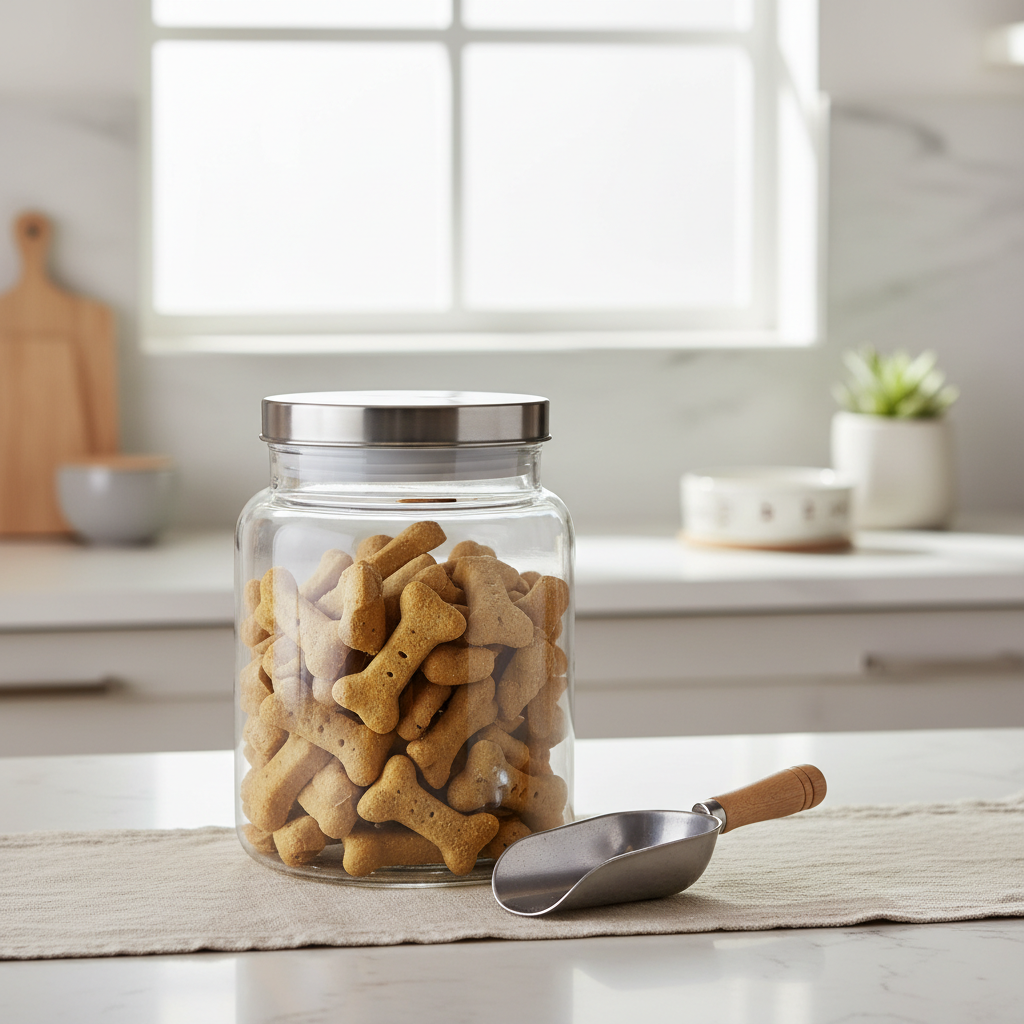
Common real-world reasons include:
- Gasket issues: Silicone rings can be missing, warped, or not seated evenly after washing.
- Lid design limits: Some “airtight” lids are really just snug-fitting, especially on decorative tins or bamboo tops.
- Humidity trapped inside: If treats go in slightly warm, or you store the jar near a dishwasher or stove, moisture rises and softens crunchy items.
- Frequent opening: Every open/close cycle swaps indoor air for pantry air, which often carries moisture and odor.
- Powder and crumbs on the rim: A tiny crumb can break the seal like a pebble under a door.
According to FDA, moisture and oxygen exposure can speed quality loss in foods, which is why packaging and storage focus so much on controlling air and humidity. Treats aren’t medicine, but the same physics applies.
How to tell if your jar is truly airtight (fast tests)
You don’t need special tools, just a couple quick checks that mimic how leaks happen in daily use.
Try these at-home tests:
- Paper strip test: Close the lid on a thin strip of paper. If you can slide it out easily, the seal may be weak at that spot.
- Shake test (dry only): Put a tablespoon of sugar inside, close the lid, shake gently. If sugar dust appears around the rim, air is likely escaping too.
- Odor test: Store a strongly scented treat for 24 hours. If you smell it across the room, that “airtight” claim is questionable.
- Visual rim check: Look for crumbs, hair, or sticky residue where lid meets jar.
If your container fails two or more of these, it’s probably not the right setup for anything you want to keep crisp for weeks.
Choosing the right airtight dog treat jar: what matters (and what’s hype)
There are a lot of “cute” options, and then there are options that actually protect food. If you want freshness, prioritize seal engineering over countertop style.
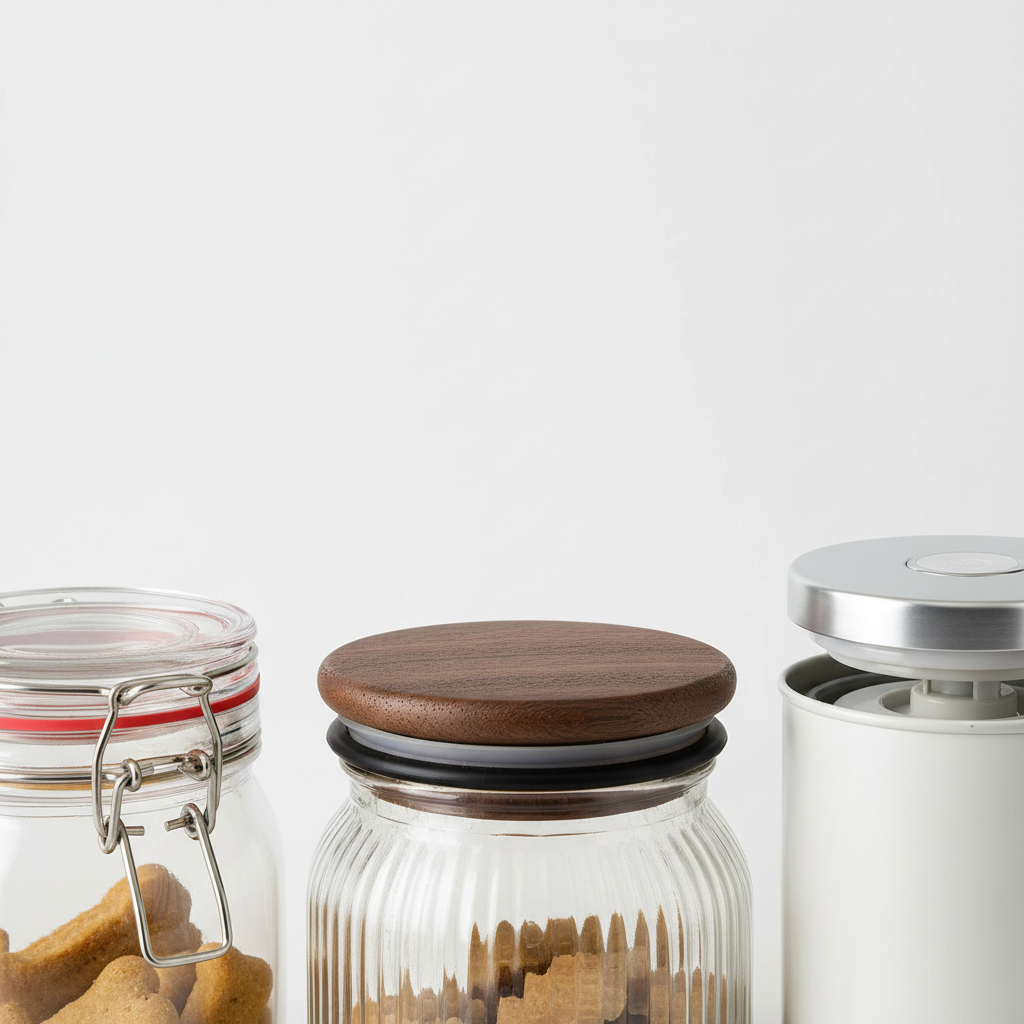
Features that usually help:
- Silicone gasket that’s removable (so you can clean and reseat it)
- Clamp/locking mechanism that applies even pressure around the rim
- Wide mouth so you don’t scrape treats (and crumbs) along the rim every time
- Opaque or tinted body if the jar sits in sunlight, since light can degrade fats and aromas over time
Things that are nice but not decisive: chalk labels, bamboo lids (often fine, sometimes leaky), and “farmhouse” metal canisters unless they include a real gasket.
Quick comparison table (practical, not perfect)
| Jar type | Seal strength (typical) | Best for | Watch-outs |
|---|---|---|---|
| Glass jar + clamp lid + gasket | High | Crunchy biscuits, training treats you open often | Heavier, can chip if dropped |
| Plastic jar + screw lid + ring | Medium to high | Everyday pantry storage, travel-friendly | Scratches can hold odor over time |
| Decorative tin + slip lid | Low to medium | Short-term use, treats used up quickly | Often not truly airtight |
| “Vacuum” push-button canister | Varies | Odor control and freshness for some treat types | Seal performance depends on brand and wear |
Storage setup that keeps treats fresh longer (step-by-step)
The jar is only half the equation. The other half is what you put in it, when you put it in, and where it lives.
Simple routine that tends to work:
- Cool and dry first: Don’t fill the jar right after treats sit in a hot car or sunny delivery box; let the bag come to room temp.
- Wipe the rim: Before closing, run a dry paper towel around the rim to remove crumbs and grease.
- Use smaller batches: Keep 1–2 weeks of treats in the counter jar, store backup in the original bag (or a second sealed container).
- Pick the right location: Pantry shelf beats countertop near the stove, dishwasher, or a sunny window.
- Keep scoops clean: A greasy scoop adds residue that can interfere with seals and create odor.
If your home runs humid, you may need to be extra picky about seal quality and location. In many kitchens, “airtight” fails because the jar sits right next to heat and steam sources.
Different treat types, different freshness problems
Not all treats stale the same way. Matching the storage approach to treat style saves you a lot of frustration.
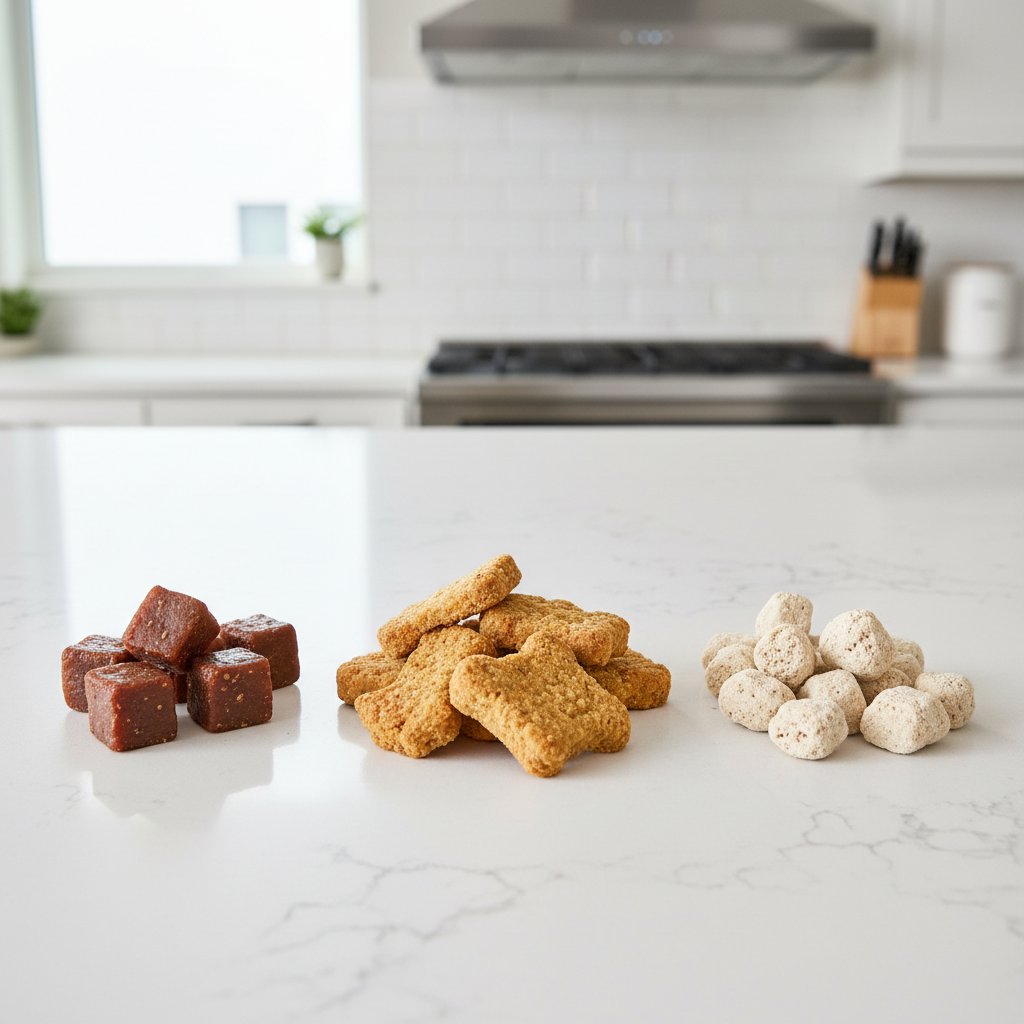
- Crunchy biscuits: They absorb moisture and go soft. Strong seal + dry storage spot matters most.
- Soft chews: They can dry out and get hard. Airtight helps, but you also want fewer open/close cycles.
- Freeze-dried treats: They pull moisture fast and lose texture. They benefit from a very good seal and quick handling.
- High-fat treats: They can smell stronger over time. Airtight reduces odor spread, but cleaning matters just as much.
If you’re unsure what category your treats fit, look at the packaging language about “store in a cool, dry place” and how quickly texture changes after opening.
Common mistakes that quietly ruin the seal
People usually blame the container, but a lot of issues come from small habits.
- Dishwasher-warped parts: Some lids and gaskets deform with heat. If the jar “used to work,” this is a prime suspect.
- Overfilling: Treats jam against the lid, leaving crumbs on the rim and preventing full closure.
- Mixing treat types: Soft and crunchy together often ends with “everything is weird,” moisture migrates and textures change.
- Not deep-cleaning the gasket groove: Oils build up where you can’t see, then the seal slips.
One practical rule: if you can smell treats with the lid closed, either the seal is leaking or the rim is dirty. Sometimes it’s both.
When to replace the jar (or ask a pro)
If your dog treat jar airtight setup still fails after cleaning and testing, replacement is usually cheaper than wasting treats every month.
Replace the jar or parts when:
- The gasket looks stretched, cracked, or sticky even after washing
- The lid wobbles, cross-threads, or won’t lock evenly
- Odor leaks persist despite passing your rim-clean test
For safety questions like moldy treats, unusual smells, or if your dog has vomiting/diarrhea after eating stored treats, it’s smart to stop using the product and consult a veterinarian. According to AVMA, pet health concerns should be discussed with a veterinary professional, especially if symptoms persist or worsen.
Key takeaways (so you can act today)
- Airtight depends on the gasket and rim cleanliness, not just a tight-feeling lid.
- Location matters, steam and heat can undo even a decent seal.
- Store in smaller batches if you open the jar multiple times per day.
- Match the jar to the treat type, crunchy and freeze-dried demand better sealing.
Practical next steps: a 10-minute freshness reset
If you want an easy reset without overthinking it, do this once and you’ll usually see a difference within a week.
- Wash the jar and lid, then fully air-dry
- Remove and clean the gasket, clean the groove, reseat it carefully
- Run the paper strip test in 3–4 spots around the rim
- Refill only what you’ll use in 7–14 days
- Move the jar to a cool pantry shelf, not next to heat or sunlight
Conclusion
A good dog treat jar airtight setup is less about buying the fanciest canister and more about getting the seal right, keeping the rim clean, and storing treats in a spot that stays cool and dry. If you do those three things, most “stale treat” problems fade fast.
If you want one action today, run the paper strip test and clean the gasket groove, it’s the fastest way to find out whether your jar is helping or quietly sabotaging freshness.
FAQ
How do I know if my dog treat container is truly airtight?
A true seal usually passes a paper strip test and doesn’t leak odor into the room. If smells travel or crumbs keep showing up on the rim, the seal is likely weak.
Is glass better than plastic for an airtight dog treat jar?
Glass often holds odor less and stays rigid, which can help the seal stay consistent. Plastic can still work well if the lid and ring are well-made and you don’t scratch it heavily over time.
Why do crunchy treats turn soft even with the lid closed?
Moisture is the usual culprit: a leaky gasket, crumbs breaking the seal, or the jar sitting near heat/steam. Crunchy items are sensitive, so small leaks matter.
Can I put a desiccant packet in a treat jar?
Some people do, but it needs caution: only use food-safe desiccants and keep them away from pets who might access them. If you’re unsure, skip it and focus on seal quality and storage location.
How often should I clean the jar and gasket?
If you refill weekly, a quick wash every couple weeks is common, with a deeper clean of the gasket groove monthly. If treats are oily or smelly, cleaning more often helps.
Should I store dog treats in the fridge or freezer?
Sometimes, but it depends on the treat. Cold storage can reduce odor and slow quality loss, yet condensation after opening can add moisture. If you try it, portion treats so you’re not warming and cooling the same batch repeatedly.
My jar says “airtight,” but it still smells. Is that normal?
It happens with decorative lids or worn gaskets. Odor leaking is a practical sign the seal isn’t tight enough for strong-smelling treats, even if the product uses the word “airtight.”
If you’re comparing containers and want a more set-and-forget approach, look for a jar with a replaceable gasket and a locking lid, then pair it with a small-batch refill routine so your treats stay fresh without constant troubleshooting.