
Small pet hay bag hanging feeder setups can be a game-changer for messy hay eaters, but only when the bag, placement, and hay type actually match your pet’s habits.
If you’ve tried a “no waste” feeder and still found hay all over the floor, you’re not doing anything “wrong”, most waste comes from a few predictable issues: opening size, mounting height, bag material, and the way your rabbit or guinea pig prefers to pull and sort hay.
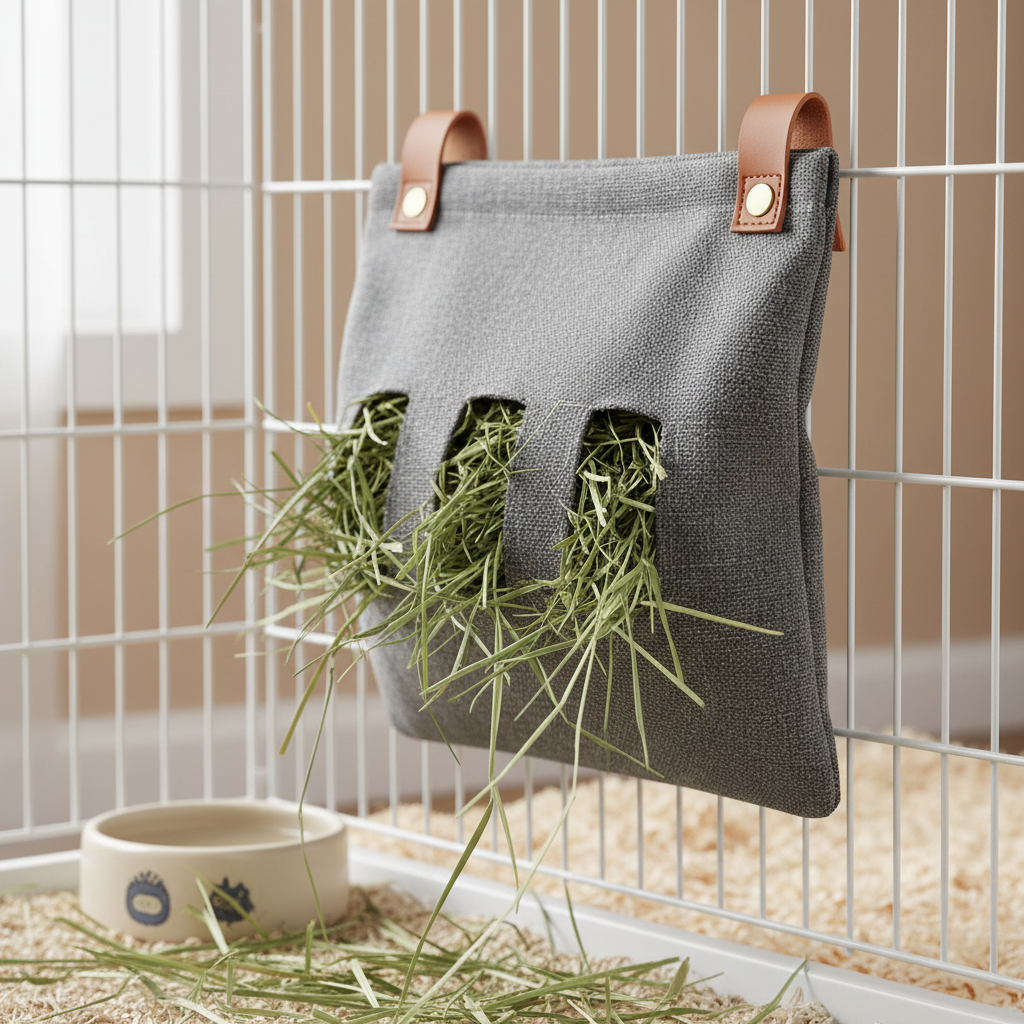
This matters more than it sounds because hay is usually the main fiber source for rabbits and guinea pigs, and wasted hay often means you restock more, clean more, and sometimes stress your pet by constantly changing the setup. According to the American Veterinary Medical Association (AVMA), preventive care and good daily husbandry are core to keeping pets healthy, and feeding routines sit right in the middle of that.
Below, you’ll get a practical way to figure out why waste happens in your home, what “no waste” realistically means, and how to set up a feeder that stays cleaner without turning feeding time into a struggle.
Why “no waste” hay feeders still waste hay (real-world reasons)
Most “waste” isn’t the feeder failing, it’s the mismatch between design and behavior. Small animals don’t eat like machines, they forage, they pick favorites, and they pull hay with their whole face.
- Openings are too large: wide slots let pets yank out big clumps, then walk on them.
- Mounted too low: hay drops straight into bedding, then it’s “dirty” and your pet often refuses it.
- Mounted too high: pets tug harder, more hay spills, plus awkward posture can become a comfort issue.
- Wrong material for your pet: soft cloth bags can sag and spill, rigid metal racks can allow “raking” hay out.
- Hay is extra crumbly: very dry or broken hay creates dust and small bits that fall regardless of feeder.
- They’re picky sorters: many rabbits and guinea pigs pull strands to find the “good stuff”, that’s normal.
Quick self-check: is a hay bag feeder the right fit for your pet?
Before buying another product, do a fast check. It saves money and frustration.
5 questions that predict success
- Does your pet eat hay steadily through the day, not in one big “meal”?
- Do they pull hay gently, or do they hook and fling it?
- Can you mount a feeder outside the enclosure (or securely inside) without wobble?
- Is your pet a chewer who targets fabric, plastic, or straps?
- Can you put a “catch zone” under the feeder (mat, tray, or litter box area)?
If you answered “yes” to most, a small pet hay bag hanging feeder usually works well. If your pet is an aggressive puller or heavy chewer, you may need a tougher design, or you’ll rely more on a catch tray to reach “low waste” instead of “no waste”.
Choosing the right hay bag hanging feeder (what to look for)
Shopping tips sound simple, but the details decide whether the feeder stays neat for weeks or becomes a daily annoyance.
| Feature | What it affects | What to aim for |
|---|---|---|
| Opening style | Pull-out size, spill control | Smaller slots for “flingers”, medium holes for gentle eaters |
| Material | Chew risk, sagging, cleaning | Heavy canvas or chew-resistant fabric; avoid flimsy mesh if chewed |
| Mounting method | Stability and safety | Stiff hooks/clips; minimal dangling straps inside the cage |
| Capacity | Refill frequency | Enough for a day, not so deep that hay compacts and molds |
| Cleaning access | Odor and hygiene | Wide top opening, machine-washable if fabric |
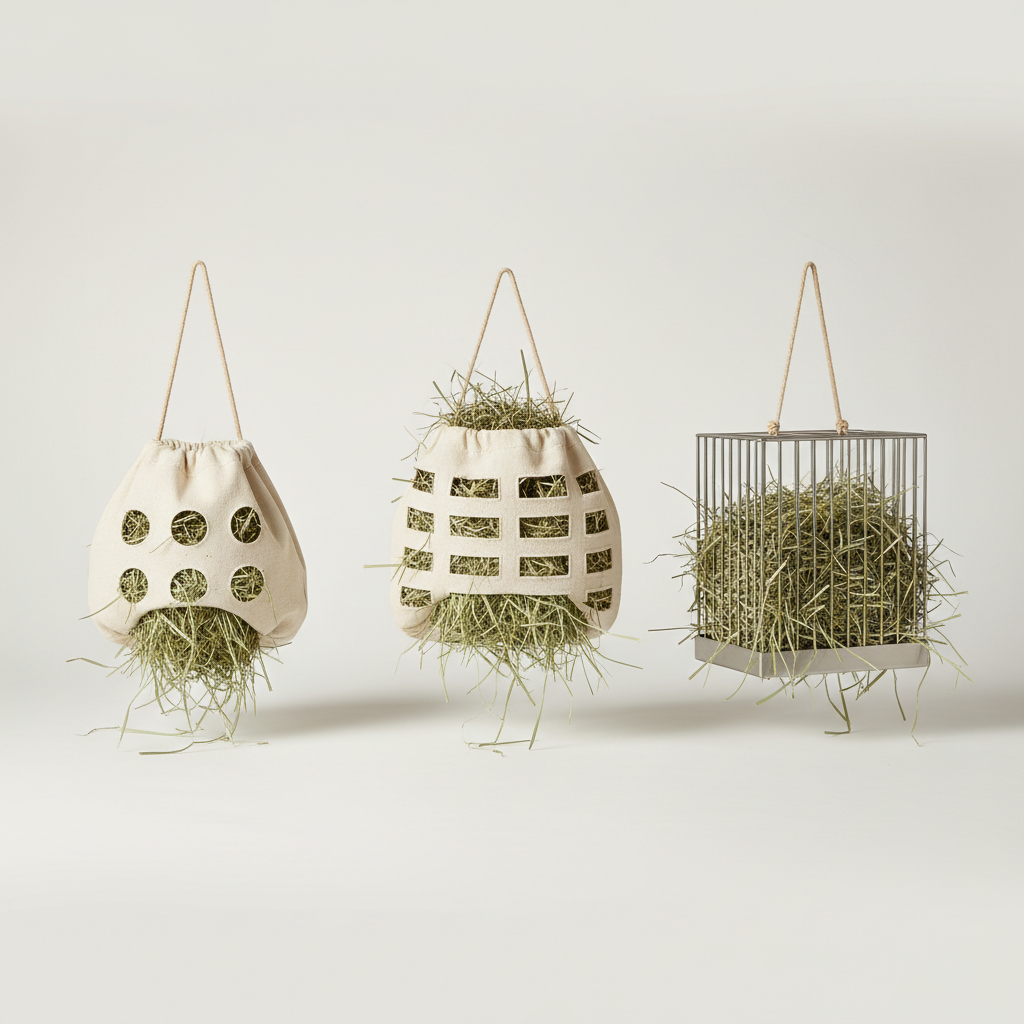
Key point: “No waste” is usually code for “reduced spill”. A little fallout is normal, so the winning setup is feeder + placement + catch area, not the bag alone.
Setup that actually reduces waste: height, location, and a catch zone
This is where most households turn a decent product into a great one. Plan the setup around how your pet stands and pulls.
Step-by-step placement
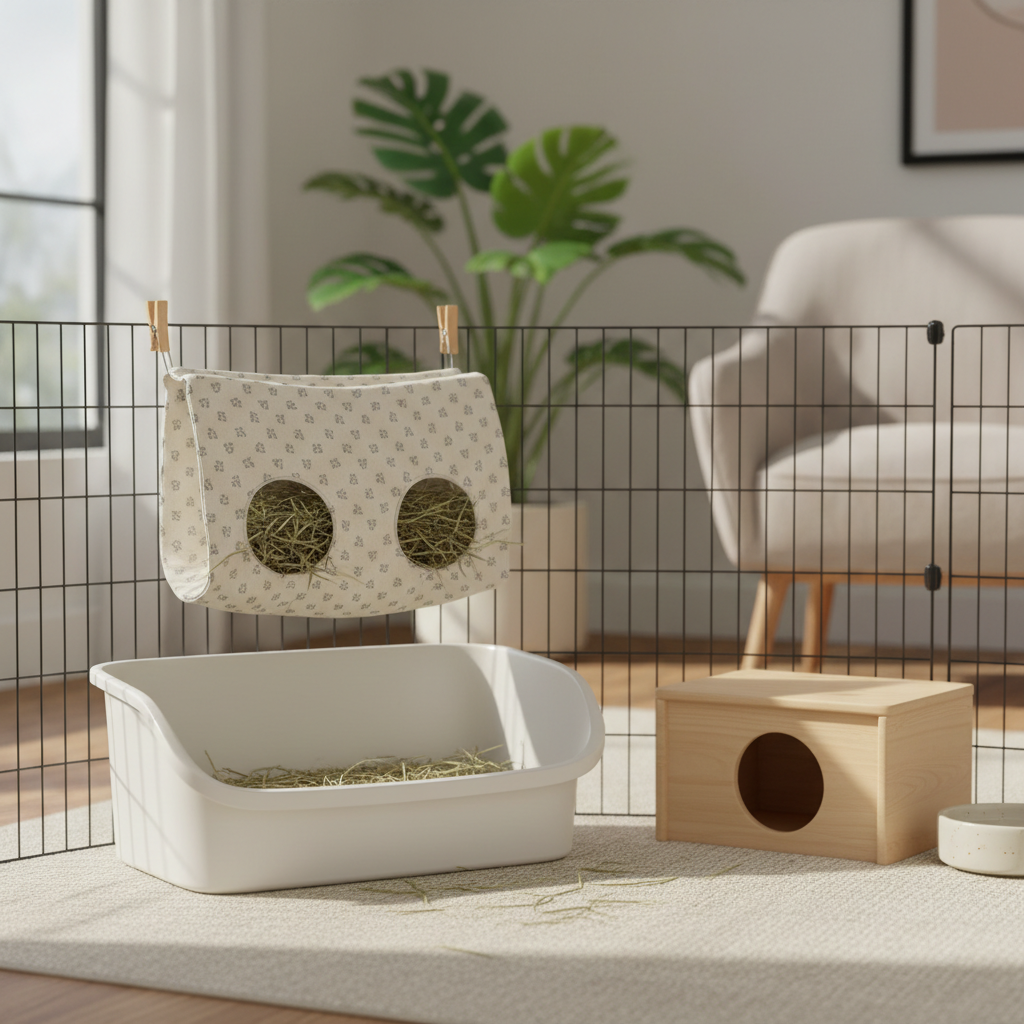
- Pick the feeding spot first: many rabbits prefer hay near a litter box, guinea pigs often like it near a hide but with clear sightlines.
- Mount at chest-to-head height: your pet should reach without stretching upward or bending awkwardly.
- Stabilize the bag: two attachment points beat one, wobble makes pulling more violent.
- Add a catch zone: a litter pan edge, washable mat, or shallow tray under the feeder keeps “dropped” hay usable longer.
- Keep bedding back: if loose bedding touches the feeder opening, it mixes with hay fast.
If you’re moving from a pile-on-the-floor method, expect a short adjustment period. Some pets “test” the new feeder by over-pulling for a day or two, then settle into normal nibbling.
Daily use tips: refilling, hay quality, and cleaning without overthinking it
Most waste reduction comes from small habits. Not complicated, just consistent.
- Refill loosely: packed hay can jam, then your pet yanks harder and spill increases.
- Shake out crumbs: if the bottom of the hay box is all tiny bits, mix in fresher strands or use the bits as litter-box “topper”.
- Rotate hay: older hay sitting at the bottom gets ignored, so empty the bag fully sometimes, then refill.
- Clean on a schedule: fabric bags can hold dust and oils, many households do a quick brush weekly and wash as needed.
According to the FDA, pet food handling and storage hygiene matter for safety; while hay is not the same as packaged food, the basic idea holds up, keep feeding materials clean, dry, and free of contamination.
Common mistakes (and what to do instead)
A few choices tend to create the exact mess you’re trying to avoid.
- Dangling straps inside the enclosure: pets may chew or tangle. Use short, secured attachments and trim excess if the design allows.
- Using a bag with fraying seams: loose threads invite chewing. Replace or repair early, not after it looks “bad”.
- Hanging over water bowls: wet hay becomes trash fast. Keep water away from the drop zone.
- Putting “unlimited hay” in a huge bag: too much hay compresses and may trap moisture, smaller daily refills often stay fresher.
- Expecting zero fallout: plan for a little drop, then make it easy to clean.
When to get professional help (safety and health flags)
If your pet suddenly stops eating hay, drops weight, or seems to struggle while chewing, don’t try to “solve it” with a feeder change. Appetite and chewing issues can signal dental problems, GI discomfort, or stress, and those can move fast in small mammals.
- Call a vet if you notice reduced droppings, no droppings, drooling, mouth wetness, or obvious pain signs.
- Ask about diet balance if your pet ignores hay but eats treats or pellets, a professional can help you adjust safely.
According to the American Animal Hospital Association (AAHA), establishing veterinary guidance and not delaying care when clinical signs appear is a key part of responsible pet ownership, and small pets often hide discomfort until it becomes harder to manage.
Conclusion: a “no waste” hay setup is a system, not a single product
A small pet hay bag hanging feeder can cut hay mess dramatically, but the real win comes from choosing openings your pet can’t over-pull, mounting it at a natural height, and giving dropped hay a clean place to land.
If you do one thing today, add a simple catch zone under your current feeder and stabilize the mounting. It’s boring advice, but it’s the move that usually changes your cleaning routine overnight.
FAQ
What size hay bag works best for rabbits vs. guinea pigs?
Many rabbits do well with a larger capacity, but only if the opening design prevents big clumps from being yanked out. Guinea pigs often benefit from medium capacity with multiple smaller access points, so more than one pig can eat without fighting.
Is a fabric hay bag safe if my pet chews everything?
It depends on how persistent the chewing is and whether the bag sheds threads. If your pet targets seams or straps, consider a chew-resistant design and keep attachments short, when in doubt, ask an exotics vet what materials are appropriate for your species.
Why does my pet pull hay out and leave it untouched?
Selective foraging is common, especially if the hay has mixed textures. Improving hay quality, refilling loosely, and rotating older hay out of the bottom usually helps more than changing brands of feeder.
Where should I hang a hay feeder inside the cage?
Most homes get the best results by hanging it near a litter area or over a washable mat, away from water sources. The goal is “clean landing,” so dropped strands don’t become instant trash.
Do hay feeders reduce respiratory issues from hay dust?
They can reduce hay being crushed into bedding, which may reduce dust in some setups, but dusty hay is still dusty hay. If you suspect respiratory irritation, switching to lower-dust hay and discussing symptoms with a veterinarian is the safer path.
How often should I wash a hay bag feeder?
If it’s fabric, many people wash when it starts to smell musty or looks dusty, with light upkeep in between like shaking out crumbs and brushing. Avoid leaving it damp after washing, moisture invites problems.
What’s the best way to stop hay from falling through the holes?
Some fallout is normal, but you can reduce it by choosing smaller openings, not overfilling, and keeping the bag stable with two mounting points. A catch tray below often does more than trying to find “perfect” hole sizing.
If you’re trying to keep the cage cleaner without constantly refilling and sweeping, a well-fitted hay bag plus a simple catch zone is usually the most practical upgrade, and if you want, you can share your pet species, enclosure type, and current feeder style to narrow down what design tends to work in that setup.