Guinea pig play yard foldable fence setups solve a real problem: you want your piggies to move more, but you do not want them disappearing under the sofa or chewing something unsafe while you turn your head.
A good foldable fence gives you a clean boundary for floor time, adds enrichment, and makes daily routines simpler, especially if you live in an apartment or share space with kids or other pets.
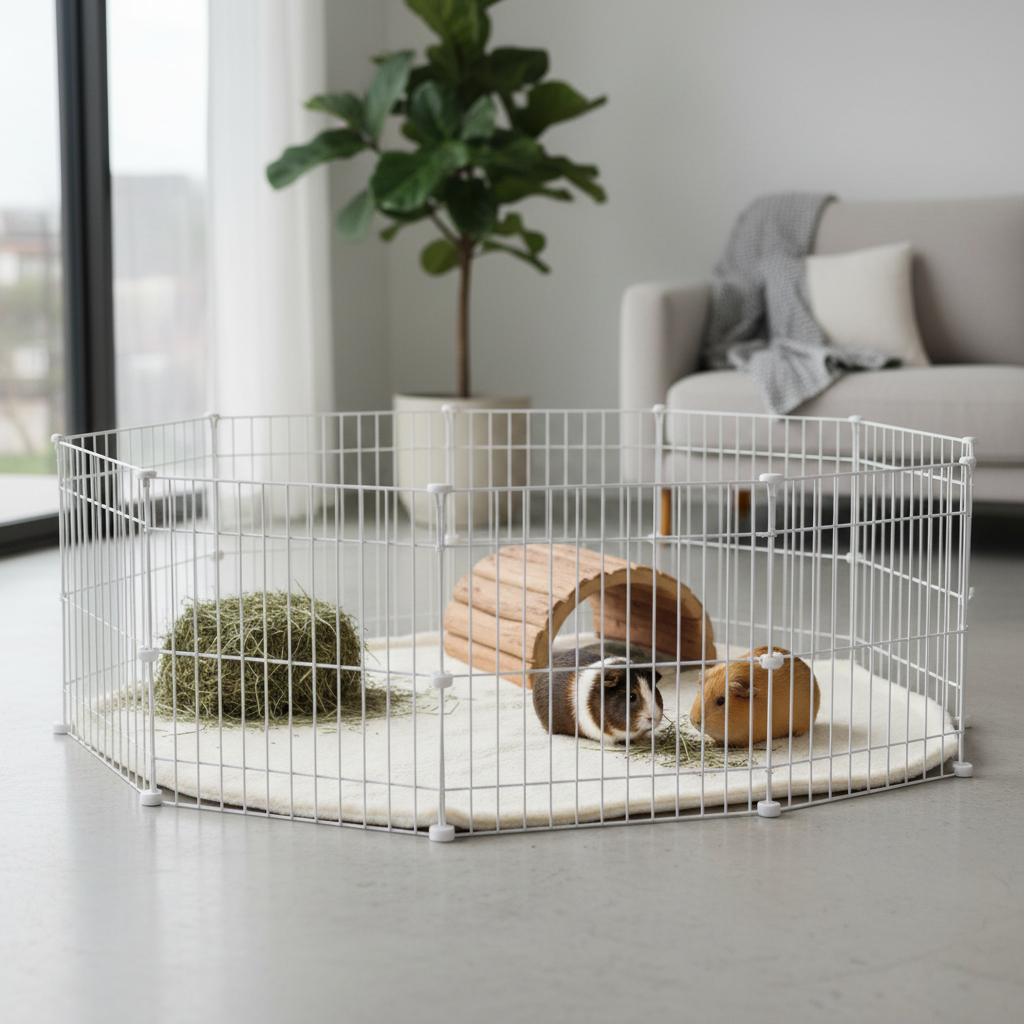
People often assume “any small pet pen works,” but guinea pigs have specific quirks, they push with their nose, they panic-jump when startled, and some will test every corner like a tiny escape artist. This guide focuses on how to choose, set up, and actually use a foldable fence in a way that feels safe and sustainable.
What makes a foldable play yard fence work for guinea pigs
Not every pen that says “small animal” behaves well in real homes. A foldable fence is worth considering when it checks three boxes: stable walls, safe materials, and a layout you can rebuild quickly.
- Height and rigidity: Many guinea pigs cannot climb smooth panels, but they can sometimes “popcorning-jump” into a wall and tip light fences. Taller panels and stronger connectors usually reduce that risk.
- Panel gaps: If openings are wide enough for a head to fit, a determined pig may squeeze through. This matters more for younger or slimmer guinea pigs.
- Floor strategy: Some fences sit directly on the floor, others need a mat inside to prevent drafts and slipping. If you use a mat, you also need a way to keep edges from becoming a chew target.
- Fast setup: The whole point is “I will actually use it.” If it takes 15 minutes and a wrestling match with clips, most people stop doing daily floor time.
According to the ASPCA, safe housing and handling starts with choosing secure enclosures and avoiding hazards in the environment, which applies to play areas just as much as permanent cages.
Why guinea pigs escape (and how fences fail in real life)
Most escapes are not dramatic, they are boring and predictable. The fence slides, the corner opens, or a hidey becomes a step stool.
- Corner gaps: Foldable pens often rely on connectors. If a connector loosens, the corner becomes a “door.”
- Tipping: Lightweight panels tip when a guinea pig runs along the wall line and hits it with momentum.
- Using “furniture” to climb: A ramp, a box, even a stuffed bed pushed against the wall can become a boost. It looks cute until it works.
- Chewing weak points: Some pigs chew edges, zip ties, or soft plastic seams, especially if bored.
- Other pets: A curious dog nose or a cat paw can push panels inward, creating an opening or stressing the guinea pig.
If you want a guinea pig play yard foldable fence to stay reliable, plan around these failure modes instead of assuming “they will probably stay put.”
Quick self-check: is your home a good match for a foldable fence?
This is the 60-second checklist I wish more people did before buying anything.
- Do you have a flat, non-slippery area (rug, fleece, foam tiles under a liner) where panels will not skate?
- Can you block access to cords, baseboards, houseplants, and low shelves?
- Will floor time happen where noise and traffic stay low, so the pigs do not get startled?
- Do you need the pen to fold small because you store it in a closet?
- Are there kids or pets who might lean on the fence?
If you answered “no” to more than one, you still can do floor time, but you may need a heavier pen, a different room, or a more controlled setup.
Picking the right fence: materials, size, and features that matter
When people shop, they focus on “how big.” I’d argue wall behavior matters more than square footage.
Materials (what usually works best)
- Coated wire panels: Often sturdy, better airflow, usually harder to tip, but watch spacing and sharp edges. Add a liner if the pig can stick its head through.
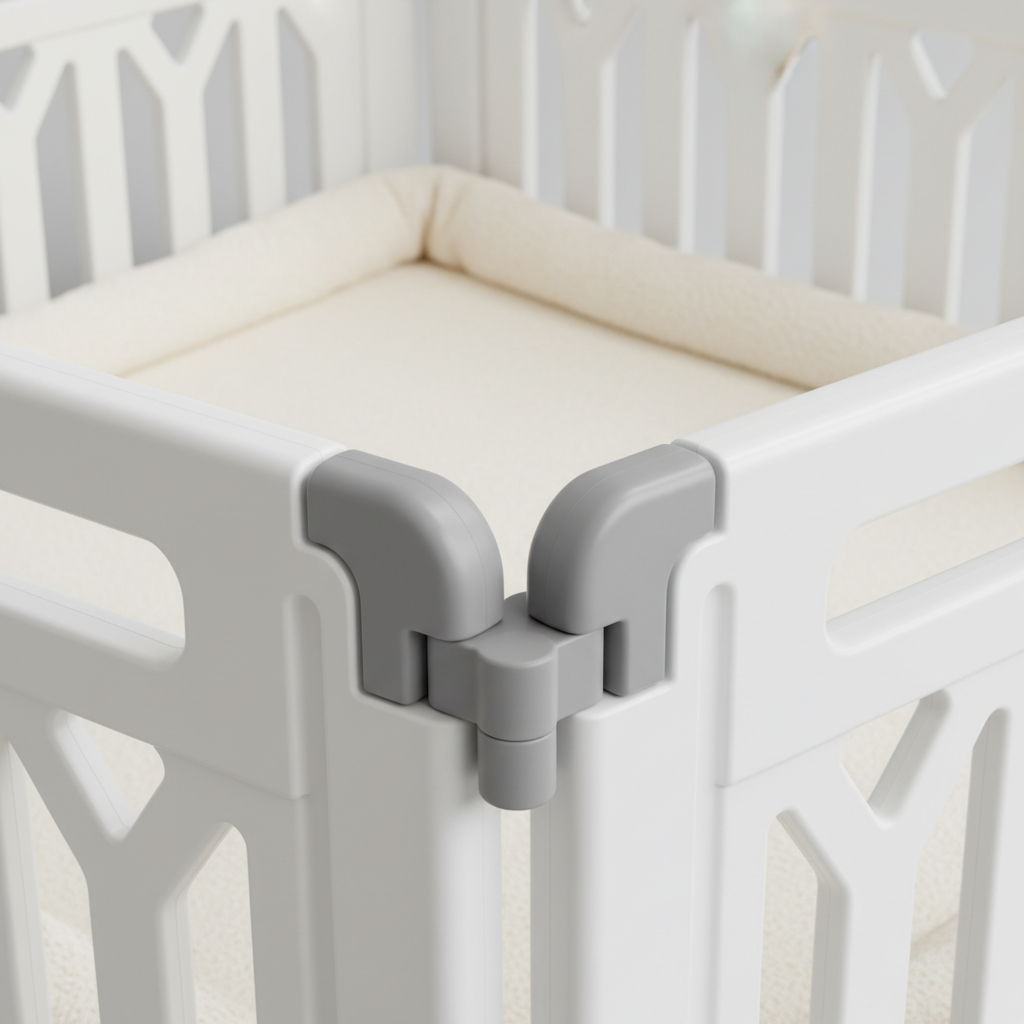
- Plastic modular panels: Lightweight and easy to clean, but some flex, and seams can become chew points. Best when connectors are solid and the base does not slip.
- Fabric playpens: Convenient, but many are easier to chew or push, and urine can soak seams. These can work for short supervised sessions, not always for “set it and do dishes.”
According to the AVMA (American Veterinary Medical Association), proper husbandry and safe environments reduce stress and injury risk in small animals, so material choice is not just aesthetics, it affects safety.
Size planning: a practical rule of thumb
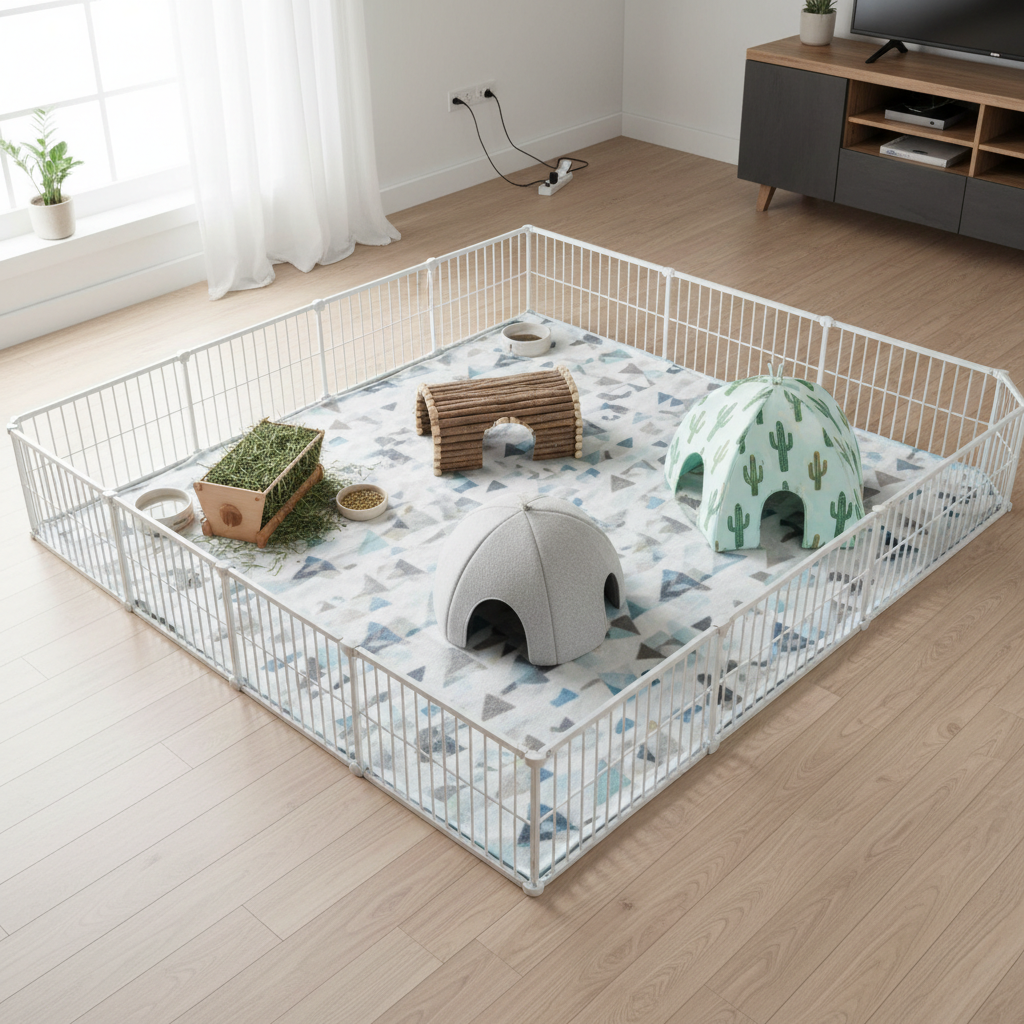
You want enough room for a few steps of running and a couple of stations, not just a circle to sit in. In many homes, a rectangle works better than a perfect square because you can create a “lap” path along one side.
- Minimum functional layout: space for one hide, one hay area, one water option, and one “open stretch.”
- Better layout: two hides with separate entrances, hay in a corner, and an open center so they do not feel cornered.
If you keep multiple guinea pigs, plan for more hides than pigs in the play yard. That single detail reduces squabbles in many cases.
Setup that actually holds up: step-by-step floor time routine
A repeatable routine beats a “perfect” pen you rarely use. Here is a setup flow that tends to stay manageable.
1) Prep the surface
- Lay down a fleece blanket, pee pad system, or washable rug, so feet do not slip.
- Remove cords and anything chewable within a guinea pig’s reach if a panel shifts.
2) Build the fence with stability in mind
- Use a rectangle or L-shape that braces against itself, very round shapes can feel less stable.
- Lock corners tightly, then push gently on each wall to test wobble.
- If the fence slides, add friction under it, for example a thin rug gripper under the mat.
3) Add “stations” to guide movement
- Hay station in one corner, this becomes the anchor.
- Hidey away from the hay so they travel between zones.
- A low tunnel that does not touch the fence, so it cannot become a step.
4) Supervise smart, not constant hovering
For the first few sessions, stay close enough to catch patterns, who tests corners, who chews plastic, who panics when a door shuts. After that, you usually can supervise while sitting nearby, but I would not treat a foldable fence as “unsupervised housing.”
With a well-built guinea pig play yard foldable fence, daily 20–40 minute sessions often feel realistic for busy households, assuming the pigs tolerate handling and transitions.
A comparison table: common foldable fence options
Every product varies by brand, so treat this as a shopping lens rather than a verdict.
| Option type | Best for | Typical watch-outs | What to check before buying |
|---|---|---|---|
| Coated wire panel pen | Stability, longer sessions | Wide spacing, pinch points | Gap size, smooth ends, firm latches |
| Plastic modular panels | Quick cleaning, flexible shapes | Sliding, chewing seams | Connector quality, panel rigidity, skid resistance |
| Fabric pop-up playpen | Travel, short supervised time | Chewing, staining, pushing walls | Reinforced seams, washable base, zipper safety |
Safety notes and common mistakes (where most people lose time)
This is the part that saves frustration. Most “my playpen didn’t work” stories trace back to one of these.
- Putting hides against the fence: it becomes a ladder. Leave a small buffer gap.
- Assuming a taller fence fixes everything: if the base slides, height does not help.
- Using unsafe floor materials: slick floors can cause splits or falls, and some foam surfaces can be chewed. If you see chewing, switch materials.
- Overcrowding the space: too many toys can trap a timid guinea pig. More is not always better.
- Ignoring stress signals: freezing, teeth chattering, repeated frantic wall-running can mean the setup feels scary. Reduce noise, offer more cover, shorten sessions.
If you have concerns about injury risk, persistent stress behaviors, or mobility issues, it is reasonable to consult an exotics veterinarian. Guinea pigs can hide discomfort, and “not wanting to move” sometimes has a medical angle.
Practical add-ons that make the play yard easier to keep using
The best fence is the one you pull out on a random Tuesday. A few small upgrades can make that happen.
- Dedicated play-yard kit: keep clips, a small dustpan, wipes, and a spare liner in one bin.
- Two-liner rotation: swap and wash, so you do not skip floor time because laundry is behind.
- Portable hide options: soft tunnels and lightweight houses that do not slide into walls.
- Simple enrichment: paper bags with hay, scatter feeding, a second hay pile, rather than complicated toys.
Key takeaways: prioritize stability over “biggest size,” keep hides off the fence line, manage slipping, and build a routine you can repeat without thinking.
Conclusion: a foldable fence can be worth it, if you set it up like it matters
A guinea pig play yard foldable fence is less about buying the “right” product and more about building a safe, repeatable floor-time zone that your guinea pigs learn to trust. If you start with a stable shape, remove hazards, and keep the layout simple, most households get a noticeable improvement in daily movement and mental stimulation.
Action step: measure the floor area you can realistically use three times a week, then choose a fence style that will not slide on that surface. After the first week, adjust based on what your guinea pigs try to do, not what the listing promised.
FAQ
How big should a foldable play yard be for two guinea pigs?
Big enough to fit at least two hides and a hay station with open space left over, so they can pass each other without getting stuck. In practice, a longer rectangle often works better than a tight square in living rooms.
Can guinea pigs chew through plastic play yard panels?
Some will test seams and edges, especially if bored. If you see repeated chewing, switch to sturdier materials, add more hay-based enrichment, and avoid leaving the play yard unsupervised.
Is a fabric pop-up pen safe for guinea pigs?
It can be fine for short, supervised sessions, particularly for travel. The common downside is chewing and staining, plus walls that flex when a guinea pig pushes, so it is not always ideal for longer daily use.
How do I stop the play yard fence from sliding on hardwood floors?
Use a non-slip layer under your liner, like a rug gripper, and choose a fence with wider bases or heavier panels. Sliding is usually a friction problem, not a “need more clips” problem.
Should I put food and water in the play yard?
Hay is worth placing because it keeps them calm and encourages natural foraging. Water can be offered if sessions run longer, either a stable bowl or bottle, but watch for spills that soak liners.
My guinea pig freezes in the play yard, is that normal?
In many cases, yes at the beginning. Add more cover, reduce noise, shorten sessions, and keep handling gentle. If freezing persists alongside appetite changes or limping, consider asking an exotics vet.
Can I use the play yard as a permanent enclosure?
Some setups can work temporarily, but many foldable pens are designed for supervised play, not 24/7 housing. Long-term housing usually needs stronger chew-proof structure, consistent bedding, and secure tops if other pets exist.
If you are trying to choose a setup that fits a small space and still feels sturdy, it may help to list your floor type, how often you plan to fold it away, and whether you have other pets, then match those constraints to panel rigidity and connector style rather than shopping on size alone.