
puppy teething toys for large breeds need a different standard than the average “cute puppy chew,” because big-breed pups bring real jaw strength long before they look grown.
If you have a Lab, GSD, Rottie, Mastiff mix, or any “future horse” of a puppy, you’ve probably noticed two things fast: the chewing is nonstop, and many toys fail in days, sometimes minutes. That’s not just a waste of money, it can become a safety issue if pieces start breaking off.

This guide helps you pick durable chews that fit large-breed mouths, spot “looks tough but isn’t,” and build a simple routine that saves your hands, your shoes, and your sanity. I’ll also flag when it’s time to ask your vet, because teething discomfort and destructive chewing don’t always mean the same thing.
Why large-breed puppies destroy teething toys so fast
Some toy breakage is normal, but large breeds stack the odds against you. Many people buy “puppy” on the label and assume it’s safe and durable, then get surprised.
- Jaw power ramps early: big pups gain leverage fast, even at 12–16 weeks, and can shear seams and thin rubber.
- Bigger mouths change the physics: wide jaws let them grip and twist, which turns small toys into tear tests.
- Teething drives intensity: sore gums make them seek pressure, edges, and “give,” so softer toys can get shredded.
- Material mismatch: plush, thin TPR, and lightly-pressed rawhide alternatives often fail under sustained chewing.
According to the American Veterinary Medical Association (AVMA), selecting toys that are appropriately sized and durable can reduce choking and intestinal blockage risks. That’s the practical reason “durable” matters beyond convenience.
Quick self-check: what kind of chewer is your puppy?
Before you buy anything, classify the chewing style. It’s not about “good” or “bad,” it’s about picking the right tool.
Chewing profile checklist
- Gentle gnawer: chews slowly, little tearing, toys last weeks.
- Persistent grinder: steady pressure for long sessions, prefers dense rubber or nylon-like textures.
- Shredder: targets seams, pulls threads, rips chunks, loves plush and rope… and destroys them.
- Power chomp + twist: crunches, then torques the toy, breaks off nubs and edges.
If you see bleeding gums, broken baby teeth, or your puppy avoids chewing on one side, consider checking in with a veterinarian, since pain or dental issues can change chewing behavior.
Materials that usually hold up (and what to avoid)
Durability is mostly material science plus design. “Indestructible” claims get thrown around, but reality depends on the dog and supervision.
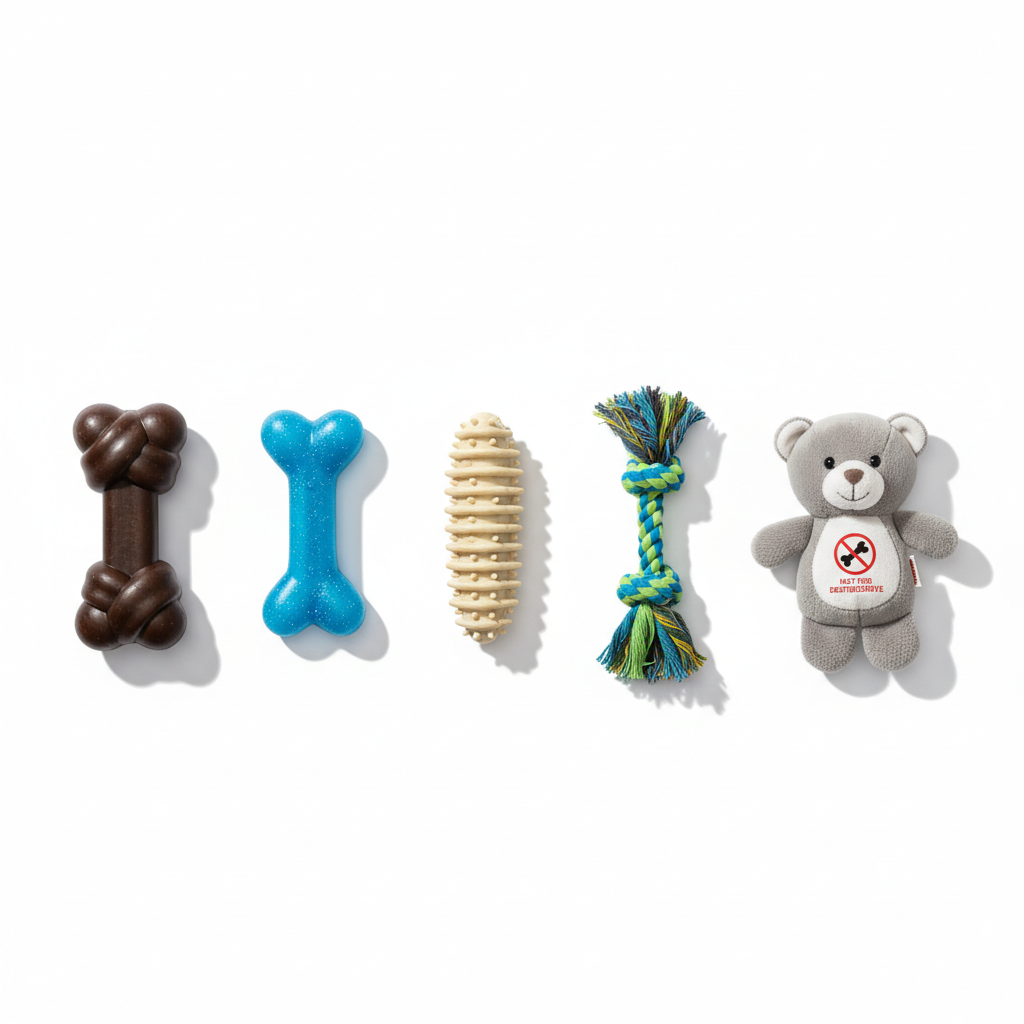
Often a good bet for large-breed teething
- Thick natural rubber: flexible but tough, good for sore gums, usually safer than brittle plastics.
- Rubber + treat-dispensing designs: slows chewing pace, adds mental work, often increases toy life.
- Puppy-specific “gentler” nylon-style chews: can work for grinders, but watch for sharp edges as it wears.
Common pitfalls
- Very soft TPR (especially thin, hollow shapes): can turn into chunks quickly for big pups.
- Plush with seams: great for supervised play, not for solo teething sessions with shredders.
- Rope toys: useful for tug under supervision, but string ingestion can be risky if your pup eats fibers.
According to the ASPCA, chewing items should be durable enough to resist being swallowed in pieces, and dogs should be supervised with any new toy until you know how they use it. That “new toy audit” matters more with large breeds.
Durability + safety: sizing rules that prevent scary moments
The fastest way to turn teething into a vet visit is picking a toy that’s too small, too brittle, or too easy to wedge across the back molars.
- Go larger than you think: for big-breed pups, “large” or “XL” often makes sense even at 10–16 weeks, as long as it’s not so heavy they can’t handle it.
- Avoid perfect “ball bearings”: round toys should be too large to fully fit behind the canine teeth.
- Watch for edge wear: once a toy develops sharp rims or hard spikes, it’s time to replace or trim if the brand supports it.
- Know your puppy’s swallow habits: if they gulp treats or try to eat toy pieces, treat that as a higher-risk profile.
When in doubt, bring the toy packaging info to your clinic and ask what they’d recommend for your breed size and age. It’s a quick question that can prevent bigger problems.
Buying guide table: match toy type to real-life situations
Not every toy needs to do everything. The best setup is usually a small “bench” of options you rotate.
| Toy type | Best for | What to watch | Helpful tip |
|---|---|---|---|
| Thick rubber chew (solid) | Most large-breed teething phases | Cracks, missing chunks | Choose textured sides for gum massage |
| Treat-dispensing rubber | Crate time, boredom chewing | Overfeeding if stuffed too often | Use part of daily kibble as the “stuffing” |
| Puppy-safe nylon-style chew | Persistent grinders | Sharp edges, aggressive splintering | Replace at the first rough, knife-like ridge |
| Freezable teething toy | Sore gums, short relief sessions | Cracking when frozen, leakage | Use 5–10 minute sessions, then rotate |
| Rope (supervised) | Tug training, engagement | Fiber ingestion | Put it away after play, don’t leave it out |
How to make teething toys last longer (without buying ten of them)
The trick is not just “buy tougher.” Big pups chew harder when they’re bored, over-tired, or trying to self-soothe. A small routine can stretch toy life a lot.
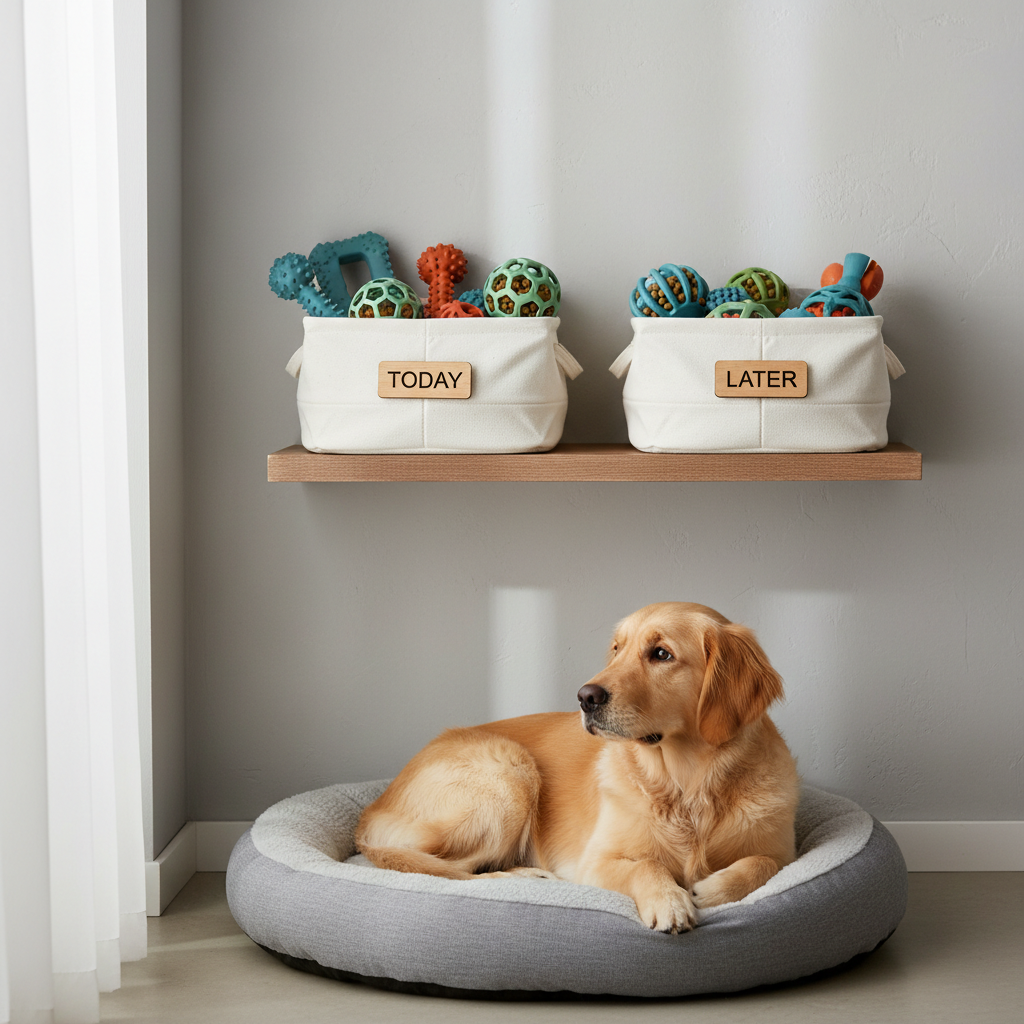
Practical steps that usually work
- Rotate 3–5 toys: keep only 1–2 out, the rest “disappear” for a day or two so they feel new again.
- Match the moment: use treat-dispensing toys for crate time, rubber chews for evening witching hour, and tug toys only with you present.
- Limit high-arousal chewing: after intense zoomies, give a calmer chew option instead of a shreddable toy.
- Do a 30-second inspection: if you can pull off a piece with your fingers, your puppy can do it with teeth.
Key takeaways (save these)
- Durable means thick rubber or well-designed puppy chews, not “hard as a rock.”
- Bigger size is usually safer for large breeds, as long as your puppy can manage it.
- Supervision matters most during the first few sessions with any new toy.
Mistakes that look harmless but cause the most trouble
Many households don’t get stuck on choosing, they get stuck on habits that accidentally train the puppy to chew the wrong things.
- Leaving one “favorite” chew out 24/7: it gets boring, so your puppy upgrades to table legs.
- Giving old shoes as chew toys: most puppies don’t understand “only this shoe,” they learn “feet-smell items are fair game.”
- Picking ultra-hard chews too early: harder isn’t automatically better, and some pups may chip teeth on very hard items.
- Ignoring calorie creep: teething toys stuffed with extras can quietly push a puppy over their daily intake.
According to the American Kennel Club (AKC), chewing is normal puppy behavior and redirection to appropriate chew items helps protect your home while your dog learns boundaries. That redirection works best when the “appropriate” option is actually satisfying.
When to talk to a veterinarian or trainer
Most teething is a phase, but a few patterns deserve a closer look, especially for large breeds growing fast.
- Swallowing pieces repeatedly, gagging, coughing, or vomiting after chew sessions.
- Bleeding that doesn’t stop quickly, or visible tooth fractures.
- Chewing that escalates with anxiety signs like pacing, drooling, or panic in the crate.
- Sudden refusal to chew or pawing at the mouth, which may signal oral pain.
For behavior support, a certified trainer can help you build calm chew routines and teach “drop it” and “leave it,” which indirectly makes using puppy teething toys for large breeds safer in daily life.
Conclusion: a durable setup that actually fits big-breed teething
If you pick one thing to do today, build a small rotation: one thick rubber chew, one treat-dispensing rubber option, and one supervised play toy. Then size up, inspect often, and retire anything that starts cracking or shedding chunks.
That combination tends to keep large-breed puppies busy in the right way, while giving you enough control to protect teeth, stomachs, and furniture. If something feels “off” with chewing intensity or mouth comfort, a quick vet call is a smart next step.
FAQ
- What are the best puppy teething toys for large breeds that are durable?
Many owners have the most consistent luck with thick natural rubber chews and rubber treat-dispensing toys, because they balance toughness with a bit of give for sore gums. Your puppy’s chew style still matters, so supervise the first sessions and adjust. - Is it safe to give my large-breed puppy nylon chews?
Often yes, if the chew is labeled for puppies and sized appropriately, but you should watch for sharp edges and heavy wear. If the surface starts forming rough, knife-like ridges, replace it sooner rather than later. - How big should a teething toy be for a large-breed puppy?
In many cases, bigger is safer, because it lowers choking risk and makes it harder to swallow pieces. A good rule is choosing a size your puppy can carry, but cannot fit fully in the back of the mouth. - My puppy destroys every toy in a day, is that normal?
It can be normal for power chewers, especially during peak teething weeks, but constant shredding can also mean the material is too soft or the toy design has easy “tear points.” If your puppy eats pieces, upgrade durability and tighten supervision. - Can teething toys help stop biting hands?
They can help, but usually not alone. Keep a chew within reach and redirect early, then pair it with short breaks if arousal is high, since over-tired puppies bite more. - Should I freeze teething toys for a large breed puppy?
Freezing can soothe gums for short sessions, but check the product instructions and inspect for cracking after freezing. If the toy becomes brittle or leaks, skip freezing and use cool (not rock-hard) options instead. - What signs mean a chew toy is unsafe?
Missing chunks, deep cracks, sharp edges, or a size that can wedge or be swallowed are the big ones. If your puppy coughs, gags, or vomits after chewing, stop using that toy and consider calling your vet.
If you’re trying to choose puppy teething toys for large breeds without filling a closet with “failed experiments,” it often helps to share your puppy’s age, breed estimate, and chew style, then narrow to two or three durable options you can rotate and monitor.