
Senior pet care gets hard when “small changes” pile up, slower walks, picky eating, bad breath, accidents in the house, and that worried feeling you can’t quite name.
Most common dog (and cat) health problems in later life aren’t one quick fix, they’re patterns. The good news, you can usually reduce discomfort and avoid emergencies by tightening routines at home and sticking to a realistic vet plan.

This guide focuses on what owners can actually do: how to tell normal aging from a problem, which at-home steps tend to help, and when it’s worth pushing for diagnostics. I’ll cover dogs and cats because many households juggle both, even though their symptoms can look different.
What “normal aging” looks like vs. a health problem
Aging brings gradual change, but disease tends to show up as a shift: faster decline, new pain signals, or behavior changes that don’t match your pet’s usual personality.
- More sleep can be normal, but sleep plus weight loss, coughing, or hiding often is a flag.
- Slower stairs can be normal, but hesitation plus licking joints, yelping, or slipping suggests pain.
- Some fussiness with food happens, but refusing meals, drooling, or one-sided chewing often points to dental or nausea issues.
According to the American Veterinary Medical Association (AVMA), regular veterinary visits help catch issues earlier, which matters more in senior pets because problems can stack quickly.
Quick self-check: which bucket are you in?
If you want a fast way to triage, use this checklist for aged dog care at home and older cats too. Any “yes” that’s new, worsening, or paired with appetite changes is worth a call to your clinic.
- Breathing: coughing, faster resting breaths, or tiring faster on short walks
- Movement: stiffness after rest, bunny-hopping, slipping on floors, reluctance to jump
- Bathroom: accidents, straining, blood, or drinking much more than usual
- Mind: pacing at night, getting “stuck” in corners, new anxiety, more vocalizing
- Mouth: bad breath, dropping food, pawing at face, red gums
- Body: unexplained weight loss/gain, new lumps, heat in a joint, greasy coat
Mobility and arthritis: reduce pain without guessing
For many households, arthritis support for older pets becomes the daily project. Arthritis often looks like “slowing down,” but pain changes posture, sleep, and even friendliness.
What helps at home (practical and low-risk)
- Floor traction: runners, yoga mats, or grippy socks reduce slips that trigger flare-ups.
- Warm-up and cool-down: a few easy minutes before longer walks, then rest.
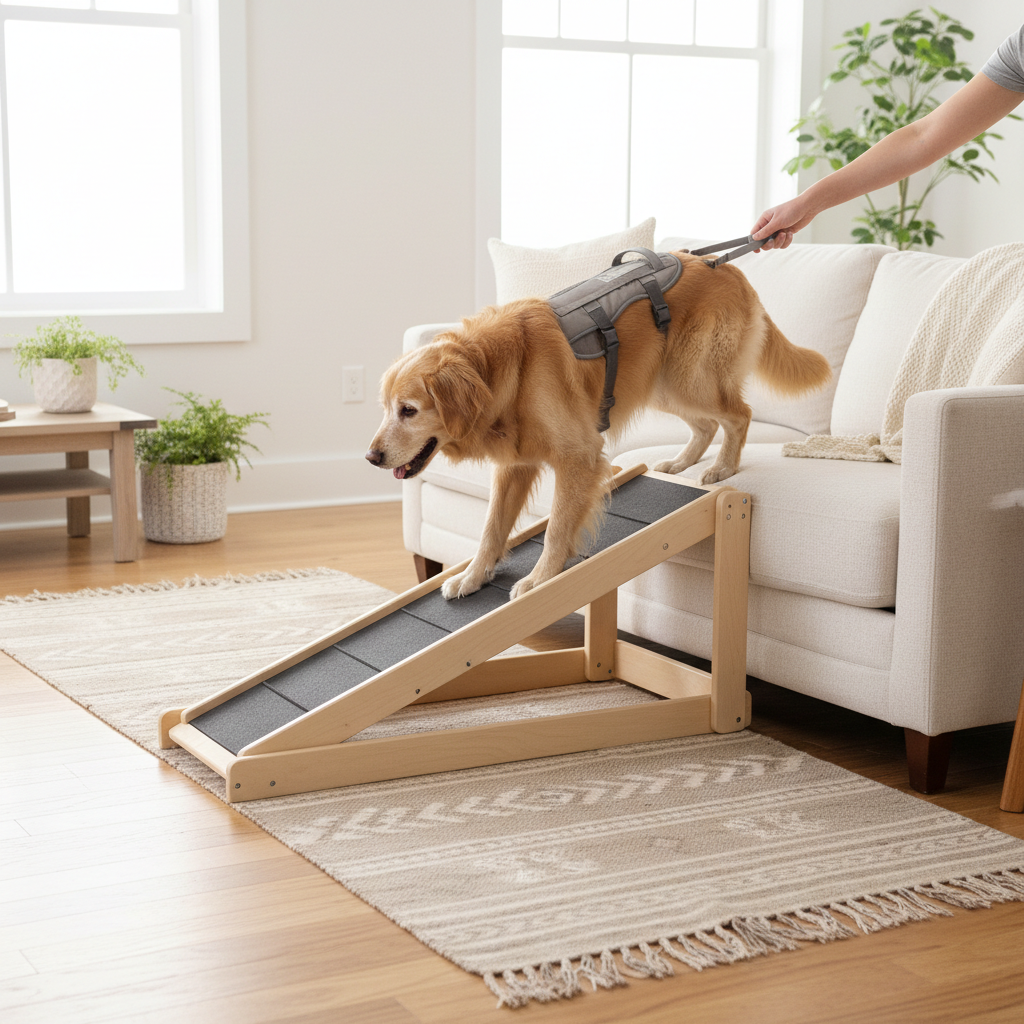
- Ramps and step stools: protect joints more than repeated jumping.
- Short, frequent movement: two to four mini-walks often beat one long walk.
Mobility tools can be a game changer, but they must fit well. Common mobility aids for senior dogs include harnesses with handles, ramps, non-slip boots, and orthopedic beds.
When it’s time to stop DIY
If your pet limps, cries out, stops using a limb, or has weakness in the back end, ask your veterinarian about an exam and imaging. Also ask before using human pain meds, many are toxic to pets.
Dental disease: the “silent” problem that affects everything
Senior pet dental cleaning comes up a lot because dental pain can masquerade as picky eating or “old age.” In both dogs and cats, gum disease may contribute to chronic inflammation and can make other conditions harder to manage.
Signs owners miss
- Chewing on one side, dropping kibble, or preferring soft food
- Bad breath that returns quickly after treats or water
- Pawing at the mouth, facial swelling, new irritability
What you can do this week
- Book an oral exam if breath is strong or gums look red, cleaning decisions should follow a vet check.
- Start slow with brushing: small sessions, pet-safe toothpaste, reward-based routine.
- Use vet-recommended dental diets/chews if your pet can chew safely.
According to the American Animal Hospital Association (AAHA), dental care is a core part of preventive health, and many pets need professional treatment even when they still eat normally.
Nutrition and weight: small tweaks, big payoff
A good senior pet nutrition guide is less about a trendy “senior formula” and more about matching calories, protein, and fiber to your pet’s medical reality.
- If weight creeps up, joints hurt more and breathing can worsen, portion control often matters more than brand swapping.
- If weight drops, think dental pain, GI disease, kidney issues, thyroid disease, or cancer, a vet visit matters.
- If constipation shows up, hydration and fiber adjustments may help, but straining can signal bigger problems.
Many older pets do better with measured meals, consistent treat limits, and a plan to track weight monthly at home. Ask your clinic what “too thin” looks like for your pet’s frame, it’s not always intuitive under fluff.
Brain and behavior: cognitive dysfunction isn’t “just stubbornness”
Cognitive dysfunction in aging pets can look like confusion, sleep disruption, house-soiling, clinginess, or withdrawal. It’s easy to misread as attitude, but the pattern matters.
Home support that tends to help
- Keep the map the same: avoid moving furniture, keep rugs in key routes.
- Night routine: last potty break, low lights, white noise if startling happens.
- Predictable enrichment: short sniff walks, simple food puzzles, gentle training refreshers.
- Safety gates: prevent falls and “stuck” situations.
Because similar signs can come from pain, thyroid disease, sensory loss, or medication effects, it’s smart to request a medical workup before assuming dementia.
Vet visit timing: a realistic senior wellness exam schedule
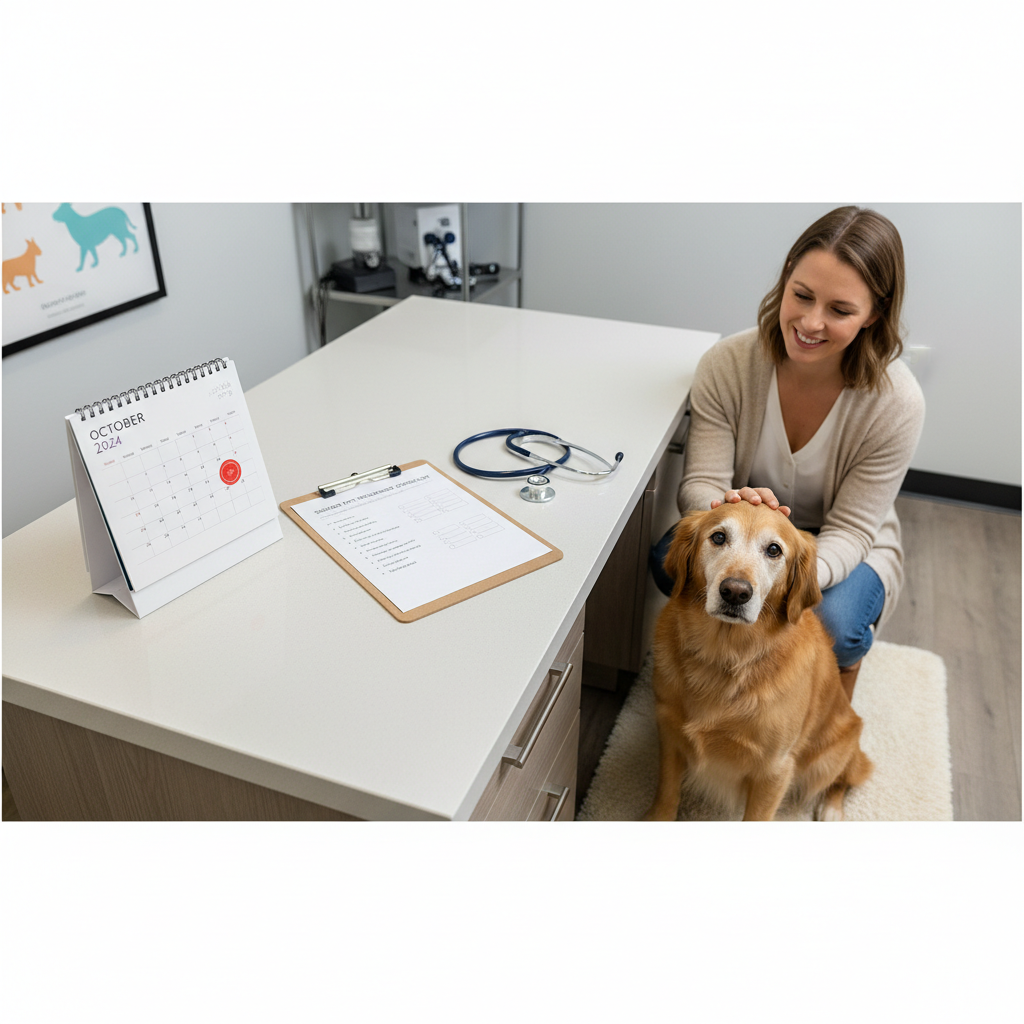
A workable senior pet wellness exam schedule depends on your pet’s conditions, but many clinics recommend more frequent check-ins for older animals than for younger adults.
According to the AVMA, preventive care visits help identify problems early and support quality of life. In practice, that often means planning ahead so you’re not booking only when something becomes urgent.
| Pet situation | Common visit cadence (typical) | What to focus on |
|---|---|---|
| Healthy senior, stable weight | Every 6–12 months | Dental check, weight/BCS, labs as recommended |
| Arthritis or mobility decline | Every 3–6 months | Pain plan, mobility review, medication monitoring |
| Chronic disease (kidney, heart, diabetes) | Every 2–4 months | Lab trends, appetite/thirst, home monitoring plan |
| New symptoms or rapid change | As soon as you can | Rule-outs, imaging, medication adjustments |
Use this table as a starting point, not a rule. Your veterinarian may suggest a different interval based on lab results and medications.
End-of-life planning: comfort, dignity, and fewer regrets
End-of-life care for pets is emotional, and it’s also practical. When you decide your “red lines” early, you’re less likely to make choices in a panic at 2 a.m.
Key points to decide before a crisis
- What “good day” means for your pet (eating, comfort, interest, sleep)
- What symptoms feel unacceptable (uncontrolled pain, repeated collapse, severe distress)
- How you’ll handle nights/weekends (urgent care plan, transport help)
In-home options
In-home hospice for pets may be available in your area and can help with pain control, mobility strategies, appetite support, and family guidance. It’s not only for the final day, many families use it to stabilize comfort for weeks or months, depending on the illness.
Talk with a veterinarian about quality-of-life scales and medication safety. If you see labored breathing, repeated collapse, nonstop vomiting, or signs of severe pain, treat it as urgent.
Practical “do this next” plan (no perfection required)
If you feel overwhelmed, pick one lane per week and build momentum. Senior pet care works best when it’s boring and consistent.
- This week: start a simple log (app or notes) for appetite, mobility, bathroom habits, sleep.
- Next week: improve traction and add one mobility aid if slipping happens.
- This month: schedule a wellness visit or dental exam if breath, chewing, or drooling raises suspicion.
- Ongoing: review food portions and treats, then weigh every 3–4 weeks.
Conclusion: steady routines beat “miracle” fixes
Most common senior pet problems, arthritis, dental disease, nutrition drift, and cognitive changes, respond best to early attention, simple home adjustments, and a vet relationship that stays proactive. If you choose two things to do today, keep a short symptom log and book the next checkup, those steps usually clarify everything else.
Key takeaways: watch for pattern shifts, protect joints with traction and ramps, don’t ignore mouth pain, and treat end-of-life planning as a kindness, not a failure.