
how to calm a cat during vet visit often comes down to two things, lowering surprise and giving your cat a sense of control, because most “bad behavior” at the clinic is really stress showing up loud.
If your cat yowls in the car, pants in the carrier, or turns into a tiny ball of claws on the exam table, you’re not alone, and you’re not failing. Many cats find vet trips hard because everything smells unfamiliar, sounds sharper, and they can’t predict what happens next.
This guide stays practical, what to do the week before, what to pack, what to say to the clinic, and how to handle the appointment without turning it into a wrestling match. I’ll also flag moments when it’s smarter to ask your veterinarian about medication or a fear-free plan, since forcing it rarely “fixes” anxiety.
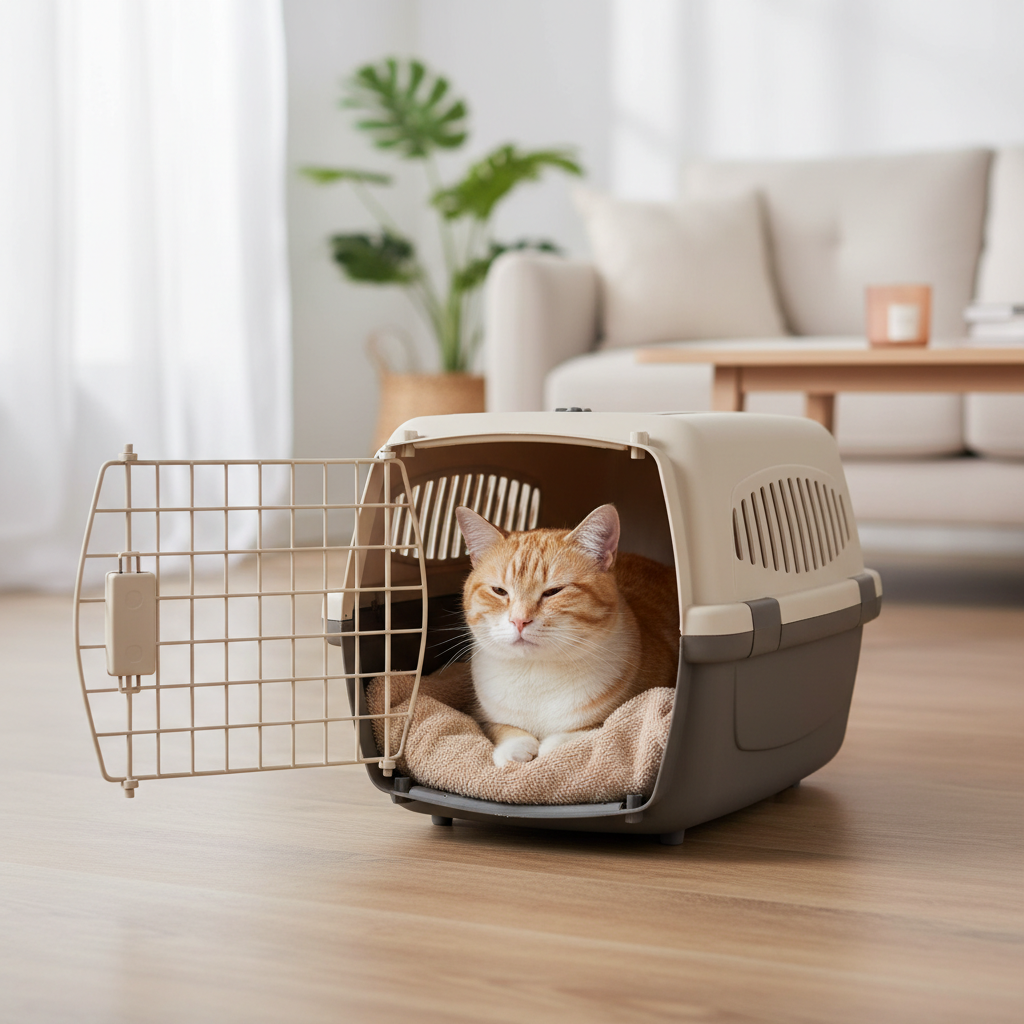
Why cats get so worked up at the vet (and why it escalates fast)
Most cats aren’t “being dramatic”, they’re having a normal stress response in a place full of triggers. Once that stress spikes, their threshold drops, and each next step feels bigger than it is.
- Carrier = predictor of bad stuff. If the carrier only appears for vet trips, many cats start panicking before they even leave the house.
- Scent overload. Other animals’ smells, disinfectants, and unfamiliar people can feel threatening. According to the American Veterinary Medical Association (AVMA), fear and anxiety can affect how pets behave in clinical settings, which is why low-stress handling matters.
- Noise + motion. Car rides add vibration, engine sound, and sudden turns, which can quickly tip a nervous cat into full alarm.
- Loss of control. Being lifted, restrained, or stared at by strangers is a lot for a species that prefers choosing distance.
- Pain or illness. If your cat already hurts, tolerance shrinks, and handling can feel like a threat.
One quiet truth, many owners try to “push through” and stay cheerful, but cats read tension and speed. Slower and more predictable usually wins.
Quick self-check: what kind of vet-trip stress is this?
Before you change your whole routine, figure out where the stress starts. Different starting points need different fixes, and this prevents wasted effort.
- Carrier panic: hides when carrier appears, won’t go in, drools or urinates once inside.
- Car anxiety: yowling, heavy breathing, vomiting, pacing in the carrier during driving.
- Clinic fear: okay until the lobby, then crouches, growls, swats, tries to bolt when door opens.
- Handling sensitivity: reacts most during weighing, temperature, nail trims, or injections.
- Possible medical factor: sudden new aggression, vocalizing when touched, limping, or a big behavior change at home.
If you’re seeing that last category, it’s worth telling the clinic before you arrive, pain management and gentle handling may be part of the solution, not just “calming.”
Prep that actually helps: 3–7 days before the appointment
If you only do one thing, make the carrier boring again. This is the foundation for how to calm a cat during vet visit without relying on last-minute tricks.
Make the carrier a normal object
- Leave it out in a favorite room with the door open.
- Add a thick towel or small blanket that smells like home.
- Feed treats near it, then just inside it, then all the way in, no door-closing at first.
- Do short “practice closes” for 2–3 seconds, reward, open, end the session.
Do a micro-desensitization to touch
- Briefly touch paws, ears, mouth area, then reward.
- Stop before your cat pulls away, quitting early builds trust.
- If your cat hates being held, don’t train by holding longer, train by holding less and paying better.
Ask the clinic about low-stress options
Many clinics will schedule cats at quieter times, move you into a room faster, or let you wait in the car. According to the American Association of Feline Practitioners (AAFP), feline-friendly handling and environment can reduce stress during veterinary care.
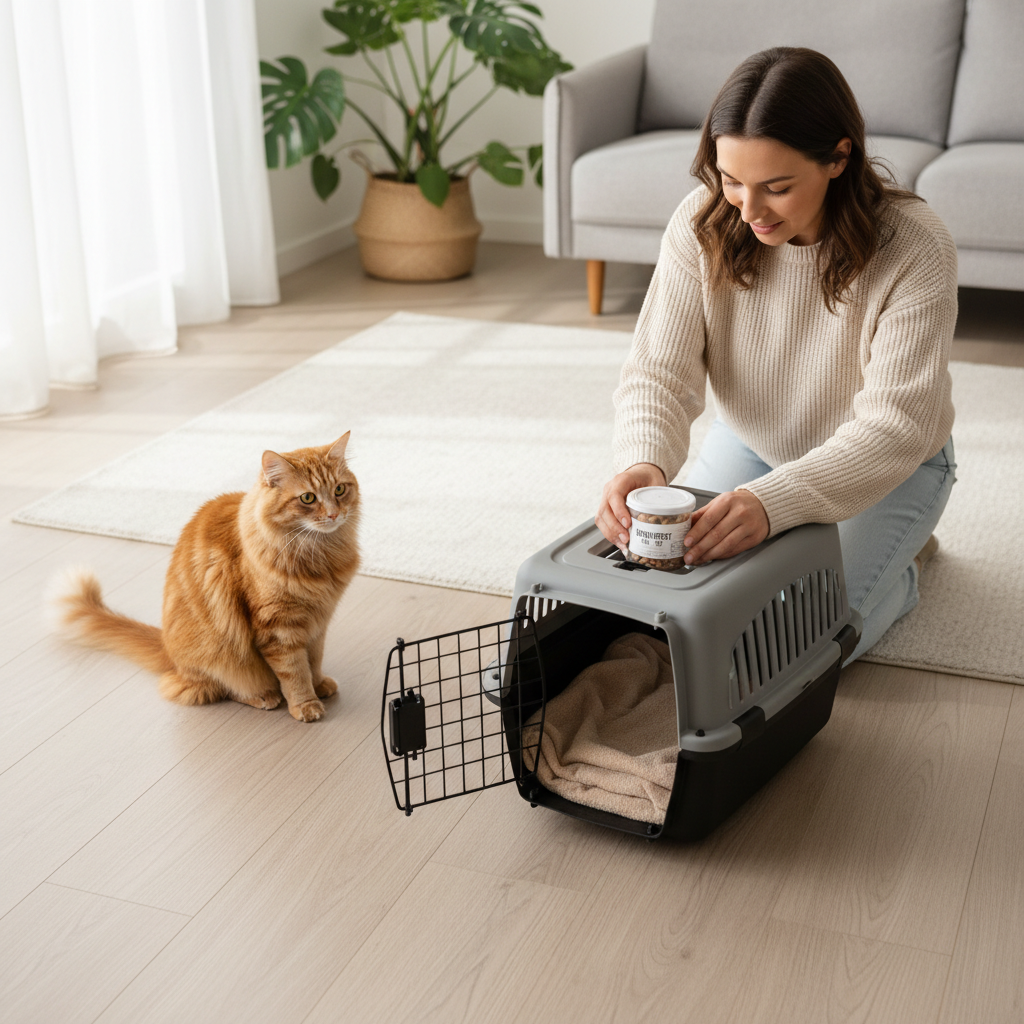
Day-of plan: from home to exam room without a meltdown
The day-of goal is not “perfectly calm,” it’s “calm enough to be handled safely,” which protects your cat and the staff.
At home, right before you leave
- Keep the house quiet, lower voices, reduce chasing and last-second carrier battles.
- Use a top-loading carrier if possible, many cats load easier from above.
- Cover the carrier with a light towel, leaving airflow, darkness often reduces visual triggers.
- Skip a big meal if your cat gets carsick, but don’t fast without vet guidance, especially for kittens or cats with medical conditions.
In the car
- Secure the carrier with a seat belt so it doesn’t slide.
- Keep music low, drive smoothly, avoid hard turns when you can.
- Don’t open the carrier door “to comfort them,” an escape in a parking lot is a nightmare.
In the lobby
- Ask to wait in your car or a quiet corner if dogs are nearby.
- Keep the carrier covered, and avoid letting strangers peer in.
- If your cat is escalating, tell the front desk early, staff can often room you faster.
Tools that help (and when they’re worth it)
Calming tools are useful when they match the problem. They’re less useful when the real issue is handling pain, a too-small carrier, or a long wait in a loud lobby.
| Tool | Best for | Practical notes |
|---|---|---|
| Pheromone spray/wipes | Carrier and car anxiety | Apply to bedding, not directly on the cat, give it time to dry and ventilate. |
| Carrier cover | Visual overstimulation | Light towel works, keep airflow, especially in warm weather. |
| High-value treats | Mild stress, cooperative cats | Some cats won’t eat when scared, don’t force it, but offer. |
| Non-slip mat/towel | Exam table fear | Gives traction, many cats relax when they stop sliding. |
| Pre-visit medication | High fear, aggression, repeated failed visits | Only with veterinarian guidance, plan a trial dose at home first if your vet recommends. |
- Key point: if your cat consistently panics, medication isn’t “giving up,” it can be part of humane care and safer exams.
What to do in the exam room (and what to say out loud)
This part surprises people, your own pacing and communication can lower stress. A rushed exam with repeated restraint often makes the next visit harder.
Helpful requests that clinics hear well
- “Can we keep the carrier covered until you’re ready?”
- “My cat does better if we go slow, can we do the exam on the towel from home?”
- “If she starts growling, can we pause and reset instead of pushing through?”
Small handling choices that matter
- Let the cat come out on their own if possible, tipping the carrier and removing the top can be easier than pulling.
- Minimize “scruffing,” many cats find it threatening, and many clinics now use towel wraps or gentle positioning instead.
- Ask whether some steps can happen in a different order, for example, listening to heart and lungs before a stressful temperature check.
According to the American Animal Hospital Association (AAHA), low-stress handling and thoughtful clinic routines can improve safety and the overall patient experience, so it’s reasonable to ask for those approaches when available.
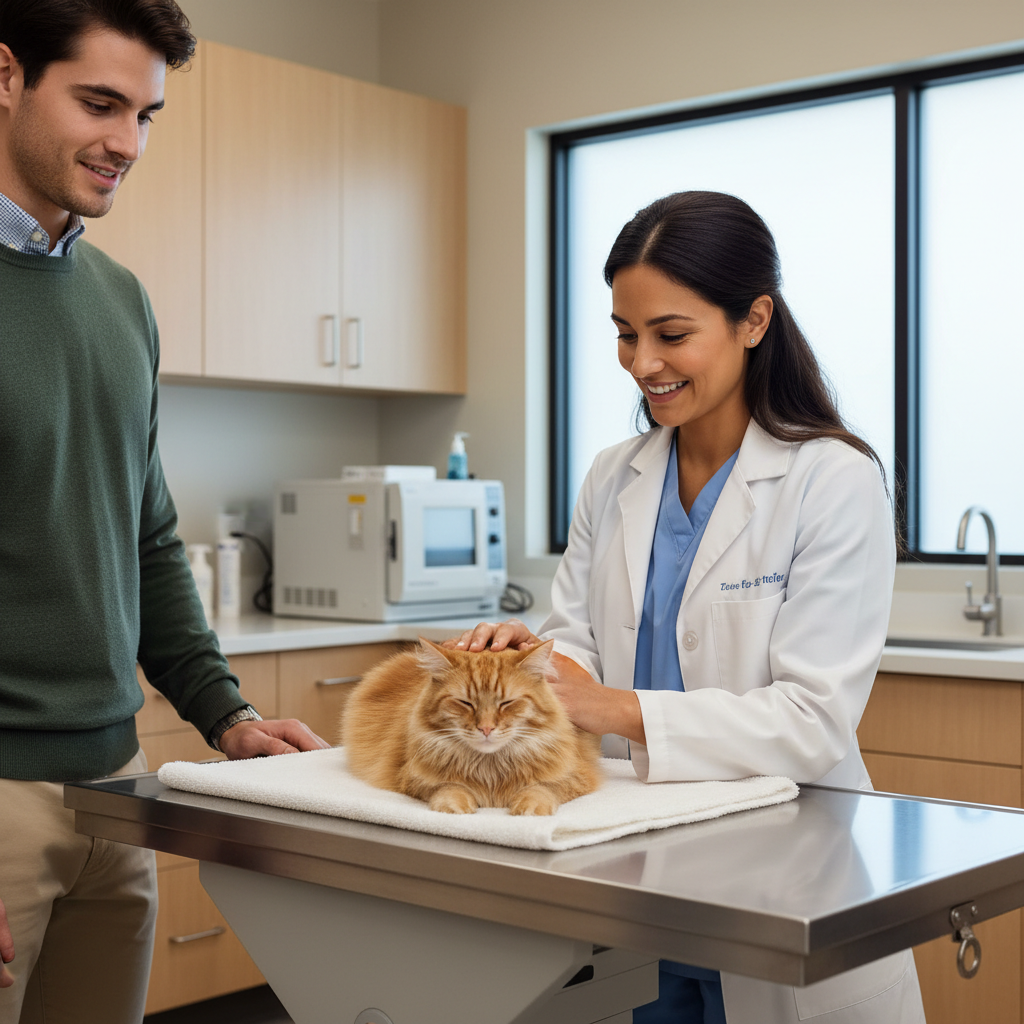
Step-by-step: calming strategies by scenario
If you’re searching how to calm a cat during vet visit, you probably want a clear plan, not just “use pheromones.” Pick the scenario that matches your cat, and try it for a few visits before judging it.
Scenario A: your cat won’t go in the carrier
- Switch to a larger carrier or one that opens on top, cramped carriers create instant resistance.
- Feed meals near the carrier for a week, then inside it.
- On appointment day, move calmly, close doors, and use a towel “burrito” only if necessary, then release as soon as the cat is secure.
Scenario B: the car ride triggers panic or vomiting
- Do 2–3 minute practice rides that end at home, no vet, no scary destination.
- Keep temperature cool, and avoid strong air fresheners.
- If vomiting is common, ask your veterinarian about anti-nausea options, don’t guess with over-the-counter meds.
Scenario C: clinic lobby causes the meltdown
- Request curbside check-in or a cat-only waiting area if available.
- Use a full carrier cover and hold the carrier close to your body rather than swinging at knee level.
- Consider the first appointment of the day, many cats cope better with fewer smells and less noise.
Scenario D: the exam itself leads to aggression
- Tell the staff what your cat usually reacts to, nails, temp, injections, being held.
- Ask if a “treatable” visit or happy visit is possible, where the goal is just calm entry, weight, and leaving.
- Discuss pre-visit meds if prior exams required heavy restraint, this is a safety issue, not a behavior contest.
Mistakes that backfire (even when you mean well)
- Only bringing the carrier out on vet day, it teaches your cat to fear the object itself.
- Spraying calming products directly on the cat, the scent can be overwhelming, use bedding or carrier surfaces instead.
- Forcing social reassurance, hugging, face-to-face talking, and prolonged petting can annoy a stressed cat, quiet presence often works better.
- Trying new sedatives without a plan, always follow veterinarian guidance, and ask about a trial run at home when appropriate.
- Waiting too long to speak up, if your cat is escalating, early intervention usually prevents a full blow-up.
When to ask for professional help or a different plan
Some cats need more than training and towels, and that’s not rare. If you’ve tried the basics and each visit gets worse, involve your veterinarian early.
- Your cat injures someone or nearly escapes the carrier.
- They stop eating for a day after the visit, or hide for long periods.
- Stress signs look intense, open-mouth breathing, collapse, extreme drooling, or disorientation, seek urgent veterinary advice.
- You suspect pain, arthritis, dental disease, or another condition that makes handling harder.
Many clinics can create a written “visit protocol” for your cat, preferred handling, quiet room, minimal wait, and medication plan if needed. That kind of consistency can be the difference between a manageable appointment and a disaster.
Conclusion: a calmer vet visit is usually built, not wished for
how to calm a cat during vet visit is less about one magic product and more about repetition, predictability, and teamwork with your clinic. Start with the carrier, reduce lobby stress, and give the staff the info they need before your cat hits their limit.
If you want a simple next step, leave the carrier out this week and run two short practice sessions, then call your clinic and ask about low-stress scheduling options. Small changes stack up fast when your cat finally believes the trip might be safe.