
How to trim dog nails safely usually comes down to two things people underestimate: seeing where the “quick” is, and keeping your dog calm enough that you can work in tiny, controlled steps.
If nail trims turn into a wrestling match at your house, you’re not alone, many dogs dislike having their feet handled, and many owners are afraid of cutting too short and causing pain or bleeding. The good news is you can make this routine feel boring instead of dramatic, but it takes a little setup.
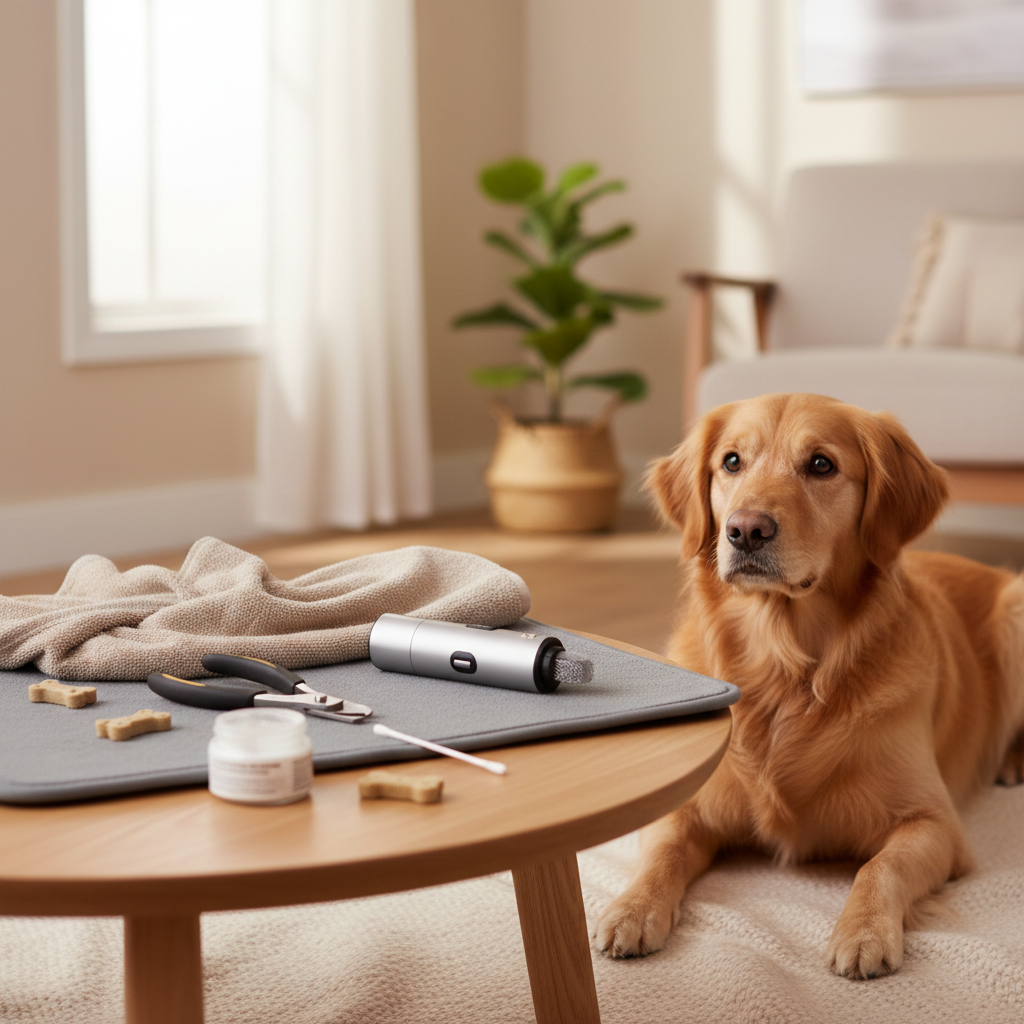
This guide focuses on practical home trimming: how to choose tools, how to read the nail, how to cut without hitting the quick, and what to do if your dog panics or you get a small bleed. If your dog has severe fear, aggression, or medical issues, it’s also okay to outsource this to a groomer or your vet.
Why dogs (and owners) get nervous about nail trims
Most “nail trim fear” isn’t mysterious, it’s a mix of sensitivity, past experience, and us moving too fast.
- Feet feel vulnerable, many dogs dislike paw handling even if they love belly rubs.
- One bad quick cut sticks, pain plus the surprise of restraint can create long-term resistance.
- Slippery floors and awkward angles make dogs tense, and tense dogs pull away at the worst moment.
- Human hesitation matters, if you’re nervous, you tend to squeeze slowly, reposition often, and your dog reads all of it.
According to the American Veterinary Medical Association (AVMA), keeping nails at an appropriate length supports normal movement and comfort, so this is more than a cosmetic chore.
Quick self-check: is this safe to do at home today?
Before you even grab clippers, decide what kind of session you’re having. A “two nails and done” session still counts as progress.
Green light (DIY is usually reasonable)
- Your dog allows brief paw handling with treats.
- Nails are visible, not severely overgrown or curling.
- You have a stable surface, good light, and the right tool size.
Yellow light (go slower, consider help)
- Your dog pulls paws away, but can recover and take treats.
- Dark nails where the quick is harder to see.
- Thick nails (common in large breeds) that crush under dull clippers.
Red light (pause and ask a pro)
- Snapping, growling, or panic-level thrashing when paws are touched.
- Swollen toes, limping, cracked nails, bleeding, or signs of infection.
- Medical concerns (clotting disorders, severe arthritis, extreme anxiety) where restraint could worsen things.
When in doubt, a groomer can show you where they cut on your dog’s specific nails, and your vet can advise on anxiety or pain concerns.
Tools that make trimming safer (and less stressful)
You can trim nails safely with either clippers or a grinder, but the “right” choice depends on your dog’s nail type and tolerance.
| Tool | Pros | Watch-outs |
|---|---|---|
| Scissor-style clippers | Good control, common sizes, quick trims | Dull blades can crush thick nails |
| Guillotine-style clippers | Can work well on small dogs | Less ideal for thick nails, blade alignment matters |
| Nail grinder (Dremel-style) | Gradual shaping, easier to avoid the quick | Noise/vibration bothers some dogs, heat if you hold too long |
| Styptic powder or pencil | Helps stop minor bleeding fast | Stings briefly, keep it for emergencies |
Key point: sharp tools reduce pressure and “cracking” sensations that startle dogs. If your clippers are old, replacing them often helps more than any training trick.
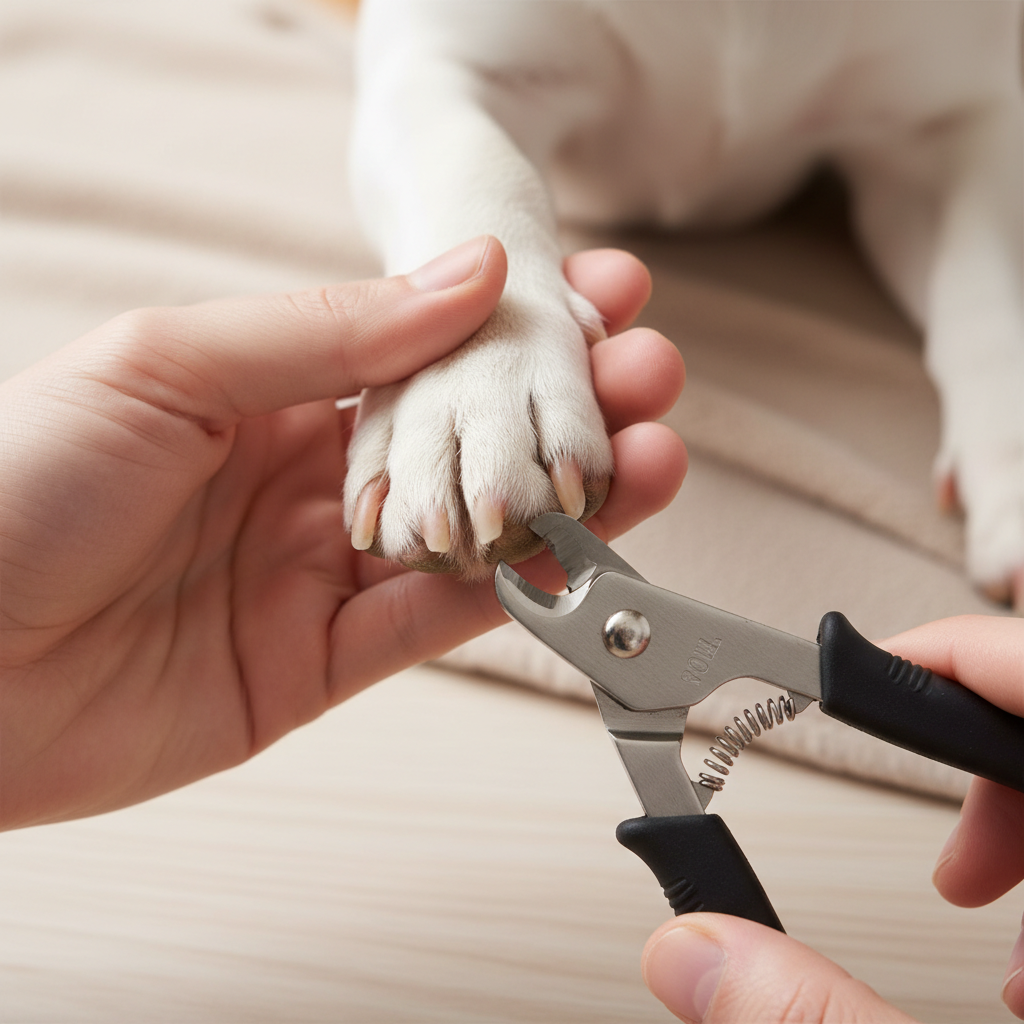
How to see (or infer) the quick so you don’t cut too short
The quick is the living tissue inside the nail that contains blood vessels and nerves. Hitting it hurts, and that’s why people fear trimming.
If your dog has light/clear nails
- Use bright light and look for the pink core.
- Trim small slices until you’re still a little ahead of that pink area.
If your dog has black/dark nails
- Plan to trim tiny amounts, think “shavings,” not “chunks.”
- After each cut, look at the cross-section: as you approach the quick, you may see a darker center that looks moist or softer.
- Stop before you reach that center, and switch to a grinder if you want to round edges.
According to the American Kennel Club (AKC), trimming small amounts frequently reduces the chance of cutting the quick and helps dogs learn that nail care isn’t a big event.
Step-by-step: how to trim dog nails safely at home
How to trim dog nails safely is more about a calm, repeatable routine than perfect technique on day one.
1) Set the environment so your dog can relax
- Choose a non-slip surface (yoga mat, bath mat, towel).
- Use bright light, a flashlight angled at the nail helps.
- Have high-value treats ready, small and fast to chew.
2) Pick a position that protects the paw
- Many dogs do best standing with you at their side, not on their back.
- Hold the paw gently but securely, avoid twisting toes.
- For wiggly dogs, a second person feeding treats can change everything.
3) Trim in small increments
- Cut a thin slice off the tip at a slight angle, following the natural curve.
- Pause, check the nail cross-section, reward, then decide if you do another slice.
- Stop early if your dog tenses, you can return later.
4) Don’t forget dewclaws
Dewclaws don’t always wear down naturally. They can curl and grow into the pad in some dogs, so check them every trim session.
5) Smooth sharp edges if needed
If you’re using clippers, a grinder or nail file can round the edge. Keep grinder contact brief so the nail doesn’t heat up.
What to do if you nick the quick (and how to recover calmly)
Even careful owners sometimes cut a little too close, especially with dark nails. The goal is to treat it like a small accident, not a crisis.
- Apply styptic powder with gentle pressure for 10–30 seconds.
- If you don’t have styptic, cornstarch can help in a pinch, but it’s not as reliable.
- Keep your dog on a clean surface for a few minutes, minor bleeding usually stops quickly.
- If bleeding won’t stop, or the nail looks torn, contact your vet.
The behavioral part matters too: give a treat, take a short break, and end the session if your dog seems stressed. Pushing through often teaches them that nail trims always “get worse.”

Fear-free progress: training tricks that actually work in real homes
If your dog is scared, technique alone won’t fix it. You’re building tolerance in short reps, and your win condition is “calm,” not “all nails finished.”
Low-drama desensitization (5 minutes, a few times a week)
- Touch paw, treat, release.
- Hold paw 2 seconds, treat, release.
- Tap nail with the clipper (no cutting), treat, release.
- Do one nail only, jackpot treat, stop.
Small changes that reduce fear fast
- Switch to a grinder if the clip “snap” scares your dog.
- Shorter sessions beat long sessions, even if it takes two days.
- Consent-based handling: if your dog pulls away, pause and reset instead of gripping harder.
According to the American Animal Hospital Association (AAHA), low-stress handling and positive reinforcement are widely recommended to reduce fear and anxiety during care routines.
Common mistakes that make nail trims harder than they need to be
- Cutting too much at once, this is the most common path to quicking.
- Trimming only when nails are very long, infrequent trims often keep the quick long.
- Bad lighting, if you can’t see well, you’re guessing.
- Holding the paw at an odd angle, it makes dogs resist and can stress joints.
- Waiting until your dog is already upset, if you see tension rising, end early and try again later.
Wrapping up: a realistic plan you can start this week
How to trim dog nails safely looks boring when it’s going well: good light, sharp tools, tiny cuts, plenty of treats, and stopping before anyone loses patience. If you want a simple reset, aim for two calm nails per day for a week, then build from there, most dogs improve when the routine feels predictable.
If you’re still stuck, book a groomer visit and ask them to show you exactly where they trim on your dog’s nails, that quick “demo” can save you months of second-guessing.
FAQ
How often should I trim my dog’s nails?
Many dogs do well with trims every 2–4 weeks, but it varies by breed, activity, and surfaces they walk on. If you hear nails clicking on hard floors, that’s often a sign it’s time.
Is a nail grinder safer than clippers?
A grinder often makes it easier to remove small amounts gradually, which can reduce quick cuts. Some dogs hate the noise or vibration though, so “safer” also depends on what keeps your dog calm.
How do I trim black dog nails without hitting the quick?
Use strong light and take very thin slices, checking the nail cross-section after each cut. When you see a darker, softer-looking center, stop and round with a grinder if needed.
What if my dog won’t let me touch their paws?
Start away from trimming: brief paw touches paired with treats, then longer holds over days. If your dog shows panic or tries to bite, it’s smart to work with a trainer or have a groomer handle trims while you do training separately.
What’s the best angle to cut dog nails?
In many cases you follow the nail’s natural curve and remove the tip at a slight angle rather than cutting straight across. When unsure, cutting less is the safer choice.
Can long nails cause problems for dogs?
They can, long nails may change how a dog’s foot meets the ground and can snag or split. If you notice limping, toe swelling, or a nail growing into the pad, contact a vet.
What should I do if my dog’s nail is cracked or split?
A cracked nail can be painful and may bleed or catch on surfaces. Keep the area clean, prevent licking if you can, and ask your vet for guidance, especially if the crack reaches the base or the nail looks loose.
If you’re trying to keep nail trims calm but keep running into fear, dark nails, or last-minute wiggles, it may help to use a simple at-home setup with a grinder, good lighting, and a treat plan, or to schedule a groomer “maintenance trim” while you build handling skills in short sessions.