
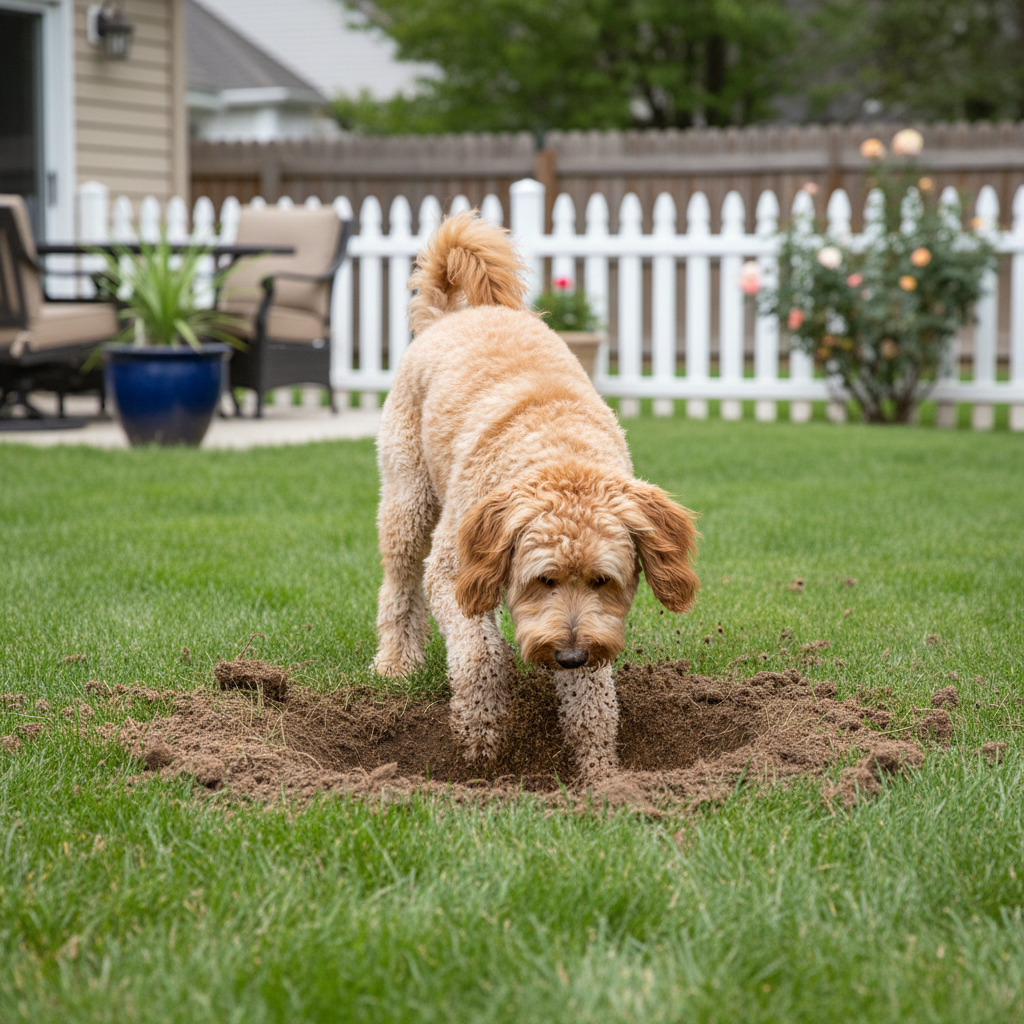
how to stop dog from digging starts with one honest question: what is your dog getting out of that hole that they can’t get anywhere else in your yard.
Most digging isn’t “bad behavior” in the dramatic sense, it’s usually boredom, comfort-seeking, prey drive, or a self-made cooling plan. If you only punish the hole, many dogs just move to a new spot, and you end up playing whack-a-mole with your lawn.
This guide walks you through the common causes, a quick self-check, and several fixes you can mix and match. You’ll also see when it’s time to bring in a trainer or your vet, because sometimes digging is a symptom, not the whole story.
Why dogs dig in the yard (and why it keeps happening)
Digging is a normal canine behavior, the tricky part is that “normal” can still be destructive. The fastest way to reduce it is matching your fix to your dog’s motivation.
- Boredom and excess energy: many dogs dig when the yard becomes the only entertainment option, especially high-drive breeds and young dogs.
- Comfort and temperature: in hot weather, a fresh hole can feel cooler. In cold weather, some dogs dig to create a den-like spot.
- Prey or scent chasing: moles, voles, insects, or even just an interesting smell can trigger repeated digging in one zone.
- Stress relief: separation anxiety, noise phobias, or changes at home sometimes show up as repetitive yard behaviors.
- Escape behavior: digging along fences often means your dog wants out, or wants something on the other side.
According to the American Veterinary Medical Association (AVMA), behavior issues can be linked to health, environment, and learning history, so it helps to rule out discomfort and then work on management plus training.
A quick self-check: what kind of digger do you have?
Before you buy anything, take two minutes to “profile” the digging. This usually tells you which fix will actually stick.
- Location: one favorite corner, or random holes everywhere?
- Timing: only when alone outside, or even when you’re watching?
- Weather: worse on hot days, after rain, or during windy nights?
- Pattern: shallow scrapes, or deep craters? Fence-line trenches?
- Body language: playful and bouncy, or frantic and repetitive?
If digging happens mostly when your dog is unsupervised, you’re dealing with a management problem as much as a training problem. If it happens while you’re present, your dog may be rehearsing a habit that’s now self-rewarding.
Choose the right solution: a practical “digging cause” table
When people ask how to stop dog from digging, they often want one trick. Reality is more like a menu, pick the few that match your dog.
| Likely cause | Clues you’ll notice | What usually helps |
|---|---|---|
| Heat-seeking | Digging in shade, belly-down in the hole | Shade, cooling mat, kiddie pool, supervised outdoor time |
| Boredom/energy | Random holes, zoomies, chewing too | More exercise, food puzzles, structured play, training sessions |
| Prey drive | Focused digging, sniffing, “pouncing” | Pest control, block access, redirect to scent games |
| Escape attempts | Fence-line trenches, targeting gates | Block fence base, improve supervision, address triggers |
| Anxiety/stress | Repetitive digging, pacing, whining | Behavior plan, enrichment, possibly vet support |
Training that works: teach “leave it” and reward the right spot
If your dog has practiced digging for weeks, the habit can be rewarding all by itself. Training is about making a better option easier, not trying to “win” a staring contest with a terrier.
Step 1: Interrupt early, then redirect
Catch the first few paw-scrapes if you can. Calmly call your dog away, then cue a simple behavior they know, like sit or touch, and reward. The goal is to break the digging loop before it escalates.
- Keep treats near the door so you’re not sprinting to the kitchen.
- Reward fast when your dog disengages from the spot.
- If you’re yelling from across the yard, you’re usually too late.
Step 2: Create a “yes” digging zone (for dogs who love to dig)
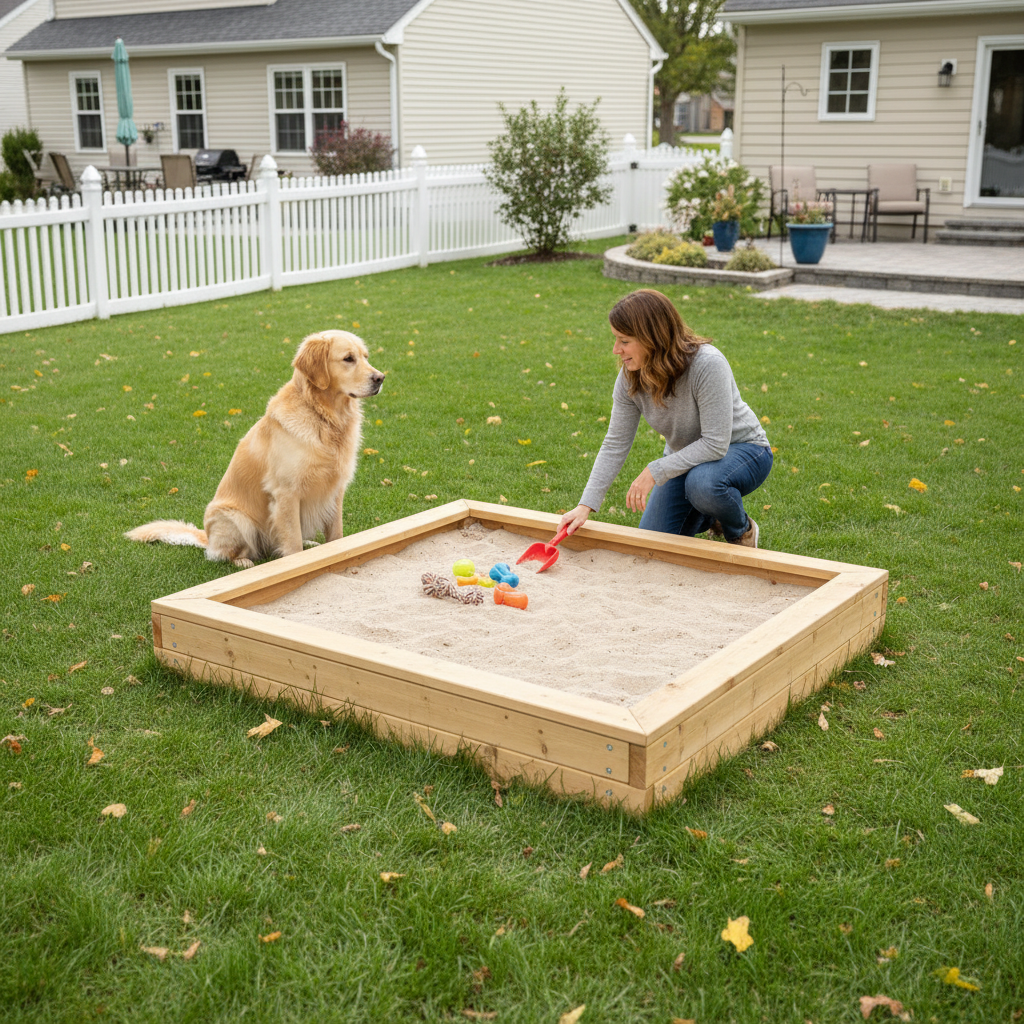
Some dogs won’t stop digging completely, so you redirect it. A sandbox or a small corner with loose soil can save your lawn and keep your dog satisfied.
- Pick a spot away from fences and tree roots.
- Bury approved items occasionally, a toy or a chew, then praise when your dog digs there.
- If your dog digs elsewhere, calmly guide them to the dig zone and reward when they engage.
This sounds almost too permissive, but for many dogs it’s the cleanest path to fewer holes overall.
Step 3: Increase mental work, not just physical exercise
A tired dog is helpful, but a mentally satisfied dog often stops hunting for their own projects. Try short training bursts and food enrichment.
- Sniff walks where your dog sets the pace for part of the route
- Scatter feeding in the grass instead of a bowl
- Frozen food toys when your dog goes outside
- 5-minute cues like stay, place, recall games
Yard management: make digging inconvenient (without being unsafe)
Management is the part people skip, then wonder why training “doesn’t work.” If your dog can dig unsupervised for 45 minutes, the yard is paying them in entertainment.
- Supervision and timing: until the habit fades, keep outdoor time structured, short potty breaks plus planned play works better than free-roam.
- Block repeat zones: use temporary garden fencing, pavers, or landscape edging in the favorite digging spot.
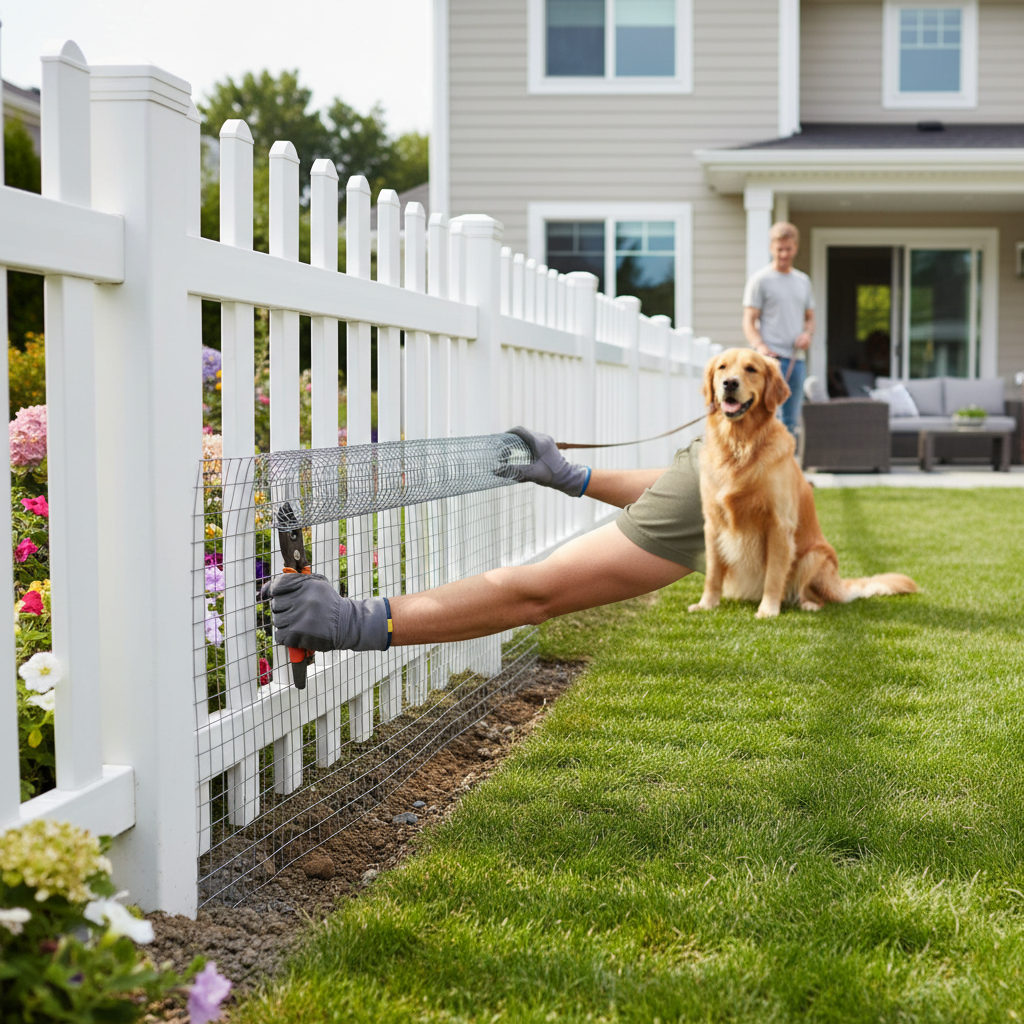
- Fix fence-line trenches: attach welded wire or hardware cloth along the bottom, then extend it inward in an L-shape and cover with soil or mulch. This can reduce escape digging.
- Comfort upgrades: shade, fresh water, and a designated resting area reduce “cooling holes” in summer.
Skip harsh deterrents. Many DIY repellents can irritate noses or paws, and some substances are outright unsafe for pets. If you’re unsure, ask your veterinarian or a qualified trainer before applying anything to the ground.
Targeted fixes for the most common scenarios
Here are the patterns I see most often, plus what tends to work in real yards.
Scenario A: digging only when alone outside
- Reduce unsupervised yard time for a few weeks, use a leash or long line for potty breaks.
- Give a “job” before you open the door, a short training rep or a food toy placed outside.
- Make the first 10 minutes outside interactive, tug, fetch, or a sniff game, then end the session.
Scenario B: digging in one shaded spot every hot day
- Add shade cloth, a canopy, or move outdoor time to cooler hours.
- Offer a cooling alternative, like a damp towel on a shaded patio, or a kiddie pool if your dog likes water.
- Block the spot temporarily while building the new habit.
Scenario C: digging with intense sniffing and “pouncing”
- Inspect for pests. You may need a humane pest professional, especially if you suspect moles or voles.
- Redirect prey drive into scent work games, hide treats in boxes or around the yard and let your dog search.
- Manage access to the trigger zone until the pest issue improves.
Scenario D: fence-line digging and escape behavior
- Improve the environment inside the yard, more interaction, enrichment, and visual barriers if the street triggers your dog.
- Reinforce the fence base with wire mesh and add a dig zone elsewhere.
- If your dog bolts the moment they get out, this can become a serious safety risk, treat it as urgent.
Common mistakes that make digging worse
Some approaches backfire, not because owners don’t care, but because the dog’s “reward” stays in place.
- Punishing after the fact: your dog won’t connect your reaction to a hole you found later, they just learn humans are unpredictable near holes.
- More yard time as a solution: for many dogs, the yard is not enrichment, it’s an empty room with grass.
- Only adding exercise: helpful, but if prey drive or heat is the trigger, more running won’t solve the root.
- Ignoring small scrapes: shallow pawing often becomes deeper digging once the habit forms.
- Unsafe deterrents: anything caustic, sharp, or irritating can lead to injuries and anxiety.
According to the American Society for the Prevention of Cruelty to Animals (ASPCA), reward-based training supports behavior change while avoiding fear and stress, and digging problems often respond better to that approach than to punishment.
When to call a professional (trainer, behaviorist, or vet)
Sometimes digging is part of a bigger behavior picture. Getting help early can save time and keep your dog safe.
- Your dog digs frantically, pants, drools, or can’t settle, especially when left alone, anxiety may be involved.
- Digging pairs with self-injury, broken nails, raw paws, or obsessive pacing.
- Your dog repeatedly tries to escape the yard, traffic risk is real.
- You suspect pain, skin irritation, or a medical issue that changes your dog’s comfort outside.
According to the American College of Veterinary Behaviorists (ACVB), persistent behavior problems can benefit from a coordinated plan that may include environmental changes, training, and medical evaluation.
Key takeaways (so you can act today)
- Match the fix to the reason, boredom, heat, prey, stress, and escape behavior look similar but need different answers.
- Stop rehearsals with supervision and blocking favorite zones while you train a better habit.
- Give a legal outlet like a dig pit if your dog genuinely loves digging.
- Prioritize safety, avoid harsh yard chemicals and treat fence-line digging as a serious risk.
Conclusion: fewer holes comes from better options, not louder corrections
If you’ve been wondering how to stop dog from digging, the most reliable path is combining training with smart yard management, then adding the missing need your dog is trying to meet. Pick one cause that fits your dog, apply two or three matching changes, and give it a couple weeks of consistent reps.
Your next move can be simple: block the favorite digging spot today, then schedule one daily enrichment activity that makes your yard less “boring” than the dirt.