
puppy teething ring frozen can be a simple way to take the edge off sore gums, but it only works well when the ring is the right material, frozen the right way, and used with a little common sense about safety.
If you’re watching your puppy chew furniture, nip hands, and whine at night, you’re not overreacting. Teething is a real discomfort phase, and many puppies look for pressure and coolness to cope.
This guide breaks down what’s actually happening in your puppy’s mouth, when a frozen ring helps, when it backfires, and how to build a quick routine that keeps chewing focused on the toy instead of your home.
What’s really going on during puppy teething (and why cold helps)
Puppies typically start losing baby teeth and erupting adult teeth over several months, and during that window you’ll often see increased chewing, drooling, mild gum irritation, and a shorter fuse. Some days look normal, then suddenly your puppy becomes a tiny beaver again.
Cold can help because it may reduce local gum inflammation and temporarily dull the sensation, similar to how a cold compress feels on a sore spot. Pressure from chewing also matters, a teething toy gives a safe place to push against tender gums.
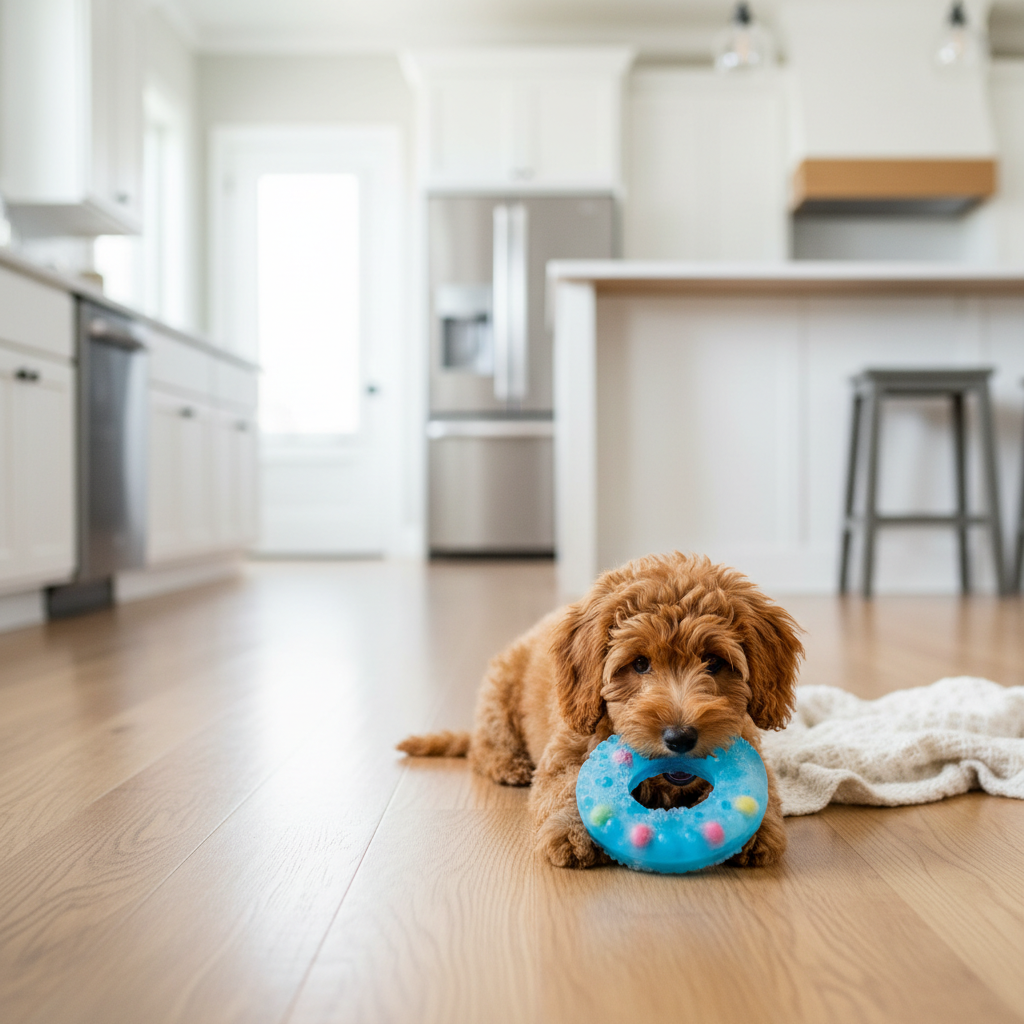
That said, not every chew toy should be frozen, and not every puppy should chew a very cold object for a long time. If your puppy seems frustrated, won’t engage, or tries to bite harder and harder, the toy may be too hard, too cold, or the wrong shape for their mouth.
Why a frozen teething ring sometimes doesn’t work (common real-life reasons)
When people say a frozen ring “does nothing,” it’s usually one of these situations, not because the idea is bad.
- It’s frozen solid like a rock, which can feel uncomfortable and can encourage aggressive biting.
- The ring is too small or too large, so your puppy can’t get a satisfying grip.
- Material mismatch, some plastics get very rigid when cold; some rubbers are better at staying slightly forgiving.
- Your puppy wants a different texture, many puppies rotate preferences: soft cloth one day, bumpy rubber the next.
- Overstimulation, teething discomfort plus overtired puppy often equals mouthy chaos, even with good toys.
- There’s another issue, like a cracked tooth, retained baby tooth, or gum injury, which needs a veterinarian’s input.
According to American Veterinary Medical Association (AVMA), puppies explore the world with their mouths and chewing is normal, but owners should choose safe chew items and monitor use to prevent injury or ingestion. That monitoring part matters more than most people want it to.
Quick self-check: is a frozen ring a fit for your puppy today?
If you want a fast way to decide whether to reach for the freezer or try a different option, use this checklist.
- Your puppy chews steadily for 30–90 seconds on rubber toys without giving up immediately
- No history of aggressively shredding toys and swallowing pieces
- Gums look a bit pink, not bleeding heavily, not foul-smelling
- You can supervise for at least 10–15 minutes
- Your puppy isn’t coughing, gagging, or trying to wedge the ring deep in the back of the mouth
If two or more items feel off, you can still work on teething relief, but you may want a different chew texture, shorter sessions, or a quick call to your vet if anything looks painful beyond “normal teething.”
How to freeze a teething ring safely (practical steps that actually help)
The goal is “cool and soothing,” not “hard and numbing.” A few small tweaks usually make a frozen chew more effective.
Step-by-step method
- Pick the right toy for freezing: look for products that explicitly allow freezing, and avoid toys that become brittle when cold.
- Chill first, then freeze: refrigerate 30–60 minutes, then freeze 20–40 minutes, many puppies do better with semi-frozen.
- Use short sessions: 5–15 minutes, then rotate to a room-temp chew.
- Wipe condensation: reduces slippery gripping and drops on floors.
- Inspect after each use: toss if cracks, sharp edges, sticky breakdown, or pieces missing.
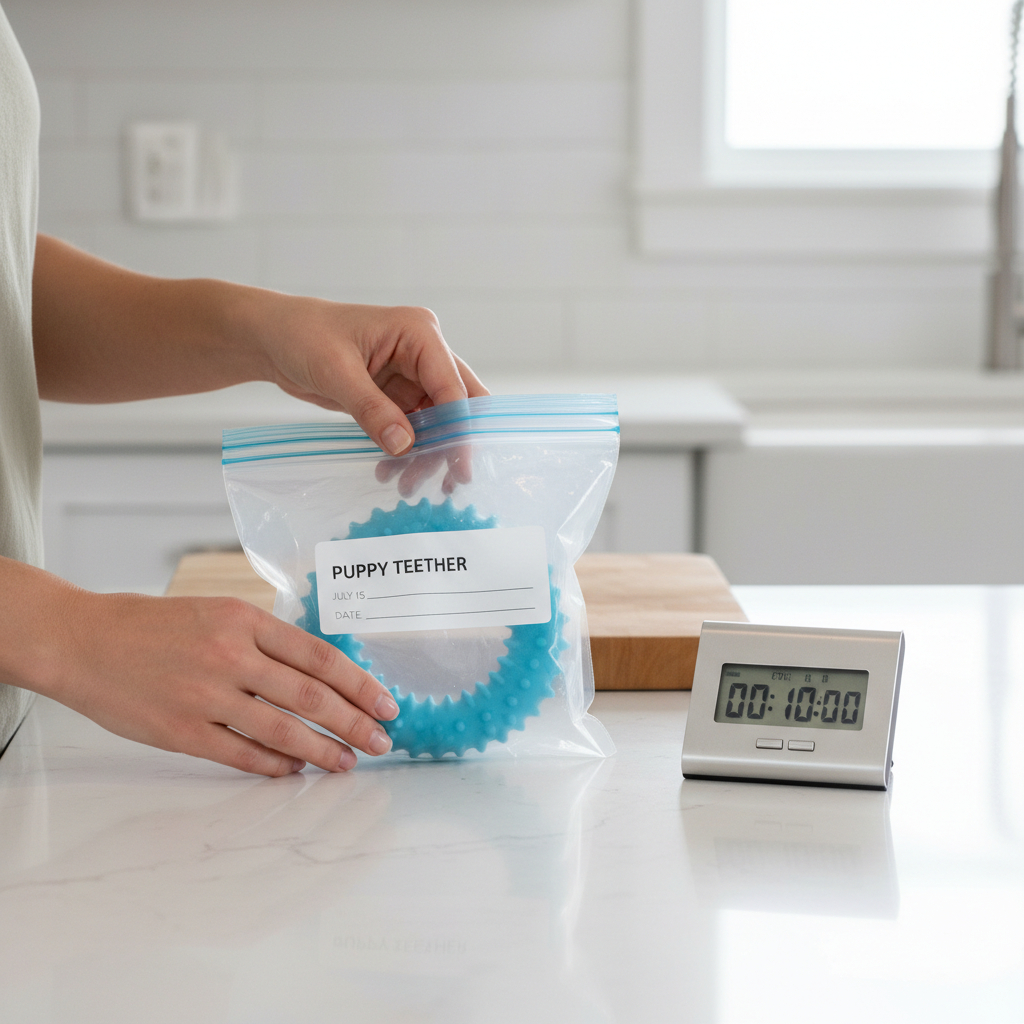
If you’re using a ring designed to hold water or gel, follow its brand directions closely. With cold packs, the failure mode is usually cracking or leaking, and that turns a soothing tool into a mess or a safety concern.
Choosing the right frozen teething ring: materials, size, and shape
Most owners focus on “freezable” and forget the rest. In practice, size and texture often decide whether your puppy sticks with it.
What to look for
- Moderate flexibility: a little give is usually easier on new teeth.
- Ridges or nubs: helps massage gums, especially around molar areas.
- Wide ring profile: easier to grip without slipping deep into the mouth.
- One-piece construction: fewer seams, fewer chew points that tear.
- Appropriate chew rating: match to your puppy’s intensity, not their age alone.
Comparison table: common options for cooling teething relief
| Option | What it’s good for | Watch-outs | Best use |
|---|---|---|---|
| Freezable rubber ring | Gum massage + grip | Cracks, hard-freezing | Short supervised sessions |
| Chilled (not frozen) ring | Gentler cold, less hardness | Wears off faster | More frequent rotations |
| Frozen damp washcloth (tied) | Soft texture for sensitive pups | Fraying, ingestion risk | Hold one end, supervise closely |
| Vet-approved dental chew (non-frozen) | Longer engagement | Calories, choking if too small | After teething peak, with guidance |
A simple teething routine that reduces biting (without overthinking it)
The frozen ring works best as part of a rotation, not as a single magic toy. Many puppies calm down when you manage their mouth needs the way you manage naps: predictably.
- Morning: quick potty, then 5–10 minutes with a chilled chew to start calm.
- Midday: training mini-session, then a frozen ring while you prep food or answer emails.
- Evening witching hour: swap between a frozen option and a room-temp chew every 10–15 minutes.
- After play: offer a chew before your puppy gets mouthy, not after they’re already biting hands.
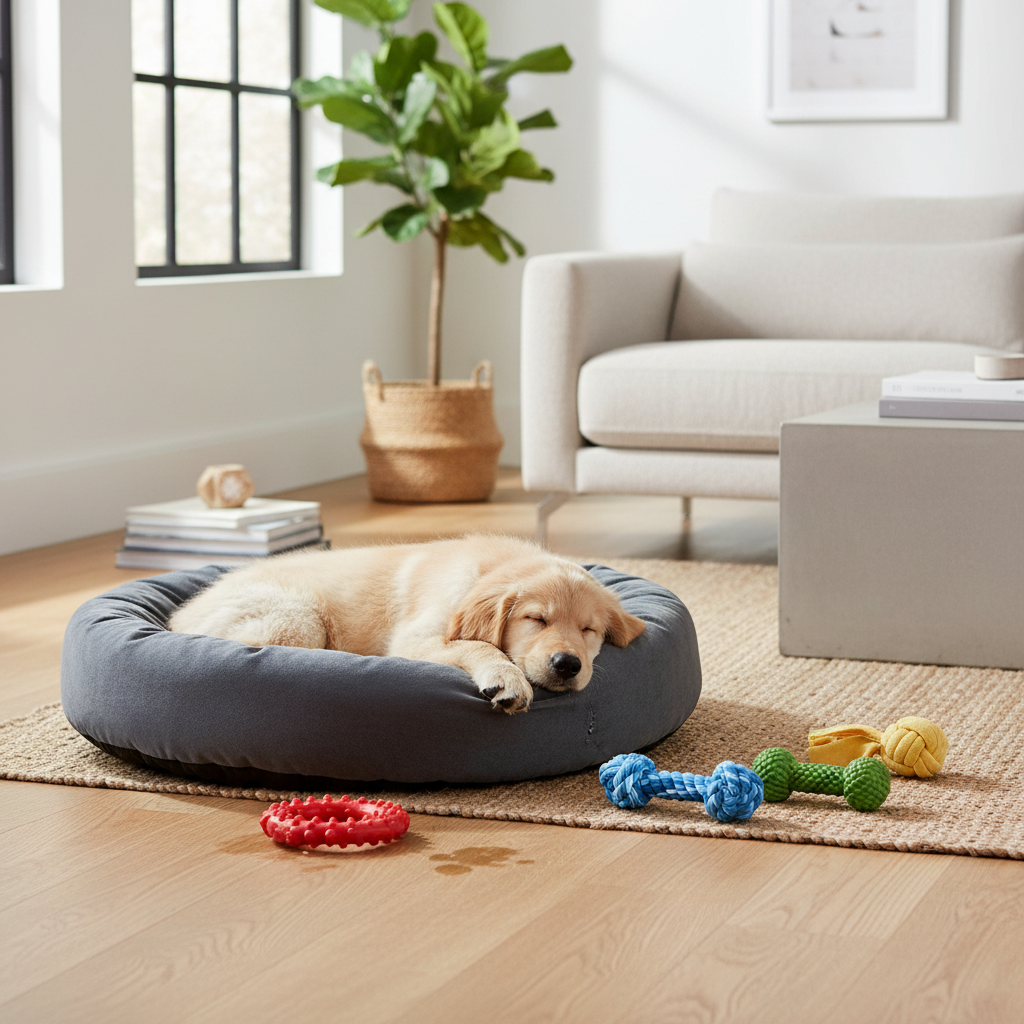
If your puppy bites you during play, the routine still matters, but pairing it with bite inhibition work helps. According to American Kennel Club (AKC), puppies bite as a normal behavior and training focuses on redirecting and teaching gentle mouth behavior, rather than punishment. The frozen toy becomes your “redirect tool” you can repeat all day.
Safety notes and common mistakes (the stuff that prevents ER trips)
You can do everything “right” and still run into edge cases, so treat this like a supervised activity, not a set-it-and-forget-it solution.
- Avoid rock-hard frozen items if your puppy bites intensely, very hard chews can contribute to tooth fractures in some dogs.
- Skip anything that splinters or shatters, cold can change material behavior.
- Don’t use a ring with cracks, small shards or chunks are the main risk.
- Keep sessions short, extended cold exposure can irritate some gums.
- Match the ring to the mouth, if it’s small enough to get lodged, it’s too small.
Also, many owners accidentally reward biting by offering the ring only after the puppy chomps hands. If you can catch the moment right before the land shark phase, you’ll see better results.
When to stop DIY and talk to a veterinarian
Teething is normal, but pain that looks excessive should not be waved off as “just a puppy thing.” If you’re unsure, it’s reasonable to call your clinic and describe what you’re seeing.
- Bleeding that keeps coming back, or gums that look very swollen
- Refusing food, dropping kibble, or crying when chewing
- Bad breath that seems strong for a young puppy
- A tooth that looks broken, dark, or out of place
- Repeated vomiting, gagging, or suspected swallowed toy pieces
According to American Animal Hospital Association (AAHA), preventive veterinary visits in puppyhood help catch dental and developmental issues early. Many problems are easier to address when you spot them quickly, and it saves you weeks of guessing.
Key takeaways (so you can act today)
- Cool beats rock-solid, many puppies prefer semi-frozen or chilled rings.
- Supervision is part of the product, check for cracks and missing pieces every time.
- Rotation works, use cold chew time to prevent the biting spiral, not just respond to it.
- Escalate when symptoms look off, persistent pain, bleeding, or chewing refusal merits a vet call.
Conclusion: a frozen ring is helpful, but the plan matters more
A puppy teething ring frozen can absolutely make teething days easier, especially when you keep it semi-frozen, choose a forgiving material, and use it in short supervised bursts. If you try it once and it flops, don’t write the whole idea off, change the freeze time, switch textures, and make it part of a predictable chew routine.
If you want one action step, set up a small “teething rotation” in your freezer and fridge so you can redirect quickly. That one habit tends to reduce hand biting more than any single toy.
FAQ
How long should I freeze a puppy teething ring?
Many puppies do well with 20–40 minutes in the freezer after the ring has chilled, because it stays cool without becoming uncomfortably hard. If it freezes solid quickly, shorten the time and test the flexibility with your hands.
Can a frozen teething ring damage my puppy’s teeth?
It can in some situations, especially if the ring becomes very hard and your puppy bites with a lot of force. If you notice intense crunching, avoidance, or sensitivity after chewing, switch to chilled or softer options and ask your vet for guidance.
Is it better to use the fridge instead of the freezer?
For sensitive puppies, the fridge often works surprisingly well. You give cooling without the extra hardness, and you can offer it more frequently because it warms up faster.
What if my puppy only wants to chew furniture even with a frozen ring?
That usually means the furniture offers a more satisfying texture or your puppy’s routine needs more structure. Try offering the ring before the chewing starts, limit access with gates or pens for a couple weeks, and rotate in a different chew texture so the ring isn’t the only option.
Can I freeze a ring with water or gel inside?
Only if the product label says it’s designed for freezing. If it leaks, cracks, or feels sticky afterward, discontinue use and replace it, since ingested filling material is not something you want to gamble on.
How many times a day can I give a frozen teething ring?
In many homes, 2–4 short sessions works well, especially around high-energy times. If your puppy seems irritated by cold or starts chewing more frantically, cut back and use chilled or room-temp chews instead.
My puppy chews off pieces of rubber toys, what should I do?
Stop using that toy and switch to sturdier, one-piece designs sized appropriately for your puppy. If you suspect swallowed pieces or see vomiting, lethargy, or appetite changes, contact a veterinarian promptly.
Want a lower-stress setup?
If you’re trying to keep teething calm while juggling work or kids, it may help to build a small chew system: two safe rings in rotation, one chilled option, and one non-frozen chew for downtime. If you need a more hands-off plan, a vet clinic or qualified trainer can help you match chew types and routines to your puppy’s bite intensity and daily schedule.