
parrot food pellets organic options can be a smart upgrade, but only if you know what “organic” actually means on a label and how pellets fit into a real bird diet.
If you’ve ever stood in a pet store aisle (or scrolled online) thinking “these all look the same,” you’re not alone. Ingredient lists can be long, marketing words can be louder than nutrition, and parrots themselves can be… opinionated eaters.
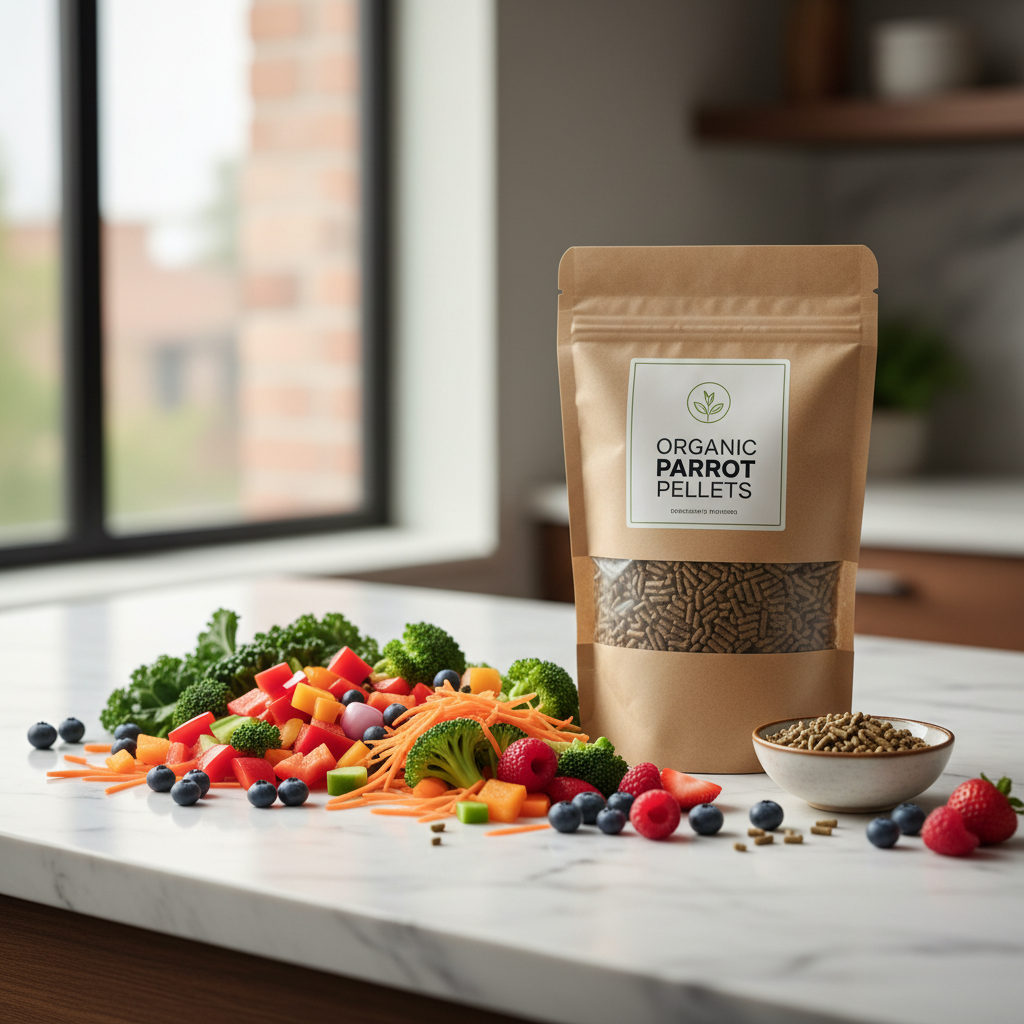
This guide breaks down what to prioritize when choosing organic pellets, how to tell whether your bird is thriving, and how to transition without turning mealtime into a standoff.
What “Organic” Can (and Can’t) Tell You About Parrot Pellets
“Organic” usually signals how ingredients were grown and processed, not automatically how ideal the nutrient profile is for your specific parrot. In other words, it’s a helpful filter, not the finish line.
According to USDA, “organic” labeling in the U.S. is regulated and generally relates to agricultural practices and restricted synthetic inputs. That’s meaningful, but it still doesn’t guarantee the pellet is low-sugar, appropriately fortified, or a good match for your species and life stage.
- Useful: fewer certain pesticide residues are a common motivation for choosing organic ingredients.
- Not guaranteed: better taste, better acceptance, or better macronutrient balance.
- Still matters: quality control, freshness, storage, and how you feed it day to day.
Why Many Birds Do Better on Pellets (and Where People Get Stuck)
Pellets can reduce “selective eating,” that classic problem where a parrot picks the fattiest seeds and ignores the rest. A complete pellet is designed to be nutritionally consistent from bite to bite.
The catch is that “pellets” is a category, not a guarantee. Some formulas are more like brightly colored, sweetened cereal than a staple food, and some parrots refuse pellets at first because they’re used to seeds or table snacks.
According to Association of Avian Veterinarians (AAV), many companion parrots benefit from diets that emphasize formulated diets (pellets) plus a variety of fresh foods, with species-specific adjustments.
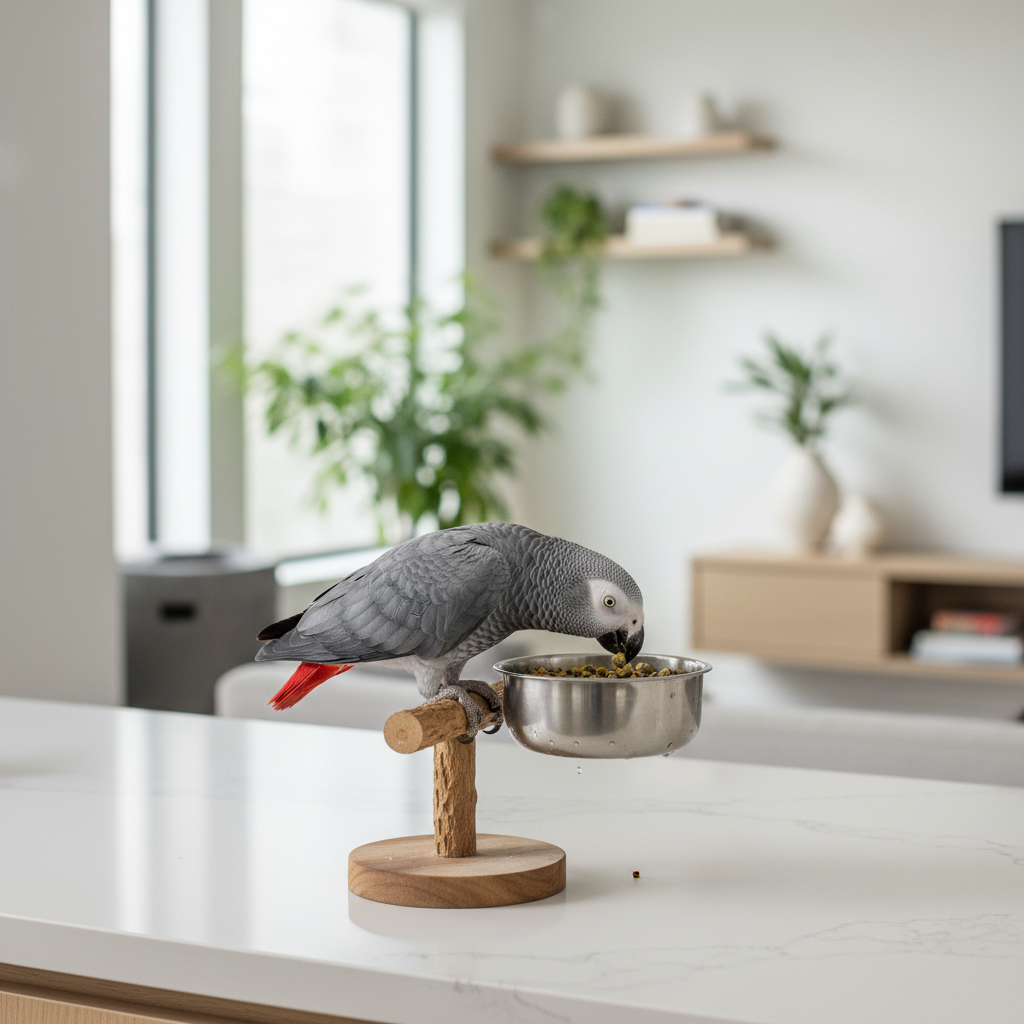
Where people get stuck is usually one of these:
- The bird won’t touch pellets, or only eats them when “starving.”
- Poop changes and the owner panics, even when changes can be normal during a diet shift.
- Weight drifts up or down because portions and treats aren’t accounted for.
Quick Self-Check: Is Your Current Diet Working?
Before switching brands, it helps to answer one question: is your bird doing well on what you’re feeding now, or are you trying to fix a real problem with a label change?
Green flags
- Stable weight trend (not just one weigh-in), with a consistent weekly pattern.
- Good feather condition and normal molt patterns for your bird.
- Normal activity and interest in food, without constant begging or lethargy.
Yellow flags (worth adjusting)
- Seed-heavy bowl with lots of leftovers that look “healthy” but never get eaten.
- Frequent fruit snacks or “people food” that quietly becomes the main calorie source.
- Pellets are offered, but the bird mainly nibbles and waits for treats.
Red flags (consider veterinary guidance)
- Fast weight loss or gain, repeated vomiting, or persistent diarrhea.
- Feather damage that looks behavioral or medical, not just normal molt.
- Breathing changes, weakness, or dramatic appetite shifts.
If you’re unsure, an avian veterinarian can help interpret symptoms and run basic checks, especially because nutrition issues and medical issues can look similar at home.
How to Choose Better Organic Pellets: Label Reading That Actually Helps
When shopping for parrot food pellets organic formulas, focus on the boring details. Marketing claims are easy, ingredient and nutrient info is where the truth usually sits.
What to prioritize
- Adequate nutrition statement: look for a “complete” or “formulated” diet positioning, not just a treat.
- Clear ingredients: identifiable grains/legumes/vegetables are easier to evaluate than vague “by-products.”
- Reasonable added sugars: sweeteners can increase “addiction” behavior in some birds and complicate weight control.
- Appropriate pellet size: too large leads to waste; too small can reduce engagement for larger parrots.
Watch-outs that commonly cause issues
- Heavy dyes or strong fragrances: not automatically harmful, but they can be a clue the product leans on palatability tricks.
- High-fat positioning: sometimes appropriate for specific birds, but many pet parrots are already calorie-rich.
- “All fruit” vibe: fruit-forward pellets can be very tempting, but may not be ideal as the daily base.
Comparison Table: Common Pellet Types and Who They Fit
This table won’t replace a vet’s advice, but it’s a practical way to match a pellet style to your real-life constraints and your bird’s habits.
| Pellet type | Why people choose it | Potential downside | Best fit |
|---|---|---|---|
| Organic, lightly processed pellet | Ingredient transparency, organic sourcing | Can be pricier; some birds resist the taste | Owners prioritizing organic inputs and consistent feeding |
| Standard formulated pellet (non-organic) | Wide availability, often strong acceptance | May include non-organic ingredients or colors | New pellet users, multi-bird homes, tighter budgets |
| High-palatable, colorful pellet | Transition tool for picky eaters | Can encourage preference patterns; monitor weight | Short-term bridge when a bird refuses plainer options |
| Species/life-stage targeted formulas | Tailored nutrient approach | Easy to over-rely on “targeted” marketing | Breeding birds, seniors, or vet-guided nutrition plans |
Practical Transition Plan: Get Your Parrot Eating Pellets Without a Fight
Switching to parrot food pellets organic usually works better as a behavior project than a nutrition lecture. Your bird cares about routine, texture, and what gets rewarded.
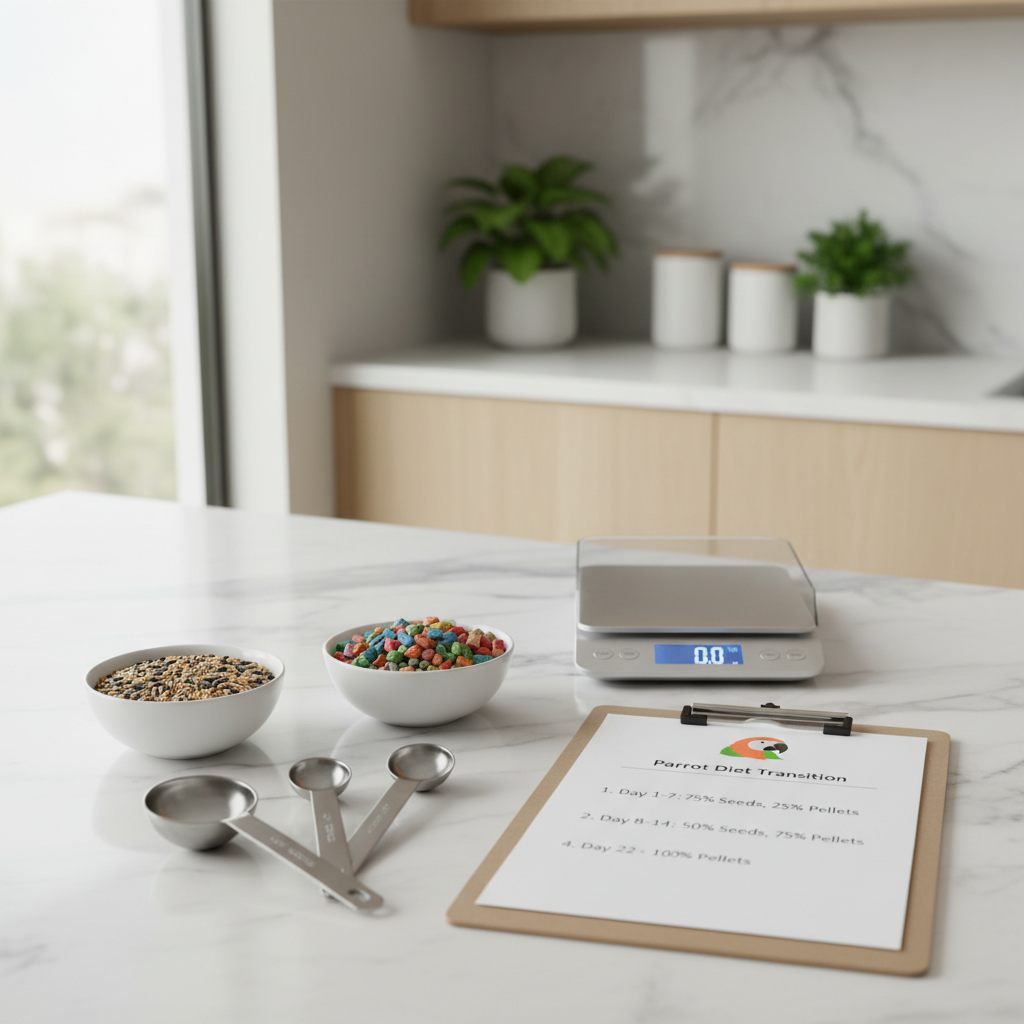
Step-by-step (a common, realistic approach)
- Start with observation: weigh your bird on a gram scale if possible, then track weekly trends.
- Mix gradually: many households do better with a slow blend change over a few weeks, not a sudden swap.
- Time it: offer pellets when your bird is naturally more willing to try food, often mornings.
- Use “social proof”: some parrots try new foods when you pretend to eat it first, or when it’s presented as a special item.
- Manage treats: treats can stay, but keep them small and earned, otherwise pellets never become relevant.
If your parrot refuses pellets
- Try a different pellet shape or size before changing the entire diet plan.
- Offer pellets in a separate dish so the bird can investigate without seed “comfort food” sitting on top.
- Consider lightly moistening pellets or pairing with vegetables, but remove damp food promptly to reduce spoilage risk.
Big caution: avoid “tough love” tactics that significantly restrict food without professional guidance. Small birds can drop weight quickly, and the risk is not worth proving a point.
Common Mistakes (Even Well-Meaning Owners Make)
Most feeding problems aren’t about bad intentions, they’re about small habits that add up.
- Assuming organic equals complete: a clean ingredient list still needs a balanced nutrient profile.
- Over-feeding pellets: “healthy” food can still be too many calories, especially for indoor birds with low activity.
- Too much fruit: fruit can be a nice rotation item, but many parrots treat it like candy.
- Ignoring water and hygiene: fresh water, clean bowls, and proper storage matter as much as brand choice.
- Not tracking outcomes: without weight and behavior notes, it’s easy to misread what’s working.
Key Takeaways and a Simple Next Step
Choosing parrot food pellets organic is most helpful when you treat it as one piece of a broader feeding routine: a reliable base diet, fresh foods for variety, and treat discipline that keeps your bird interested in the right things.
If you want one practical action today, pick one pellet option, read the label like a skeptic, then plan a slow transition while tracking weight weekly. If anything feels “off” beyond normal adjustment, it’s reasonable to consult an avian veterinarian for individualized guidance.
FAQ
Are organic parrot pellets worth it?
They can be, especially if you care about organic sourcing and you find a formula your bird consistently eats. The bigger win is still overall balance and acceptance, not the word “organic” by itself.
How much of my parrot’s diet should be pellets?
Many companion parrots do well with pellets as a major portion of the diet plus fresh foods, but the right ratio varies by species, age, and health history. An avian vet can help if you’re managing weight or medical conditions.
Why did my bird’s droppings change after switching pellets?
Color and texture can shift with new foods, and that can be normal during a transition. If you see persistent diarrhea, blood, vomiting, or your bird seems unwell, stop experimenting and get professional advice.
What ingredients should I avoid in parrot pellets?
It depends on the full formula, but many owners try to minimize heavy added sugars and overly “candy-like” additives. If you’re unsure, compare a few labels and look for clear, functional ingredients.
My parrot only eats seeds. What’s the safest way to change?
Go slowly, monitor weight, and don’t rely on food restriction as a main strategy. Mixing, offering pellets at peak appetite times, and reducing treat “noise” tends to be safer than sudden swaps.
Can organic pellets replace fresh vegetables?
Pellets can cover many nutrients, but fresh foods add variety and foraging value. In many households, vegetables become the daily habit that keeps diet quality steady long-term.
How do I store pellets so they stay fresh?
Keep them sealed, cool, and dry, and avoid buying more than you can use in a reasonable time. If a bag smells off or looks damp, it’s safer to replace it.
If You Want a More “Doable” Feeding Routine
If you’re trying to move toward a healthier pellet-based diet but your bird is picky, or you’re juggling multiple foods and schedules, it may help to build a simple plan: one main pellet, a short vegetable rotation, and a treat rule everyone in the household follows, then adjust based on weight and behavior trends.