
How to clean cat tree properly comes down to two goals most people miss: remove oils and dander that hold odor, and do it without soaking the materials that trap moisture.
If you’ve ever cleaned a cat tree and thought, “Why does it still smell a day later?” you’re not alone. Plush fabric grabs hair, the base holds dust, and sisal rope can stay damp longer than it looks, which is where musty odors can show up.
This guide walks through a practical routine you can repeat, plus a few spot-fix options for urine, vomit, and flea concerns. You’ll also get a quick decision checklist, a timing table, and the mistakes that quietly ruin cat trees.
What makes cat trees hard to clean (and what you’re really fighting)
Most cat trees combine materials that behave very differently when you add water or cleaner. The cleaning approach that works on a couch cushion can backfire on a scratching post.
- Dander + skin oils bind to fibers, making “perfume-only” sprays fade fast.
- Hair buildup forms a felt-like layer that blocks cleaners from reaching the surface beneath.
- Hidden dust settles under platforms and inside condos, where airflow stays low.
- Moisture retention in particle board, cardboard tubes, and thick plush can create lingering smells if drying takes too long.
- Sisal rope is tough but absorbent; harsh chemicals can make it brittle over time.
According to the CDC, cleaning and disinfecting are different steps, and you typically disinfect only when you need to reduce germs after contamination. For routine freshness, thorough cleaning and drying usually do more than frequent disinfecting.
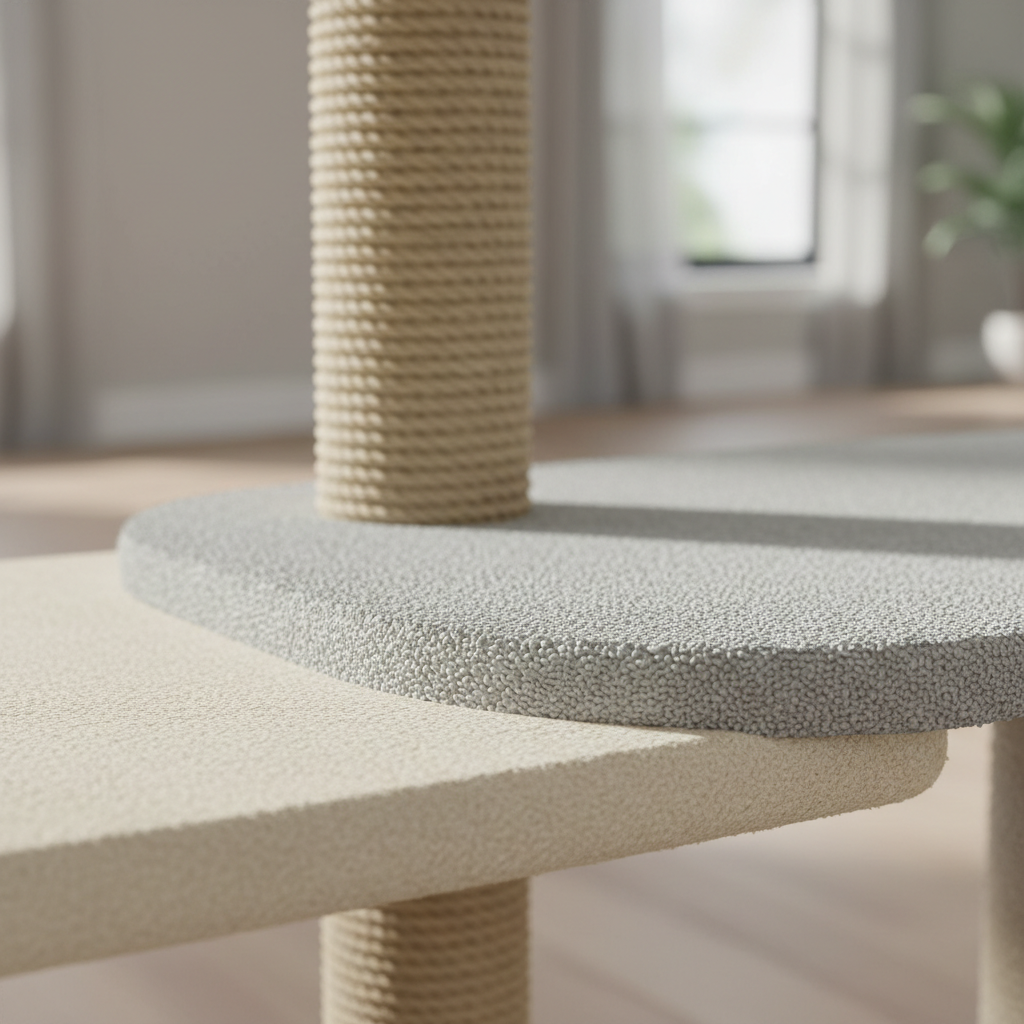
Quick self-check: what kind of cleaning does your cat tree need?
Before you grab a spray bottle, take 60 seconds to diagnose the situation. It keeps you from over-wetting the tree or using a cleaner that leaves residue.
- Light maintenance: looks dusty, mild “cat smell,” no visible stains, no sticky spots.
- Deep clean: visible hair mats, dingy fabric, odor returns within 24–48 hours, dusty condo interior.
- Spot treatment: one clear stain, urine mark, vomit, or a mystery spot your cat keeps sniffing.
- Potential contamination: diarrhea, urine soaking into seams/wood, fleas present, or illness in the home. In these cases, consider more targeted disinfecting and ask a veterinarian if you’re unsure what’s safe around your cat.
Key point: If the base or posts feel swollen, soft, or warped, avoid soaking. At that stage, you’re cleaning gently and planning for repair or replacement.
Tools and products that work (and what to skip)
You do not need a cabinet full of products. You do need the right mix of “lift hair,” “break grime,” and “dry fast.”
Helpful basics
- Vacuum with crevice tool and brush attachment
- Lint roller or reusable rubber pet-hair brush
- Soft scrub brush (for carpet/plush) and an old toothbrush (for corners)
- Microfiber cloths
- Enzyme cleaner labeled for pet urine (for accidents)
- Mild dish soap diluted in warm water (general grime)
- Baking soda for deodorizing (dry method)
- Fan to speed drying
What to be cautious with
- Steam cleaners: can work on some trees, but heat and moisture may loosen glue or swell particle board.
- Strong disinfectants: many are irritating to cats if residue remains; only use when warranted and follow label directions carefully.
- Essential oils: even “natural” oils can be risky for cats in many situations; if you want scent control, focus on cleaning and ventilation instead.
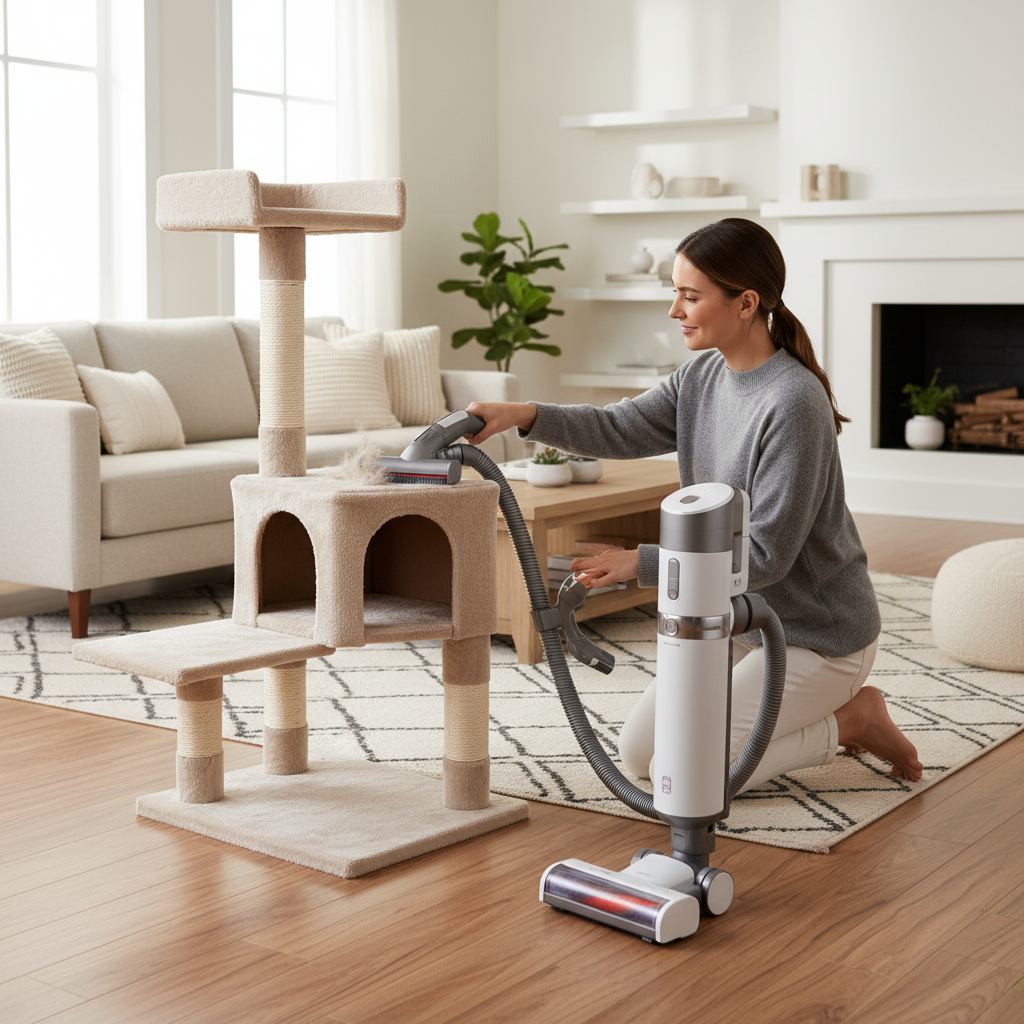
Step-by-step: how to clean a cat tree properly (routine method)
This is the repeatable approach for most homes. It’s designed to avoid the biggest failure mode: wetting the tree before removing hair and dust.
1) Remove hair and dry debris first
- Use a lint roller or rubber brush on platforms and beds, especially seams and edges.
- Vacuum top to bottom. Hit undersides of shelves, condo floors, and the base perimeter.
- If cushions are removable, unzip and shake outside, then vacuum both sides.
Why it matters: Wet hair clumps, and once that happens, you end up scrubbing harder and soaking more.
2) Dry deodorize (optional, but useful)
- Lightly sprinkle baking soda on fabric areas.
- Let sit 15–30 minutes.
- Vacuum thoroughly until the powder stops coming up.
3) Surface clean with minimal moisture
- Mix a few drops of mild dish soap into warm water.
- Dampen, don’t drench, a microfiber cloth and wipe high-contact zones: perches, edges, condo entry, and favorite nap spots.
- For carpeted sections, use a soft brush with small circles, then wipe with a clean damp cloth to pick up loosened grime.
4) Tackle scratching posts without ruining the sisal
- Vacuum along the rope direction with a brush attachment.
- Spot wipe only if sticky or visibly dirty, using a barely damp cloth.
- Let posts dry with strong airflow. A fan pointed at the tree helps.
5) Dry fast and fully
- Open windows if weather allows, run a fan, and keep the tree in a well-ventilated room.
- Do not let your cat use the tree until it feels completely dry to the touch, including corners and seams.
Reality check: “Dry on the surface” is not the same as “dry inside the padding.” If odor returns quickly, drying time often caused it, not the soap.
Spot-cleaning for urine, vomit, and mystery stains
Accidents happen, and quick response saves the materials. If you only remember one rule: blot first, then treat.
Urine
- Blot with paper towels, press firmly, repeat until little moisture transfers.
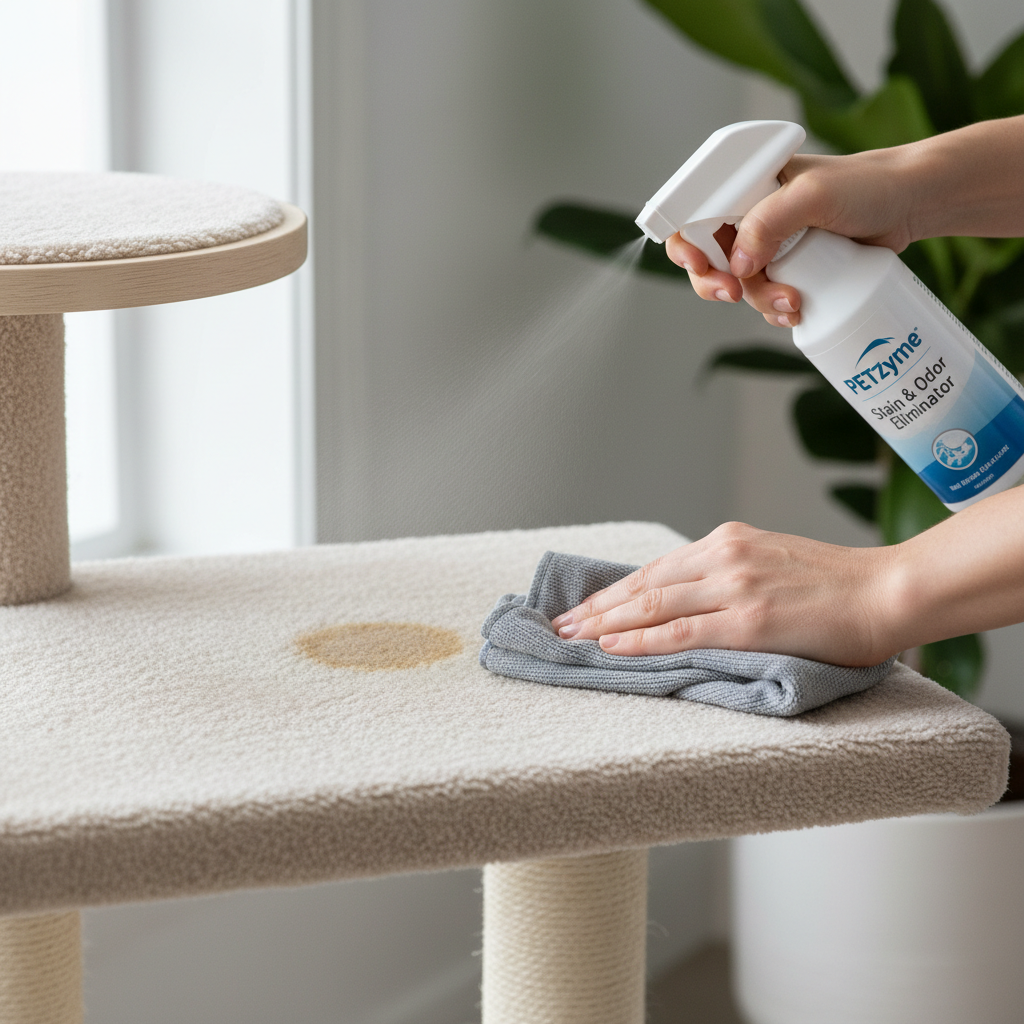
- Apply an enzyme cleaner as directed on the label. Enzymes break down odor compounds, which is why they outperform fragrance sprays.
- Allow the full dwell time, then blot again. Rinsing is sometimes recommended by the product; follow the label.
- Dry with a fan. If urine soaked into wood or deep padding, odor may persist, and replacement parts can be more realistic than endless re-treating.
Vomit or food mess
- Scoop solids, then blot.
- Use mild soapy water on a cloth, wipe, then wipe again with plain water on a clean cloth.
- Dry thoroughly to prevent sour smells.
“My cat keeps sniffing this spot”
- Assume there’s residue your nose misses, often body oils or trace urine.
- Start with enzyme cleaner on that area, even if you’re not sure.
- If behavior continues, consider stress, litter box issues, or medical causes, and a veterinarian can help you rule out problems.
How often to clean: a simple schedule (with a practical table)
Frequency depends on how many cats you have, shedding level, and whether the tree sits near a litter box or kitchen. Use this as a starting point and adjust after you see how fast odor builds back.
| Task | Good baseline | Do it sooner if… |
|---|---|---|
| Hair removal + vacuum | 1x per week | Heavy shedding, allergies, multiple cats |
| Baking soda deodorize | Every 2–4 weeks | Tree sits in humid room, odor returns fast |
| Wipe high-contact surfaces | Every 2–4 weeks | Cat has oily coat, uses tree after meals |
| Deep clean + spot checks | Every 2–3 months | Indoor-outdoor cat, frequent hair mats |
| Spot treatment (enzyme) | As needed | Any urine/vomit, repeat sniffing or marking |
Tip: Put a reminder on your phone for weekly vacuuming. That single habit usually keeps the “big clean” from becoming a weekend project.
Mistakes that keep odors coming back (and how to avoid them)
- Skipping the dry pass: if you don’t vacuum and de-hair first, you’ll smear grime deeper into fabric.
- Over-wetting the structure: many trees use compressed wood; too much moisture can warp panels and trap smells.
- Using strong fragrance to “cover” odor: it often mixes with the existing smell and can irritate sensitive cats.
- Not rinsing when needed: some cleaners leave residue that attracts dirt. If the label suggests a water wipe after, do it.
- Letting cats back on too soon: paws track moisture, and damp fabric holds onto new dirt immediately.
According to ASPCA guidance on household hazards, many common household cleaners can be problematic for pets if ingested or if residue remains on surfaces. When in doubt, choose milder products, use small amounts, and prioritize ventilation and drying.
When to repair, replace, or ask a professional
Sometimes the “right” cleaning move is admitting the tree can’t bounce back, at least not fully.
- Replace parts if platforms feel soft, swollen, or smell sour even after full drying.
- Re-wrap sisal if the rope is unraveling; cleaning won’t fix loose strands that keep trapping debris.
- Consider professional upholstery cleaning for removable beds or cushions, especially if a household member has allergies and you want a deeper extraction without soaking the whole frame.
- Consult a veterinarian if urine marking repeats; cleaning helps, but medical or stress factors can drive the behavior.
Key takeaway: The best results come from a predictable routine, light moisture, and fast drying, not from stronger chemicals.
Conclusion: keep it fresh without turning it into a project
If your goal is to clean without wrecking the fabric or sisal, stick to a simple rhythm: remove hair first, wipe with minimal moisture, and dry aggressively. That’s the core of how to clean cat tree properly, and it’s what keeps odors from creeping back.
Pick one action to start today: schedule a weekly vacuum pass, or do a targeted enzyme treatment on the spot your cat keeps revisiting. Small consistency beats occasional marathon cleaning almost every time.
FAQ
Can I wash a cat tree with a hose outside?
Usually not a great idea. Many frames contain particle board or cardboard tubes that can hold water and swell. If you must rinse something, limit it to removable fabric pieces and dry them fully.
Is vinegar safe to use on a cat tree?
Diluted vinegar can help with some odors, but it does not replace enzyme cleaner for urine. Also, the smell can bother some cats, and too much moisture is still the bigger risk, so use sparingly and dry fast.
What’s the best way to remove cat hair from plush platforms?
A rubber pet-hair brush or lint roller first, then vacuum. If you go straight to vacuuming, hair often stays woven into the nap and you end up doing extra passes.
How do I clean sisal rope posts without making them fray?
Vacuum along the rope direction and avoid saturating the rope. If a sticky spot needs attention, use a barely damp cloth and let it dry with airflow.
Why does my cat tree smell worse after I clean it?
Most often it’s slow drying, which can make old odors bloom and create a musty note. Next time, reduce water, blot more, and add a fan for several hours.
Can I use disinfecting wipes on a cat tree?
Only when there’s a clear contamination reason, and even then, residue matters. Follow the product label, keep your cat away until the surface is dry, and consider wiping with plain water afterward if the label allows.
How do I know if my cat tree needs to be replaced?
If the base wobbles, panels feel soft, staples or exposed wood appear, or odor persists after proper enzyme treatment and thorough drying, replacement is often the safer and less frustrating option.
If you’re trying to keep a small apartment from smelling like “cat stuff,” a simple routine plus a couple of pet-safe products usually goes a long way, and if you want a more hands-off setup, choosing a cat tree with removable, washable covers can make the whole process easier.