
hamster sand bath container large size searches usually come from one frustration: the bath looks big online, but at home it turns into a sand-flinging mess, or your hamster can’t really dig and roll the way it wants.
A truly “large, deep” sand bath container is less about aesthetics and more about behavior and hygiene, it helps with coat care, absorbs oils, and can reduce odor when used correctly. But you also have to balance depth, footprint, entry style, and how your enclosure handles scattered sand.
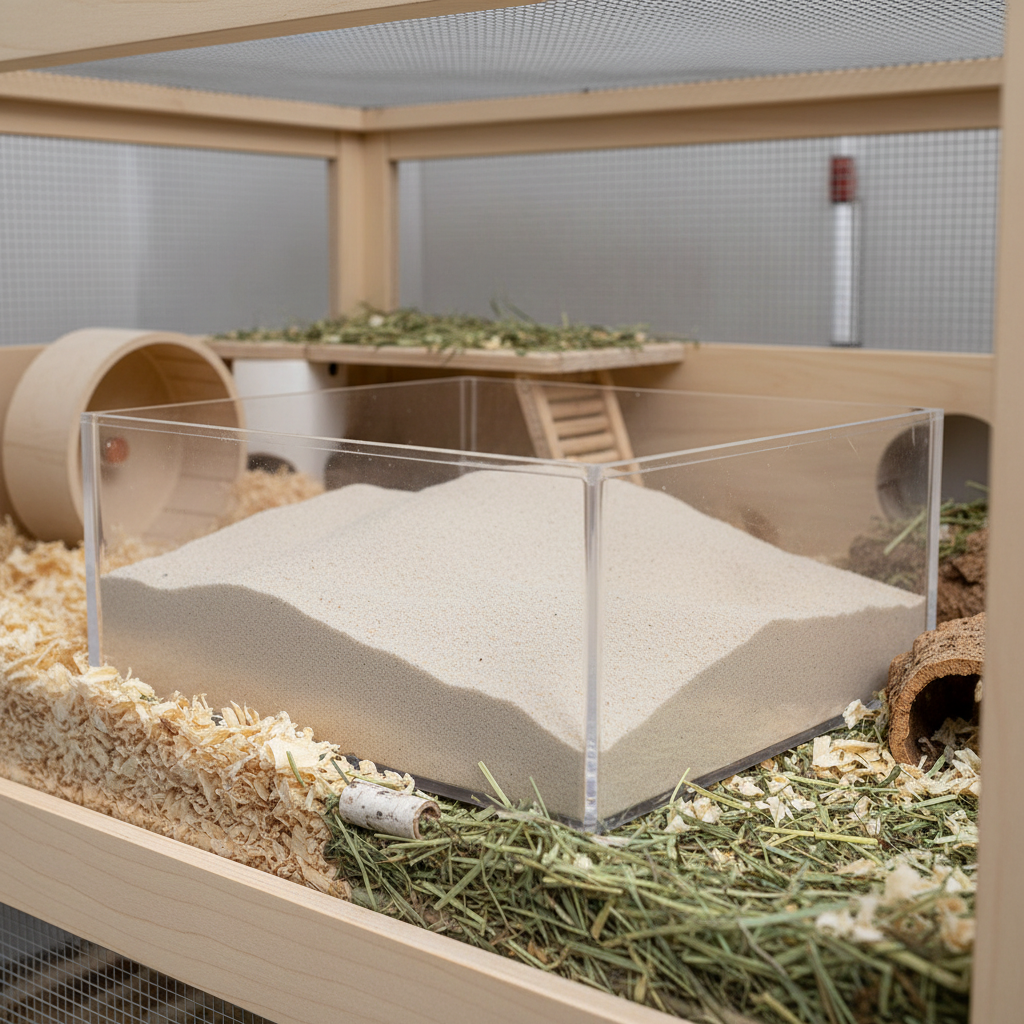
If you’re picking one now, the goal is simple, your hamster should be able to roll, dig lightly, and exit without dumping half the sand into the bedding. This guide breaks down what “large” and “deep” actually mean across common hamster types, how to judge your current setup fast, and what to tweak when it keeps getting messy.
What “large” and “deep” should mean in real cages
Product listings can be vague, so it helps to translate “large deep size” into practical outcomes. A sand bath feels large when your hamster can turn around easily and do a full body roll without pressing its back against a wall.
“Deep” is about sand depth and wall height. Most people focus on filling more sand, but tall sides are what stop the classic kick-out problem.
- Large footprint: enough floor area for rolling, not just sitting in sand.
- Deep usable space: sand depth that supports rolling and light digging without exposing the bottom immediately.
- High sides: reduces scatter, especially for energetic diggers.
- Entry that makes sense: too high = avoidance, too open = sand everywhere.
According to the American Veterinary Medical Association (AVMA), good husbandry and a clean habitat are key parts of small pet health, and for hamsters that includes keeping dusty substrates and dirty areas under control. Your container choice is a small detail that affects that daily.
Why your hamster keeps making a mess (and why depth helps)
When a hamster treats the bath like a playground, that’s not “bad behavior,” it’s usually an environment signal. A hamster sand bath container large size can solve it, but only if it matches what your hamster is trying to do.
- Walls are too low: even a calm Syrian can flick sand during rolling, dwarfs can launch it when digging.
- Container is too narrow: they hit the wall, pivot harder, and sand shoots outward.
- Entry is too open: open dishes look cute, but scatter tends to be constant.
- Wrong sand texture: overly dusty sand can cling and puff into the air, too coarse can encourage “digging out” behavior.
- Placement issues: set on soft bedding, the bath tilts, sand pours out at the low side.
Depth does two things, it gives enough material for rolling without scraping the floor, and it encourages the hamster to stay inside the container longer rather than half-in, half-out kicking sand into the bedding.
Quick self-check: are you buying “large deep” for the right reason?
Before you spend money (or rearrange the enclosure again), run this quick checklist. It usually tells you whether you need a bigger container, a deeper one, or just a different shape.
- Your hamster can’t roll fully without bumping walls
- Sand level drops fast because it gets kicked out daily
- Bath becomes a toilet corner within 24–48 hours
- You see sand mixed into bedding all around the bath zone
- Your hamster avoids the bath unless you place it directly inside
If you checked 2+ boxes, moving to a hamster sand bath container large size with higher sides is often the most straightforward improvement. If the main issue is toileting, size helps, but placement and cleaning routine matter just as much.
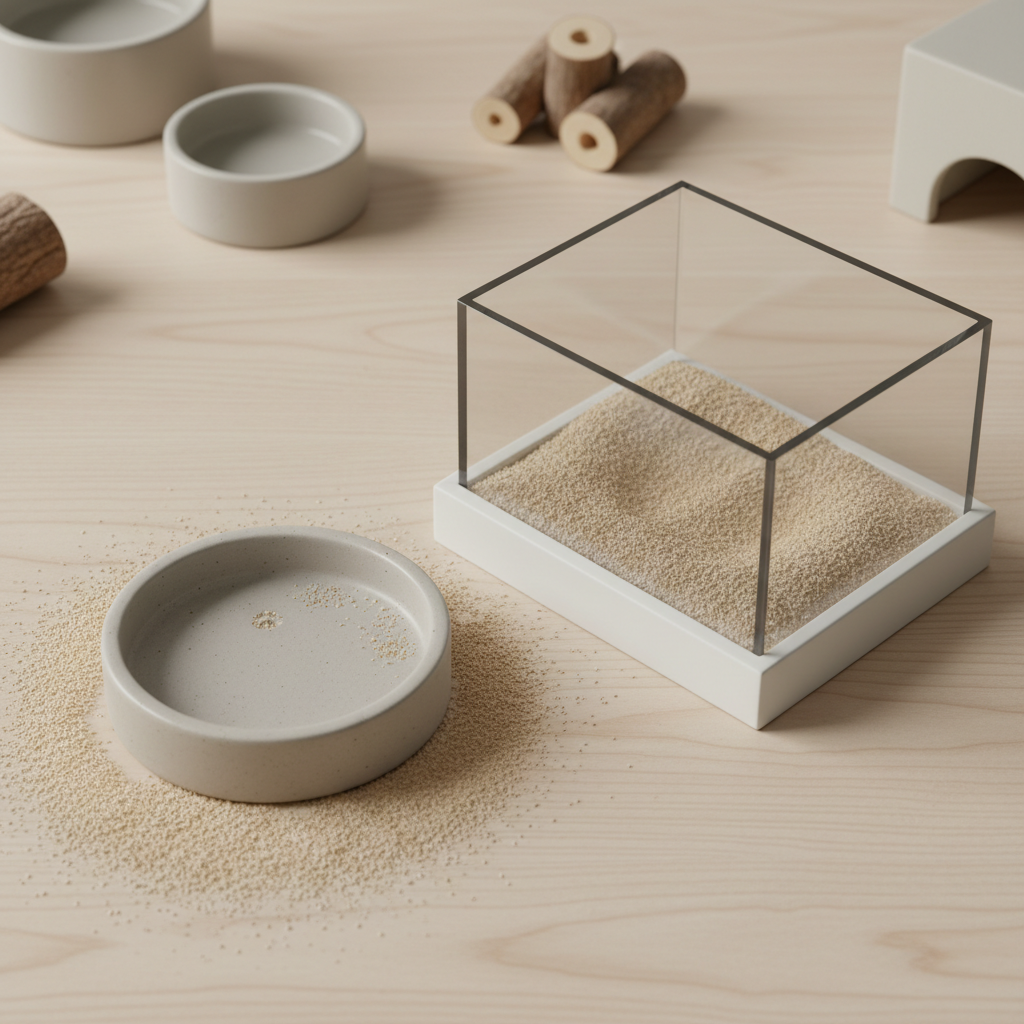
Choosing the right container: size guide + materials that hold up
In U.S. setups, “large” varies by enclosure size and hamster species, so think in constraints: the bath must fit without blocking the wheel, hides, or main tunnels. Many cages look big until you add essentials.
Practical size targets (use these as a starting point)
| Hamster type | Container footprint (approx.) | Wall height goal | Notes |
|---|---|---|---|
| Syrian | 10–14 in long | 4–6 in | Large turns need more width, low walls usually fail |
| Dwarf (Robo/Campbell/Winter White) | 7–10 in long | 3–5 in | Often more active diggers, higher sides help |
| Chinese | 8–12 in long | 4–6 in | Long-bodied, appreciates length and stable footing |
These are typical ranges, not strict rules. If your enclosure is compact, you may choose slightly smaller footprint but compensate with higher walls and better placement.
Material choices that usually work well
- Acrylic: easy viewing, lighter than glass, scratches over time but stays functional.
- Glass: heavy and stable, great for keeping sand contained, watch edge safety and weight on platforms.
- Ceramic: stable and cool, often smaller openings, can be hard to find in truly large formats.
- Plastic: budget-friendly, but watch for chewing and odor retention, replace if it gets rough or damaged.
For many homes, a clear acrylic or glass option hits the sweet spot, you can monitor cleanliness fast, and you get the “deep” wall height without needing a lid.
Setup steps that reduce scatter and keep the bath usable
Even the perfect container fails if it’s set up like a bowl in the middle of bedding. This is where most “why is it still messy?” complaints come from.
Step-by-step setup
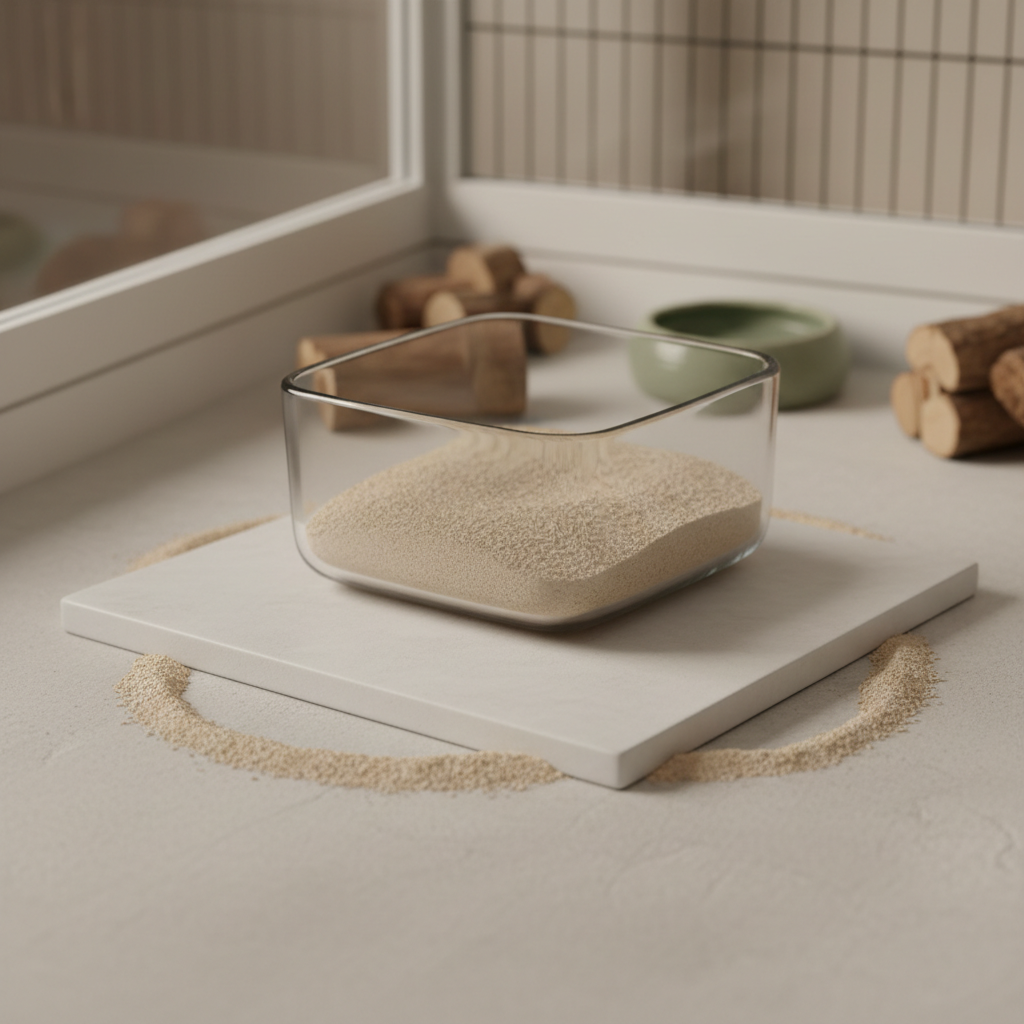
- Pick a stable base: place the bath on a flat tile, acrylic sheet, or a packed-down platform so it stays level.
- Use a sensible sand depth: enough for rolling, not so high that every kick clears the rim.
- Angle the entrance: if the container has one open side, face it toward a wall or corner to catch scatter.
- Create a “sand zone”: keep a small buffer area around it, don’t crowd it with soft hides that trap sand.
- Spot-clean daily: remove clumps and soiled sand, top off only when needed.
According to the ASPCA, clean housing is part of basic small-pet care. For sand baths, “clean” typically means removing waste quickly and replacing sand before it starts to smell or clump.
Common mistakes (the stuff that wastes sand and time)
A few missteps show up again and again, and they’re frustrating because they look “normal” until you realize they cause 80% of the mess.
- Using a wide-open dish for an active hamster: works for photos, not always for daily use.
- Filling to the brim: you want depth, but a high fill line makes kick-out inevitable.
- Ignoring ventilation and dust: if sand is dusty, it can irritate airways in some cases, switch to a cleaner option and consider asking a vet if you’re unsure.
- Letting the bath become a toilet: some hamsters choose sand as a bathroom area, if odor increases, clean more often or adjust location.
- Buying “large” but not “deep walls”: footprint alone rarely solves scatter.
If you’re upgrading, prioritize wall height and stability before you chase extra inches of floor area. In many enclosures, that’s the difference between “always messy” and “mostly contained.”
When you should consider professional help (health and safety signals)
Sand baths are usually safe when you use appropriate sand and keep it clean, but some signs deserve caution. If you notice sneezing, wheezing, watery eyes, or repeated scratching right after bathing, the sand type or dust level might be a factor.
Behavior changes matter too. If your hamster stops grooming, looks greasy, or seems uncomfortable, it could be husbandry, stress, or a health issue. In those cases, it’s reasonable to adjust the setup, but also consider consulting an exotic-pet veterinarian for tailored guidance, especially if symptoms persist.
Key takeaways before you buy
- Large should mean your hamster can roll fully, not just stand in sand.
- Deep is mostly about high sides and stable placement, not overfilling.
- A hamster sand bath container large size works best when paired with a flat base and quick spot-cleaning.
- If dust seems to trigger irritation, switch sand and talk to a professional if you’re uncertain.
Pick a container with enough footprint for natural movement, then prioritize wall height and setup stability, you’ll usually waste less sand and get a cleaner enclosure without turning maintenance into a daily project.
If you want one action step today, measure the open floor space in your enclosure and choose the biggest deep-sided bath that fits without crowding the wheel, that single check prevents most buyer’s remorse.