
hamster mini playpen portable fold options sound simple until your hamster finds a gap, the floor gets slippery, or the “foldable” seams start bowing after a few uses. This guide helps you pick a playpen that fits real life: quick setup, easy wipe-down, and fewer escape attempts.
Why it matters: a playpen is often the one “out-of-cage” space where people relax their guard. But hamsters are determined, tiny, and surprisingly good at testing corners, zippers, and fabric tension. A few small choices can be the difference between supervised enrichment and a stressful chase under the couch.
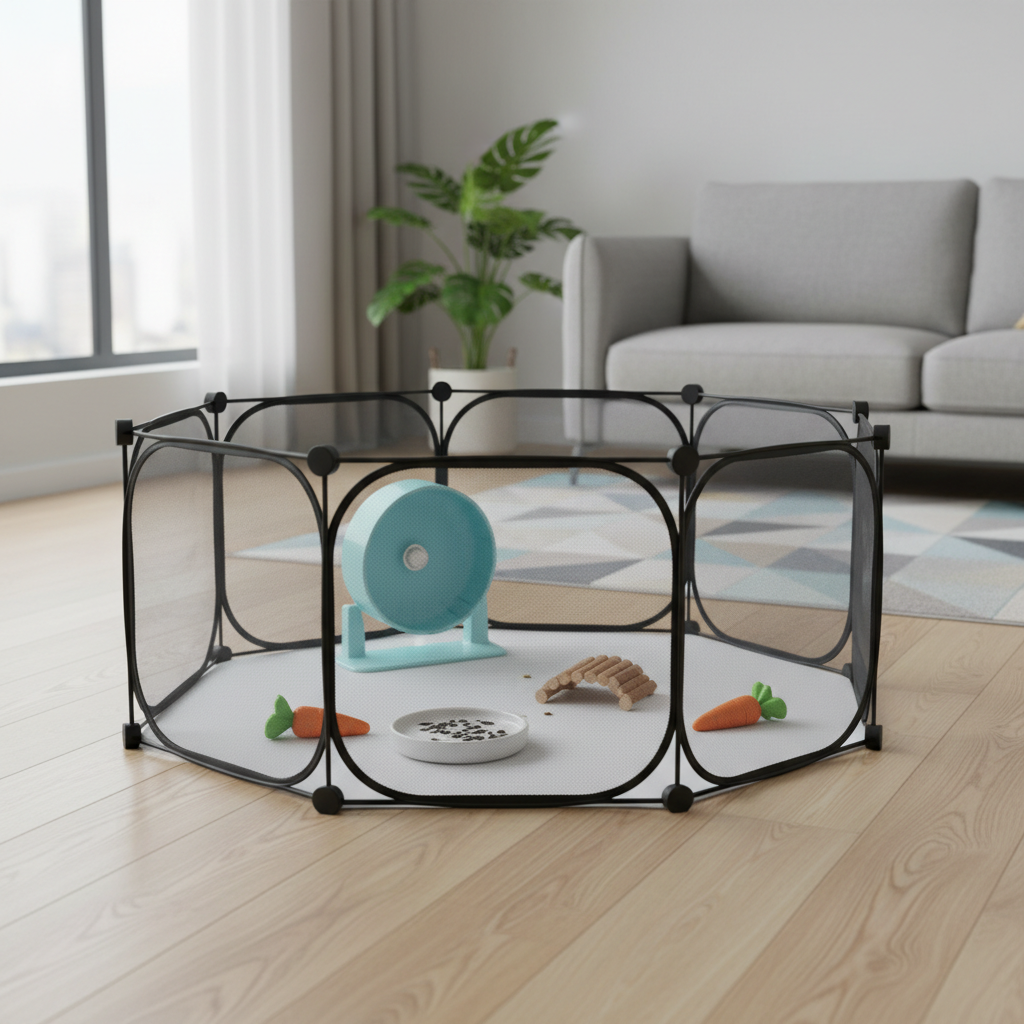
I’ll cover what usually causes escapes, how to judge materials and sizing, and a practical setup routine you can repeat at home or when traveling. You’ll also get a quick comparison table and a short checklist to spot “looks cute online, fails in person” playpens.
What “portable foldable” really means for hamster playpens
In product listings, “portable” can mean anything from a lightweight fabric pen to a semi-rigid panel system. For hamsters, portability only helps if the pen still stays upright, closes securely, and doesn’t create climbable edges.
Here’s the plain-English breakdown of common types:
- Fabric pop-up pens: fastest setup, usually the lightest, often best for travel, but more vulnerable to chewing and seam gaps.
- Panel playpens (plastic/acrylic): sturdier walls, often better visibility, typically heavier and bulkier when folded.
- Hybrid pens (fabric + stiff rings/panels): middle ground, but quality varies a lot by brand and stitching.
If you only free-roam at home, sturdier walls and a heavier base often matter more than “packs small.” If you travel, you’ll care about fold lines, zippers, and whether it fits into a tote without deforming.
Why hamsters escape playpens (real-world causes)
Most escapes aren’t “your hamster is too smart.” It’s usually a design mismatch with typical hamster behavior: climbing, digging, chewing, and squeezing.
- Low wall height: many hamsters can scramble up textured fabric or mesh, then tip over the edge.
- Corner collapse: foldable seams can create V-shaped gaps, especially on carpet or uneven floors.
- Mesh that acts like a ladder: breathable panels are great for airflow, but some weaves are easy to grip.
- Zippers and Velcro: convenient for humans, tempting “targets” for chewing and pawing.
- Slippery floors: a pen that slides becomes a pen that shifts open, or bumps into furniture and warps.
- Stress or novelty: a hamster that feels exposed may immediately perimeter-check for exits.
According to the American Veterinary Medical Association (AVMA)... small mammals benefit from safe, species-appropriate housing and handling, and owners should reduce risks of injury and escape during out-of-enclosure time. That’s the lens to use here: less “fun accessory,” more “controlled, supervised enrichment zone.”
Quick self-check: is a mini playpen a good fit for your hamster?
Before buying, check your hamster’s habits and your typical setup space. This saves money, and it saves frustration.
- Your hamster tries to climb cage bars or hangs from bottle holders.
- You’ve seen chewing on fabric hides, cardboard edges, or soft plastics.
- You free-roam on carpet, rugs, or textured mats (extra corner collapse risk).
- You want to use a wheel inside the pen (needs stable footing and more diameter).
- You plan to travel and need a hamster mini playpen portable fold model that packs flat and wipes clean.
If you checked multiple items, look for sturdier walls, higher sides, and fewer “chewable closures.” If you checked none, a basic pop-up pen may still work fine with close supervision.
Choosing the right materials and dimensions (what matters most)
Product photos tend to hide the key details: wall texture, seam reinforcement, floor thickness, and how the top edge is finished.
Material cues that usually hold up better
- Smooth inner walls: less grip for climbing than coarse mesh or textured fabric.
- Reinforced seams: double stitching or binding tape reduces seam spread at fold points.
- Thicker base layer: helps prevent sliding and reduces “tenting” on rugs.
- Fewer exposed zippers: if there is a zipper, you want a flap cover or a protected track.
On size, “mini” is fine for supervised sessions, but it shouldn’t feel like a shoebox. Many owners underestimate how fast a hamster can cross a small pen, then immediately start testing walls.
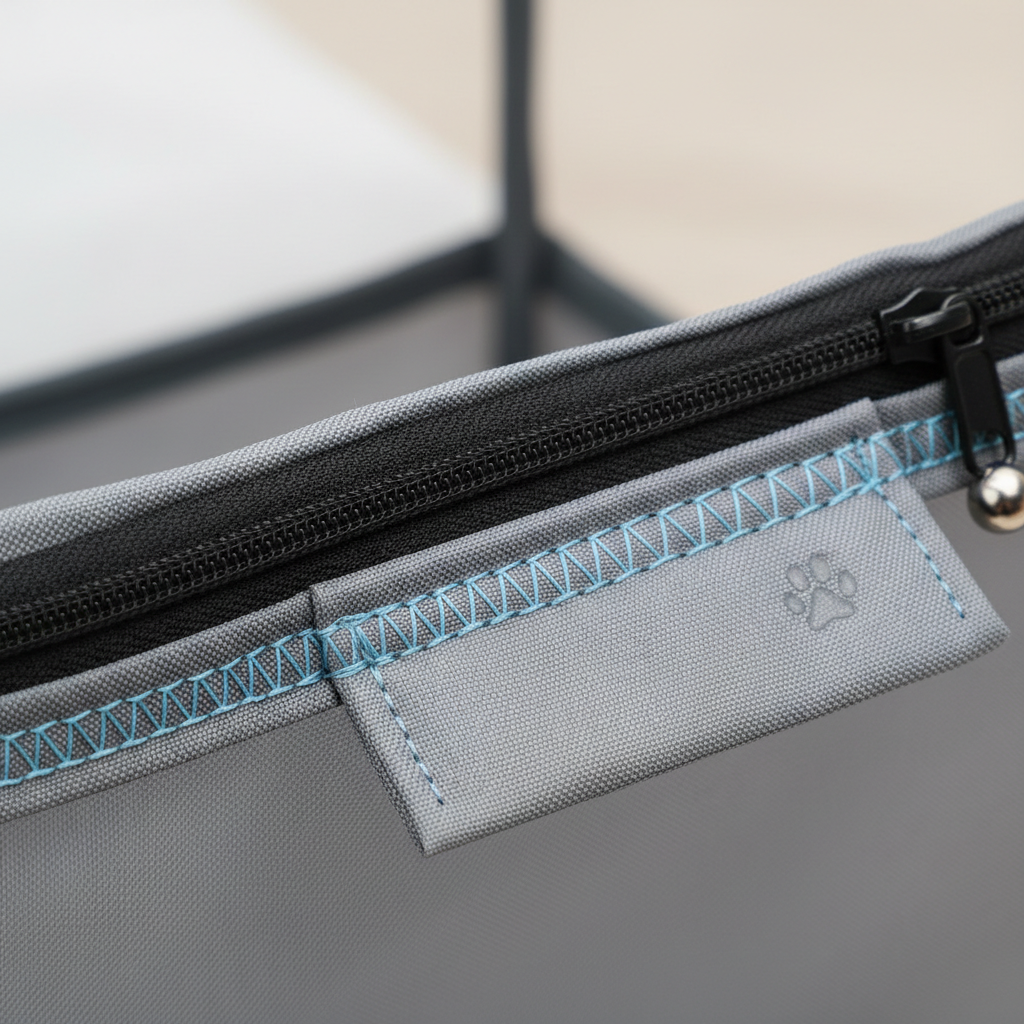
Rule of thumb: if you plan to add a wheel, tunnels, or a hide, choose a pen that still leaves clear “running space” after accessories go in. Otherwise, you’ll end up with clutter that encourages climbing.
Comparison table: common playpen styles for hamsters
This isn’t about one “best” pick, it’s about matching your use case. If you’re shopping for a hamster mini playpen portable fold setup, the tradeoffs below are usually the deciding factors.
| Type | Best for | Typical weak spot | What to prioritize |
|---|---|---|---|
| Fabric pop-up | Travel, quick sessions | Chewing, climbable mesh | Smooth walls, high sides, zipper covers |
| Plastic panel | Home use, frequent play | Gaps at panel joints | Secure connectors, no flex at corners |
| Acrylic panels | Visibility, sturdiness | Bulk and storage | Rounded edges, stable footprint |
| Hybrid foldable | Home + occasional travel | Seam bowing over time | Reinforced fold points, thicker base |
Setup that reduces escapes (and makes cleanup easier)
Most problems show up in the first five minutes. If you build a repeatable routine, your hamster’s playtime gets calmer, and you spend less time “hovering.”
Step-by-step setup
- Pick the right surface: a flat floor is easiest. On carpet, add a firm mat or a large cutting board under the pen to reduce corner collapse.
- Anchor the perimeter: place heavy, chew-safe items around edges from the outside if the pen tends to shift. Avoid anything that creates a climbable “step.”
- Keep the inside low-profile: start with one hide and one toy, then add more after you confirm no climbing attempts.
- Use a “safe transfer” container: a mug, small carrier, or tube helps you move your hamster without grabbing.
- Do a 60-second perimeter watch: let your hamster circle, sniff, and test corners while you watch the wall behavior.
For cleanup, a removable waterproof base (or a washable liner) makes a big difference. Many fabric pens claim “easy clean,” but if urine soaks into seams, odor control becomes a weekly battle.
Safety notes and common mistakes (worth avoiding)
Hamster playpens are not “set and forget.” Even a great pen still requires supervision, because chewing and climbing can start suddenly.
- Don’t rely on mesh lids: some hamsters climb and hang, and a fall can cause injury. If you use a cover, watch closely and keep the interior low.
- Avoid tall stacks: hides on top of tunnels look cute, but they turn into launch platforms.
- Skip sticky pads or adhesives: anything tacky can stick to feet or fur, and ingestion risk is a real concern.
- Watch temperature and drafts: thin fabric pens near AC vents can get chilly, and that can stress some pets.
- Check wear at fold lines: if the pen is a hamster mini playpen portable fold model, folding fatigue is common at the same creases.
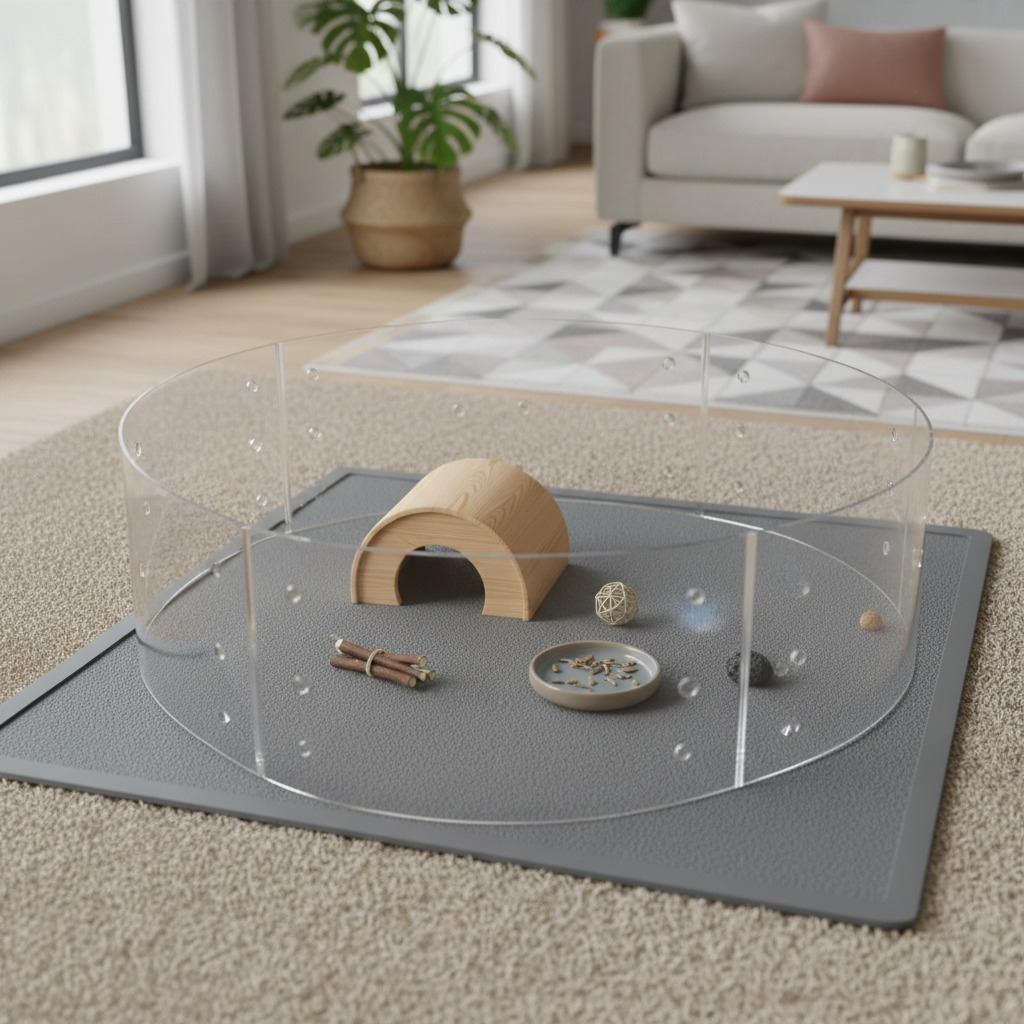
If your hamster repeatedly tries to escape, it may be signaling stress, boredom, or that the space feels too open. Sometimes adding a second hide or more scatter feeding helps, but if behavior looks frantic or obsessive, consider asking an exotic vet or experienced small-animal professional for guidance.
Practical buying checklist (printable mindset)
When you’re scanning product pages, you’re mostly looking for escape points and cleaning pain.
- Wall height: high enough that a brief climb attempt still fails.
- Wall texture: smoother interior surfaces typically reduce grip.
- Seams: reinforced, tight, no visible “daylight” at corners.
- Closures: protected zipper track or minimal chewable hardware.
- Floor: waterproof or liner-friendly, non-slip on your usual surface.
- Packability: folds without warping, comes with a carry bag if you travel.
Key takeaway: the best portable playpen is the one your hamster can’t climb or chew through in the first 10 minutes, and that you’ll actually bother setting up because it isn’t annoying.
Conclusion: a calmer, safer playpen routine
A hamster mini playpen portable fold setup can be genuinely helpful for enrichment, cleaning convenience, and travel, but only if it matches hamster behavior: climbing attempts, corner testing, and occasional chewing. If you buy with those realities in mind, you end up with a pen that feels boring in the best way: it just works.
Pick one improvement to make today: tighten your setup surface and remove “launch point” items, then do a short supervised session and watch where your hamster goes first. That single observation usually tells you what to fix next.
FAQ
What size should a mini playpen be for a hamster?
Big enough to include a hide and a little running space without forcing tall stacking. If the pen becomes cluttered fast, your hamster often starts climbing out of frustration or curiosity.
Are fabric playpens safe for hamsters that chew?
They can be, but they’re higher risk. If your hamster chews seams or zippers, consider panel-style pens or choose fabric with reinforced seams and always supervise closely.
Can I put bedding or sand in a portable foldable playpen?
Light scatter bedding usually works, but deep bedding encourages digging at edges and can hide chewing. Sand is fine in a stable, shallow dish, and you’ll want a waterproof base for easier cleanup.
How do I stop a playpen from sliding on carpet?
Add a firm mat under it so the walls stay upright, and place the pen on the flattest area you have. Sliding often comes from corners collapsing, not just “low friction.”
Is it okay to use a lid on a hamster playpen?
Sometimes, but lids can create climbing opportunities and fall risks. If you use one, keep items low, watch for hanging behavior, and remove the cover if your hamster starts climbing.
How long can my hamster stay in a playpen?
It depends on temperament and supervision. Many owners do short sessions, then gradually extend time if the hamster stays calm and isn’t fixated on escaping.
What should I do if my hamster keeps trying to escape?
First, remove climbable items and check corner gaps. If escape attempts look frantic or repetitive across sessions, it may help to adjust enrichment or consult an exotic vet, since stress can show up as “escape mode.”
If you’re trying to find a playpen that packs small for trips but still feels stable at home, focus on seam quality, wall texture, and a base that won’t slide, those three features usually matter more than extra accessories included in the box.