
cat window hammock for large cats heavy duty is usually what people search after one of two moments: the old perch starts drooping under a big body, or you hear that awful suction-cup pop and your cat looks offended (and you feel guilty).
Big cats love the window spot for the same reason we like the “best seat” in the house: warm light, a view, and a predictable routine. But the reality is, a lot of window hammocks are designed for average-weight cats, and the weak link shows up fast under heavier loads.
This guide helps you choose a sturdier window hammock, install it the way it’s meant to be installed, and maintain it so it stays trustworthy over time. I’ll also point out the common “looks heavy-duty” traps that don’t hold up in real homes.
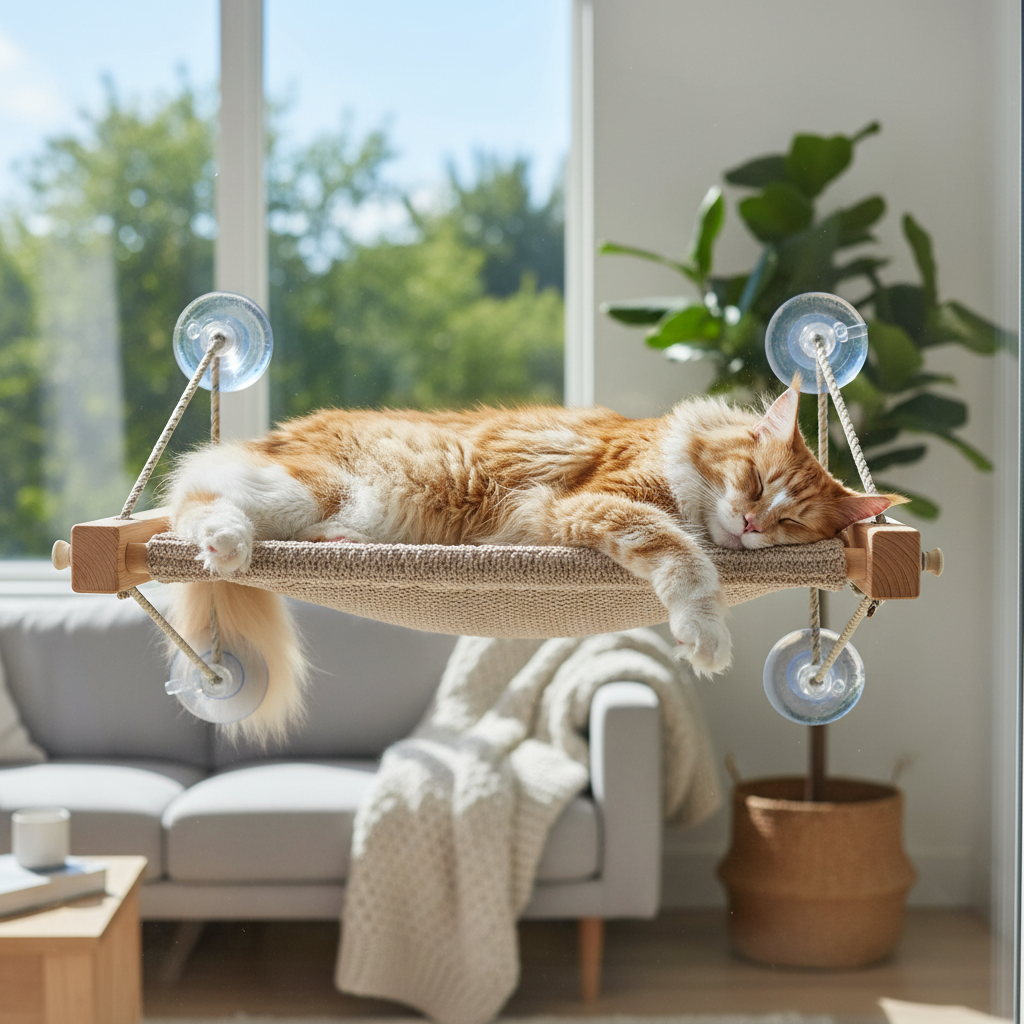
Why “heavy duty” matters more with window mounts
A window hammock isn’t just “holding weight.” It’s managing dynamic load, meaning the force spikes when your cat jumps up, pivots, or flops down. A 15–20 lb cat can momentarily create a lot more stress than the number on the scale.
There are a few failure points that show up again and again:
- Suction cup fatigue: cups slowly lose grip when exposed to heat, dust, and tiny air leaks.
- Frame flex: thin plastic arms bow, which shifts load to the cups and accelerates slipping.
- Weak seams: fabric tears near stitching where the cat’s weight concentrates.
- Bad glass fit: textured, cold, or slightly curved surfaces can reduce suction strength.
According to International Cat Care, elevated resting spots can support natural feline behaviors, but stability and safety matter, especially for older or heavier cats who may not “catch themselves” as easily after a slip.
Quick self-check: do you actually need a heavy-duty model?
Not every home needs the most overbuilt option, but a few signs usually mean you should upgrade.
Use this checklist
- Your cat is 12 lb+, or has a broad body type (stocky, muscular, big-boned).
- The current perch tilts, creaks, or sags after a week or two.
- Your cat “tests” it with one paw, then refuses to use it again.
- Your window gets strong afternoon sun (heat cycles can shorten suction performance).
- You have multiple cats and they take turns using the same spot.
If your cat has arthritis, mobility issues, or recovering from an injury, a window perch may still work, but you’ll want to be extra cautious about height and landing options, and it can be worth asking your veterinarian what’s appropriate for your specific cat.
What to look for in a cat window hammock for large cats heavy duty
Marketing words are cheap, so it helps to translate “heavy duty” into real features that reduce risk.
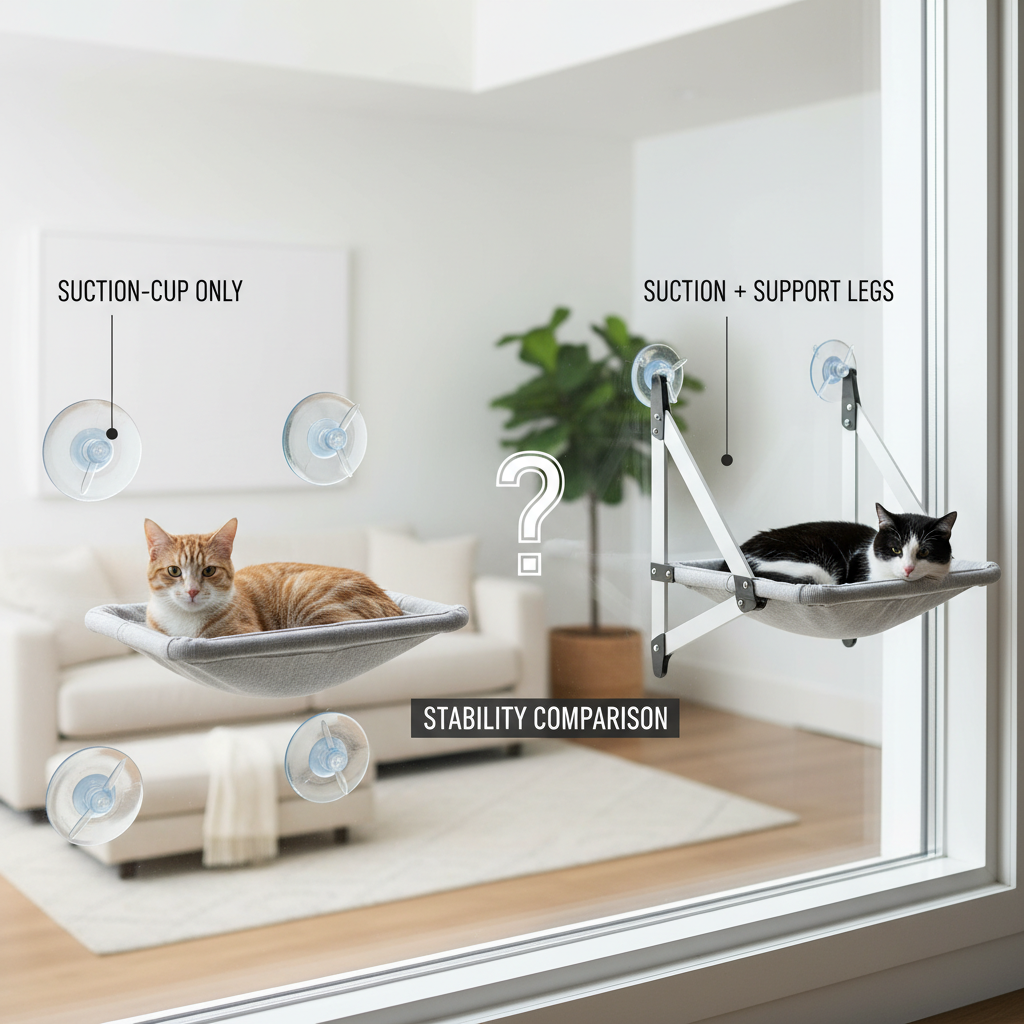
1) Mounting system: suction-only vs. suction + brace
A suction-only style can work, but many households do better with a design that adds support legs or a brace that transfers some load to the wall, sill, or window frame.
- Suction-only: cleaner look, faster install, more dependent on glass cleanliness and cup quality.
- Hybrid support: usually steadier for larger cats, slightly bulkier, less “all-in” on suction.
2) Frame material and geometry
Thicker metal or reinforced composite frames usually flex less. Also look at how the arms distribute force: wider spacing and triangulated shapes tend to feel more planted than narrow, straight arms.
3) Bed size and lip height
Large cats sprawl. A cramped bed causes constant repositioning, which increases movement stress. A modest lip or bolstered edge can make the perch feel safer, especially if your cat likes to sleep deeply.
4) Fabric and attachment points
Focus on seams, grommets, and how the fabric attaches to the frame. If the fabric is removable, check whether replacement covers are available, since claws plus sun exposure can wear material over time.
Feature comparison table (what “good” looks like)
Use this as a practical filter while shopping, especially when product listings feel vague.
| Feature | Better for large cats | Why it matters |
|---|---|---|
| Mount type | Suction + brace/support legs | Shares load, less chance of sudden slip |
| Suction cups | Larger diameter, thicker rubber | More surface contact, stronger seal |
| Frame | Reinforced metal or rigid composite | Less flex, fewer stress spikes on mounts |
| Bed dimensions | Wide enough for full-body sprawl | Reduces shifting and edge-perching |
| Cover | Washable, replaceable | Better hygiene, longer useful life |
| Claimed weight rating | Clear rating + real construction to match | Numbers alone don’t equal safety |
How to install it so it actually holds (step-by-step)
Even a truly heavy-duty perch can fail if the seal is bad or the angle is off. Installation is where most “this thing is junk” reviews are born.
Prep the window like you mean it
- Clean glass with a lint-free cloth. Many people do better finishing with a small amount of rubbing alcohol to remove residue.
- Let it dry fully. Moisture can create a temporary seal that fails later.
- Avoid mounting on frosted/etched glass or heavily textured surfaces when possible.
Mounting basics that prevent slow slipping
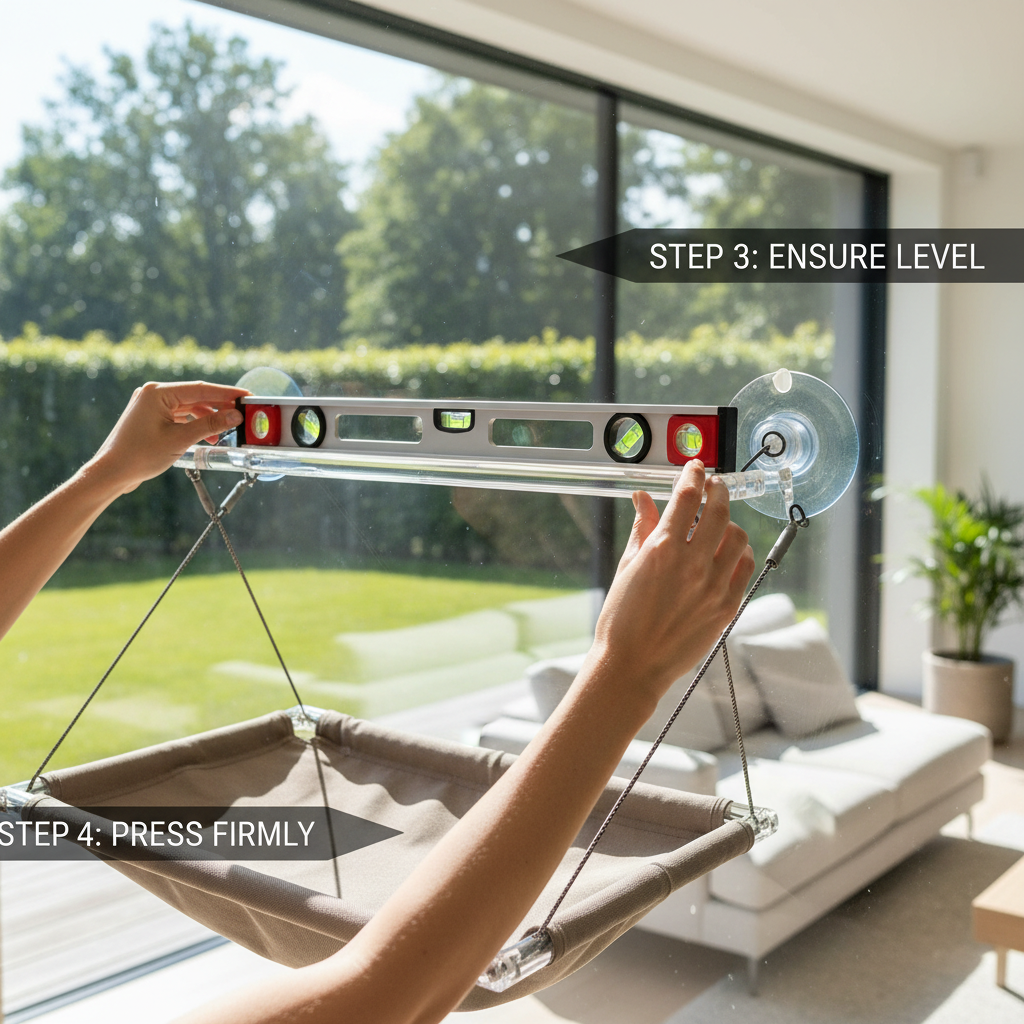
- Press each cup firmly and hold for a few seconds, then re-press after you mount the frame.
- Keep the bed level. If it’s angled, your cat’s weight constantly pulls in one direction.
- If the design includes a brace, adjust it to carry load, not just touch the wall.
Safety test before letting your cat jump up
- Pull down with both hands gradually, then add a gentle bounce to mimic a jump.
- Listen for squeaks and watch for micro-slips at the cups.
- Wait 15–30 minutes and test again, some seals fail quickly.
According to the American Veterinary Medical Association (AVMA), providing safe environments is part of responsible pet ownership, so treat the “test phase” as non-negotiable, especially with elevated products.
Keeping it reliable: maintenance that people skip
A cat window hammock for large cats heavy duty can still degrade quietly. Suction setups are a little like tires: they work until they don’t, and heat and time are the accelerants.
- Weekly quick check: run your hand under cups, confirm edges still fully sealed.
- Monthly reset: remove, clean cups and glass, re-mount to refresh the seal.
- Seasonal reality check: hot summers and cold snaps can change how rubber behaves, so re-test when weather swings.
- Fabric care: keep the cover clean so oils and fur don’t reduce grip at attachment points.
If you notice any curling cup edges, frame bowing, or frayed stitching, treat it like a “replace soon” warning rather than something to watch indefinitely.
Common mistakes (and what to do instead)
- Mounting on a dusty window: it can feel solid for a day, then slip. Clean thoroughly and re-seat.
- Assuming weight rating equals real-world safety: ratings vary by brand and testing method. Prioritize construction and support design.
- Placing it too high with no backup landing: for big cats, add a chair, ottoman, or low cat tree nearby.
- Using it as a “set and forget” item: suction needs periodic maintenance, even with premium cups.
- Ignoring your cat’s feedback: hesitation often means instability. Fix the mount before bribing with treats.
When to consider a different setup (or ask a pro)
Sometimes the “best” window hammock is not the window hammock. If your windows are textured, your climate swings hard, or your cat has mobility limits, a sill-mounted bed, a floor-to-ceiling cat tree near the window, or a wall-mounted shelf system may be safer.
If your cat is older, has chronic pain, or has a history of falls, it’s reasonable to check with a veterinarian about safe heights and jumping demands. And if you rent or have strict building rules, a quick chat with your property manager can save you from hardware mistakes you can’t undo.
Conclusion: a stable window seat is a small upgrade that changes daily life
A sturdy window perch is one of those items your cat uses every day, so it’s worth getting the details right. Choose a build that matches your cat’s body and habits, install it like you expect it to be stress-tested, then keep a simple maintenance rhythm so you’re not surprised later.
Action idea: pick a perch style today, then schedule a 10-minute install and test window. If you’re replacing an older model, keep the old spot blocked for a day so your cat doesn’t attempt a “trust fall” onto a removed mount.
FAQ
What weight rating should I look for in a heavy-duty window hammock?
A higher number helps, but it’s not the whole story. Look for stiff frames, large cups, and ideally a brace system, because real jumps create extra force beyond body weight.
Do suction cups work in cold weather?
They can, but cold can make rubber stiffer and reduce sealing performance in some situations. If your window gets very cold, re-test the mount after temperature drops and consider a braced design.
Why does my cat window hammock slowly slide down over a few days?
That usually points to a slow air leak at the cup edge, residue on the glass, or slight tilt that keeps pulling downward. Remove it, clean both surfaces, mount level, and test again.
Is a braced window hammock safer for large cats?
In many homes, yes, because it reduces reliance on suction alone. It’s not a guarantee, but it often feels more stable, which matters for hesitant or heavier cats.
Can I install a window hammock on double-pane windows?
Generally, suction mounts attach to the interior glass surface, so double-pane construction is usually fine. Avoid stressing seals or frames, and don’t use adhesives that could damage the window.
How high should I place a window hammock for a big cat?
High enough for a view, low enough that a slip won’t be a major fall. A practical approach is placing a chair or cat tree nearby so your cat has a step-up and a safer exit route.
How do I get my cat to use the new perch?
Stability first, then familiarity. Add a blanket that smells like home, use a treat trail, and give it a day or two. If your cat avoids it completely, re-check for wobble.
If you’re trying to replace a sagging perch with a cat window hammock for large cats heavy duty and you want a quicker decision, make a shortlist using the table above, then choose based on your window type and whether you prefer suction-only or a braced design for extra confidence.