
Ferret harness walking is one of those ideas that sounds simple until your ferret turns into a slippery little magician and you realize collars are a no-go. The good news is that with a soft strap harness, the right fit, and a patient plan, many ferrets can learn to walk outside calmly and safely.
This guide breaks down what actually matters: harness styles that tend to work, how to size and adjust without pinching, how to leash-train without a wrestling match, and what to watch for so you don’t accidentally reward the escape routine.
I’ll also call out a few common mistakes people make when buying the “cutest” harness, plus a quick checklist you can use before you head out the door.
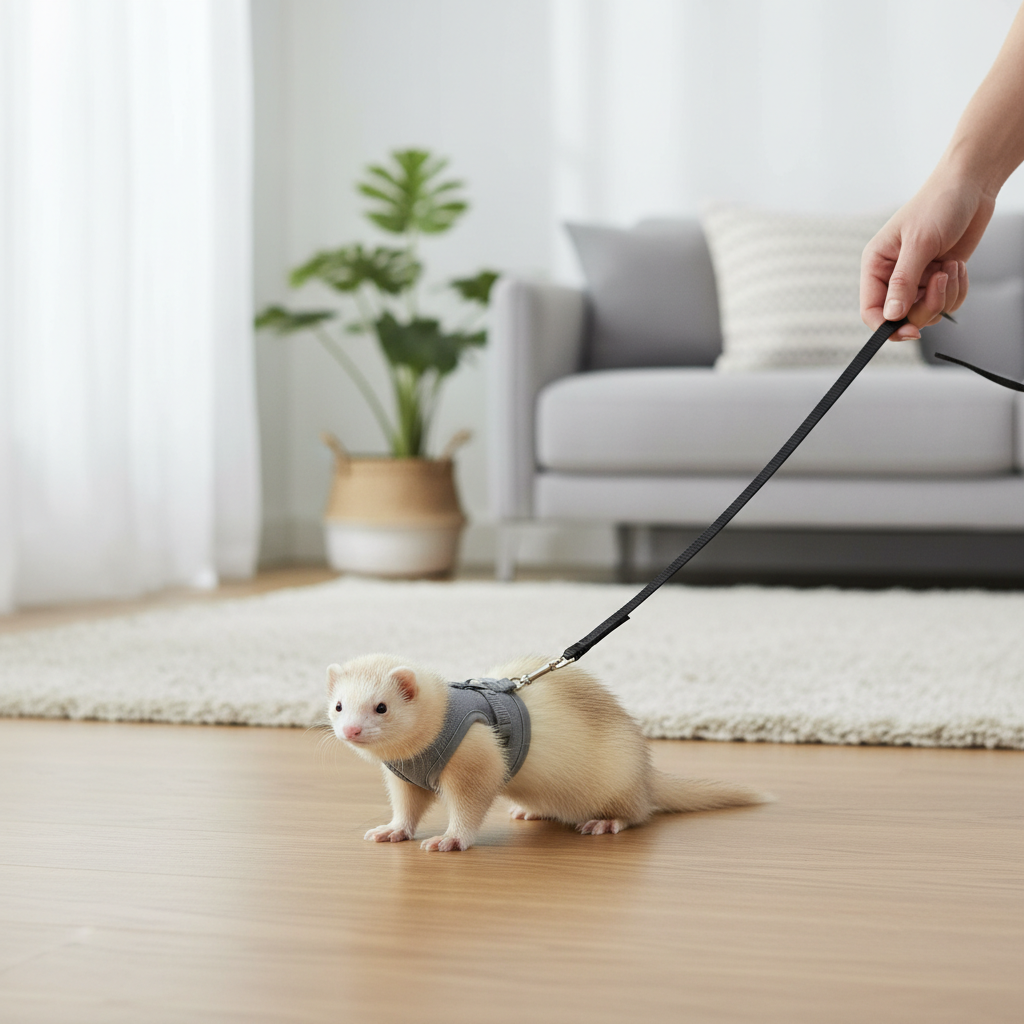
Why a Soft Strap Harness Works Better Than “Whatever Fits”
Ferrets are built for tunnels, not straight lines, which is why escape risk is the main concern with any walking setup. A soft strap harness usually helps because it can distribute pressure across the chest and shoulders without relying on the neck.
It also tends to move with the ferret’s body rather than fighting it. That matters when your ferret does the classic “back up, twist, and vanish” move.
- Comfort: Softer webbing can reduce rubbing during short sessions.
- Adjustability: Multi-point adjustment helps match a long, narrow torso.
- Control: A properly placed D-ring helps you guide without jerking.
According to the American Veterinary Medical Association (AVMA), choosing humane restraint that avoids neck pressure is generally safer for small animals; for ferrets specifically, a harness is typically preferred over a collar.
Picking the Right Harness Style: Soft Strap vs H-Style vs Vest
There isn’t one harness that fits every ferret body type, but a few patterns show up repeatedly. If you’re shopping for ferret harness walking gear, focus less on “small pet harness” marketing and more on how the shape prevents backing out.
Soft Strap (Figure-8 or Multi-Adjust)
Often the most practical choice if you can dial in fit. Look for smooth edges, strong stitching, and buckles that don’t sit right in the armpit area.
- Best for: slim, wiggly ferrets who need a snug, customizable fit
- Watch for: strap twist, buckle placement rubbing behind front legs
H-Style Harness
Simple, lightweight, and less bulky. Some ferrets tolerate it well, but it can be easier to reverse out of if it’s even slightly loose.
- Best for: calmer ferrets, short indoor practice sessions
- Watch for: the “reverse and slip” problem when startled
Vest Harness
Vests can feel secure, but not all are escape-resistant. Some are too stiff, some overheat quickly, and some have gaps that a ferret can exploit.
- Best for: ferrets that dislike straps and accept fabric coverage
- Watch for: heat buildup, restricted shoulder movement
Fit Comes First: How to Measure and Adjust Without Guessing
If there’s one reason people quit, it’s fit. Too loose invites escapes, too tight turns every step into a complaint. Aim for “secure, not cinched.”
Many manufacturers label sizes for “small animals,” so measurements matter more than the tag. If you’re between sizes, a more adjustable harness often beats sizing up.
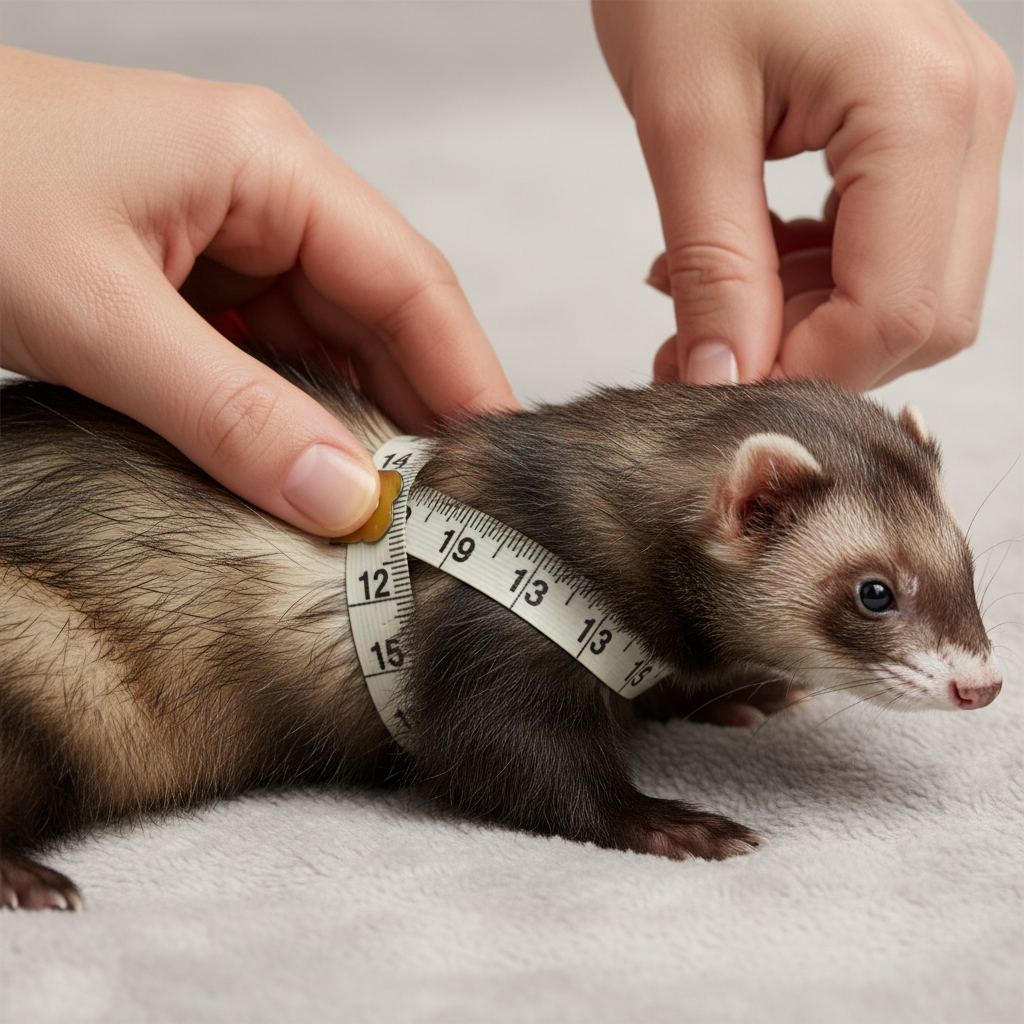
Quick measuring points
- Chest girth: around the widest part behind the front legs
- Neck/upper chest: where the front strap will sit (not the throat)
- Body length (optional): helps with vest harness sizing
Fit test (real-world, not perfect-world)
- You can slide one finger under each strap without force.
- When your ferret backs up slowly, the harness stays centered and doesn’t rotate.
- The chest strap sits on the upper chest, not pressing the windpipe area.
- No rubbing at the “armpit” after a 5–10 minute indoor session.
Self-Check: Is Your Ferret Ready for Leash Training?
Not every ferret enjoys the outdoors, and that’s okay. The goal is safe enrichment, not forcing a routine. Use this quick list to decide whether to slow down, switch tactics, or keep going.
- Calm handling: your ferret tolerates brief restraint without panic biting
- Curious behavior: explores new rooms instead of freezing for long periods
- Harness tolerance: can wear the harness indoors for a few minutes while distracted
- Health baseline: no obvious coughing, open-mouth breathing, or lethargy; if unsure, ask a vet
According to the American Animal Hospital Association (AAHA), behavior change and stress signals are important early indicators to take seriously in small pets; when in doubt, shorten sessions and reduce stimulation.
Step-by-Step: A Practical Plan for Ferret Harness Walking
This is the part most people rush. If you treat the first week like “training reps” instead of “real walks,” you usually get better results.
1) Make the harness boring
Leave it near a favorite sleeping spot, then offer a high-value treat when your ferret investigates it. No chasing, no surprise buckling on day one.
2) Short indoor wear, then remove
Start with 30–60 seconds, distract with a lickable treat or a toy, then take the harness off before your ferret starts the dramatic flop.
- Do 2–3 micro-sessions per day for a few days.
- Increase time only when your ferret stops obsessing over the straps.
3) Introduce the leash with zero pressure
Clip the leash and let it trail while you supervise closely, then pick it up gently. If your ferret bolts and hits the end of the leash, you went too fast.
4) First outdoor sessions: tiny, quiet, controlled
Choose a calm area, ideally your yard or a quiet patio. Keep sessions short, 3–10 minutes, and end while it’s still going “okay.”
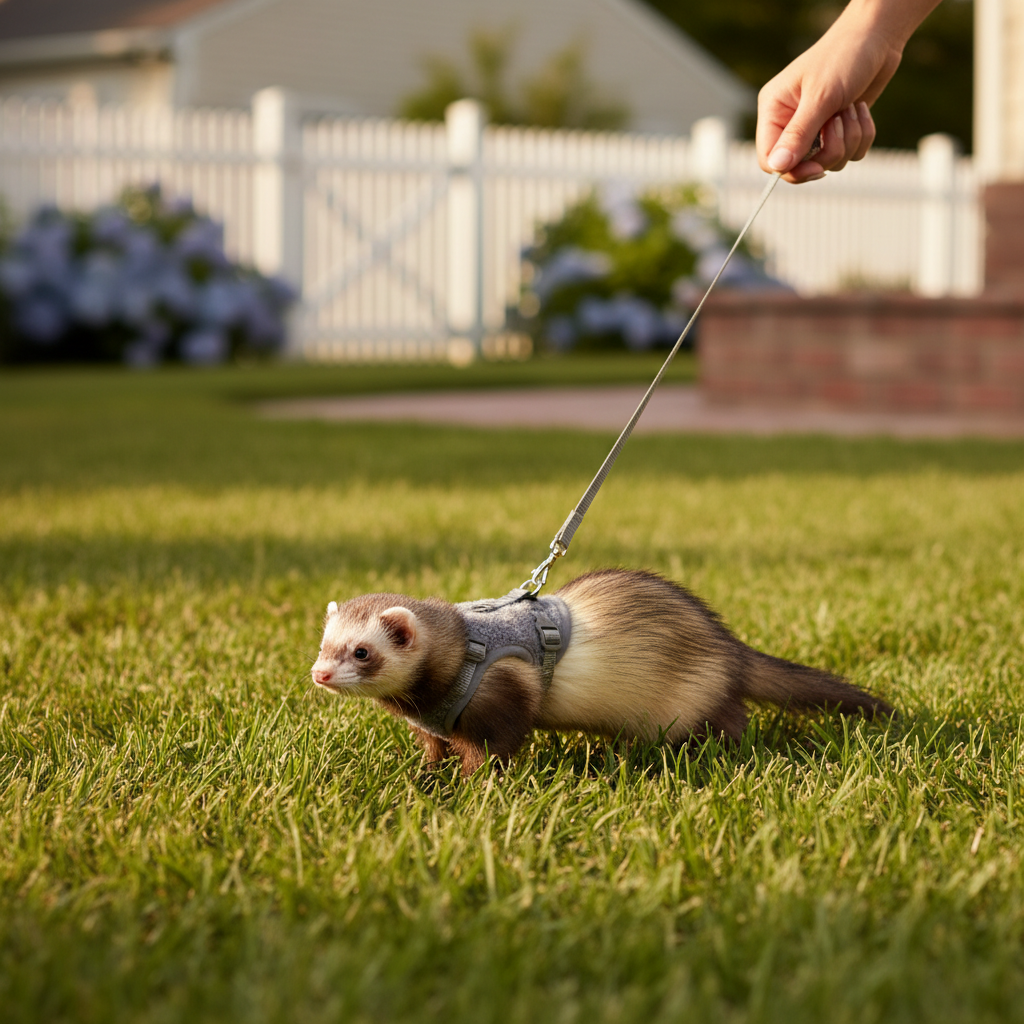
5) Reward the “check-in,” not the pull
If you give treats when your ferret hits the leash end, you may teach pulling. Instead, reward when your ferret comes back toward you or pauses calmly.
Common Problems (and Fixes That Actually Help)
Most issues aren’t “bad ferret behavior,” they’re usually a mismatch between fit, environment, and expectations. Here are the usual trouble spots.
- Constant rolling/flopping: the harness may feel unfamiliar, or the straps might pinch behind the legs. Reduce wear time, re-check strap angles.
- Backing out: typically a loose chest/neck loop or a design that rides up. Adjust tighter within comfort limits, consider a more escape-resistant shape.
- Freezing outside: overstimulation or fear. Try a quieter location, shorter sessions, and let your ferret observe without moving.
- Nipping when harness comes out: your ferret learned that harness equals frustration. Reset with treat pairing and slower steps.
Safety Notes People Skip (But Shouldn’t)
Ferrets are tough and also surprisingly easy to overwhelm. For ferret harness walking, safety is mostly about preventing sudden panic, overheating, and escapes.
- Never attach a leash to a collar; neck structures are delicate and injury risk may increase with pulling.
- Avoid retractable leashes; they can create sudden tension and fast “slingshot” moments.
- Watch temperature and surfaces; hot pavement and high heat can stress small animals quickly.
- Double-check doors and gates; one mistake becomes a chasing situation fast.
- Use ID basics; a tag on the harness and updated microchip info can help if an escape happens.
According to the ASPCA, identification and secure handling are core parts of preventing lost pets, especially during outdoor activities.
Quick Comparison Table: What to Look For in a Soft Strap Harness
| Feature | Why it matters | What to choose |
|---|---|---|
| Adjustment points | Ferrets vary a lot in torso shape | At least 2, ideally 3–4 |
| Strap width | Too thin can rub, too wide can restrict | Moderate width with smooth edges |
| Buckle placement | Can create pressure behind front legs | Buckles away from “armpit” area |
| D-ring position | Affects control and harness rotation | Centered on back, stable stitching |
| Material feel | Skin irritation happens faster than you think | Soft webbing, minimal seams |
When to Ask a Vet or a Ferret-Savvy Professional
If your ferret repeatedly panics, breathes oddly, collapses, or shows persistent discomfort in a harness, stop and get advice. Sometimes the issue is fit, sometimes it’s pain, respiratory sensitivity, or stress tolerance that needs a different enrichment plan.
In many cases, a ferret-experienced veterinarian can help you judge whether outdoor walks make sense for your specific pet, especially for seniors or ferrets with prior health concerns.
Conclusion: Keep It Simple, Keep It Safe, Build the Habit
Key takeaways: pick a soft strap harness that stays centered, prioritize fit over looks, train indoors in tiny sessions, and keep early outings short and calm. If your ferret never loves walking, that doesn’t mean you failed, it just means you should shift to other enrichment that feels safer for them.
If you want one next step, do this: measure your ferret tonight and run a 60-second indoor harness session tomorrow, then stop while it’s still going smoothly.
FAQ
What size harness is best for a ferret?
Size depends more on chest girth and adjustability than the label. If the harness offers multiple adjustment points, you can usually fine-tune fit better than with a “one size small pet” option.
Can ferrets slip out of a soft strap harness?
Yes, especially if the chest/neck loops are loose or the harness rotates when backing up. Do a slow “backup test” indoors; if it shifts toward the head, adjust or switch to a more escape-resistant design.
How tight should a ferret walking harness be?
Secure enough that the harness stays centered, but not so tight that it pinches behind the legs or presses the upper chest. A common fit check is one finger under each strap, but comfort and movement matter more than rules.
Why does my ferret flop over when I put the harness on?
Often it’s protest or unfamiliar sensation, not injury. Reduce wear time, add treats, and build tolerance gradually; if flopping turns into heavy stress or breathing changes, pause and consider professional guidance.
Is it safe to take my ferret outside on a leash?
It can be, if you manage escape risk, temperature, and stress. Quiet locations and short sessions help, and it’s smart to consult a ferret-savvy vet if your pet has health concerns.
Should I use a retractable leash for ferret harness walking?
Usually not recommended because tension can change suddenly and startle a ferret. A light, fixed-length leash gives steadier feedback and is easier to manage close to the ground.
How long does leash training take for ferrets?
Some adapt in a week or two of short daily sessions, others take longer, and a few never enjoy it. Treat it like desensitization rather than obedience training, and progress tends to be smoother.
What if my ferret refuses to walk outside?
Try making the first outings about sniffing and observing, not distance. If your ferret stays distressed, consider indoor enrichment alternatives; forcing outdoor walks often backfires.
If you’re trying to make ferret harness walking feel less stressful, a simple checklist helps: confirm measurements, pick a soft strap harness with real adjustability, and plan your first week as short indoor practice rather than “full walks.” That approach usually saves time, and it’s kinder to your ferret.