
Using a dog training clicker set can make your timing clearer and your dog’s learning less confusing, but only if you set it up right from day one.
A lot of people buy a clicker, try it twice, then decide “my dog doesn’t get it.” In reality, the clicker usually works, what breaks is the rhythm: late clicks, no reward ready, or asking for too much too soon. Those small slips add up fast.
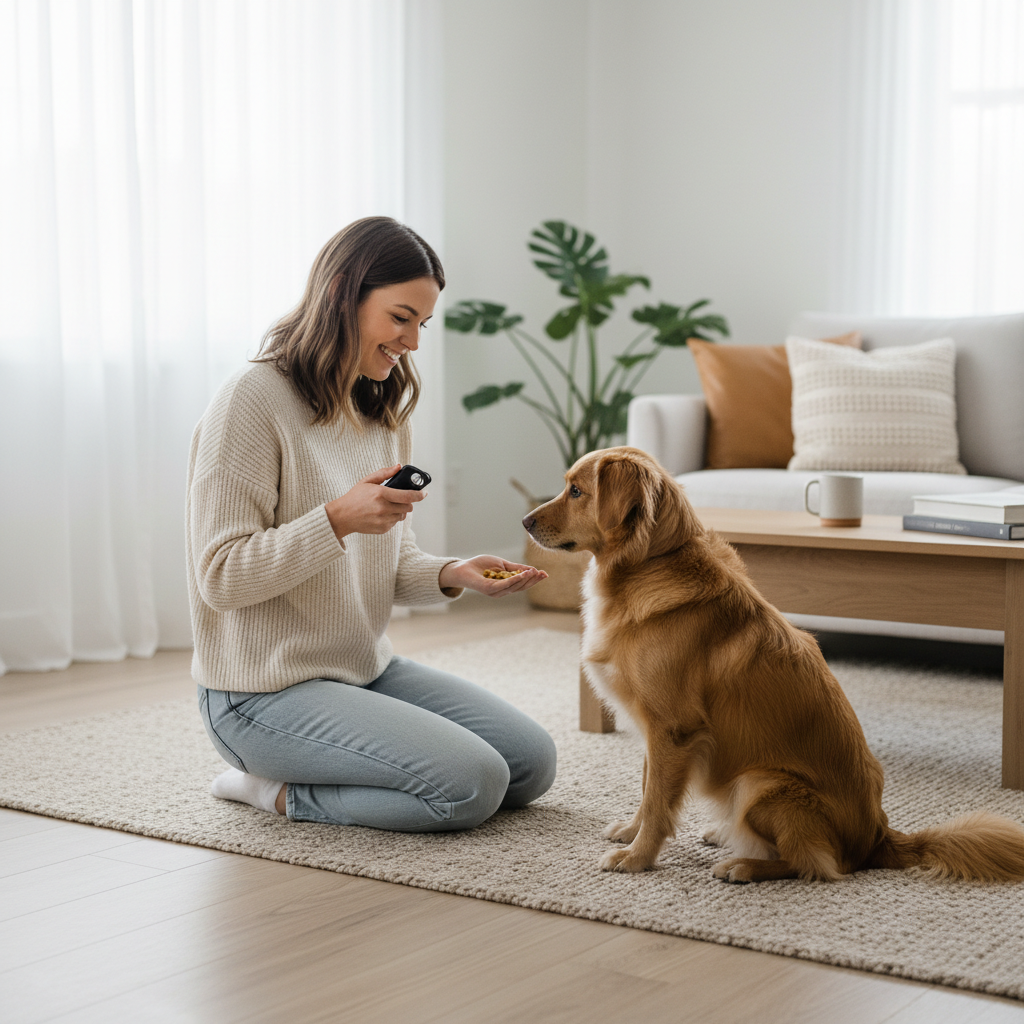
This guide covers what’s typically inside a clicker kit, how to “charge” the clicker, and how to run short sessions that actually stick. I’ll also include a quick table for choosing the right setup, plus a troubleshooting checklist for the moment you feel stuck.
What a Dog Training Clicker Set Usually Includes (and What Actually Matters)
Most sets look similar on paper, but a few details change how easy it feels in real training, especially when your hands are full with leash, treats, and a wiggly dog.
- Clicker(s): Box clickers and button clickers both work. Box styles tend to be crisp and loud, button styles can feel easier to press quietly.
- Wrist strap or finger band: This is not a “bonus,” it’s what keeps you from dropping the clicker mid-rep.
- Lanyard: Helpful for walks, but some dogs find swinging items distracting at first.
- Target stick (in some kits): Useful for shaping (teaching by tiny steps) and guiding position without physically pushing the dog.
- Storage pouch: Nice, but not training-critical.
If you only remember one thing: pick a clicker you can press without changing your grip, because grip changes cause late clicks.
How Clicker Training Works (So You Don’t Accidentally Teach the Wrong Thing)
The click is a “marker,” meaning it marks the exact moment your dog did something you want repeated. The treat is the paycheck that follows. When the click comes late, you mark the wrong moment, and your dog learns a different behavior than you intended.
According to the American Veterinary Society of Animal Behavior, reward-based methods are recommended because they avoid the risks that can come with aversive techniques, and they support better welfare and learning for many dogs.
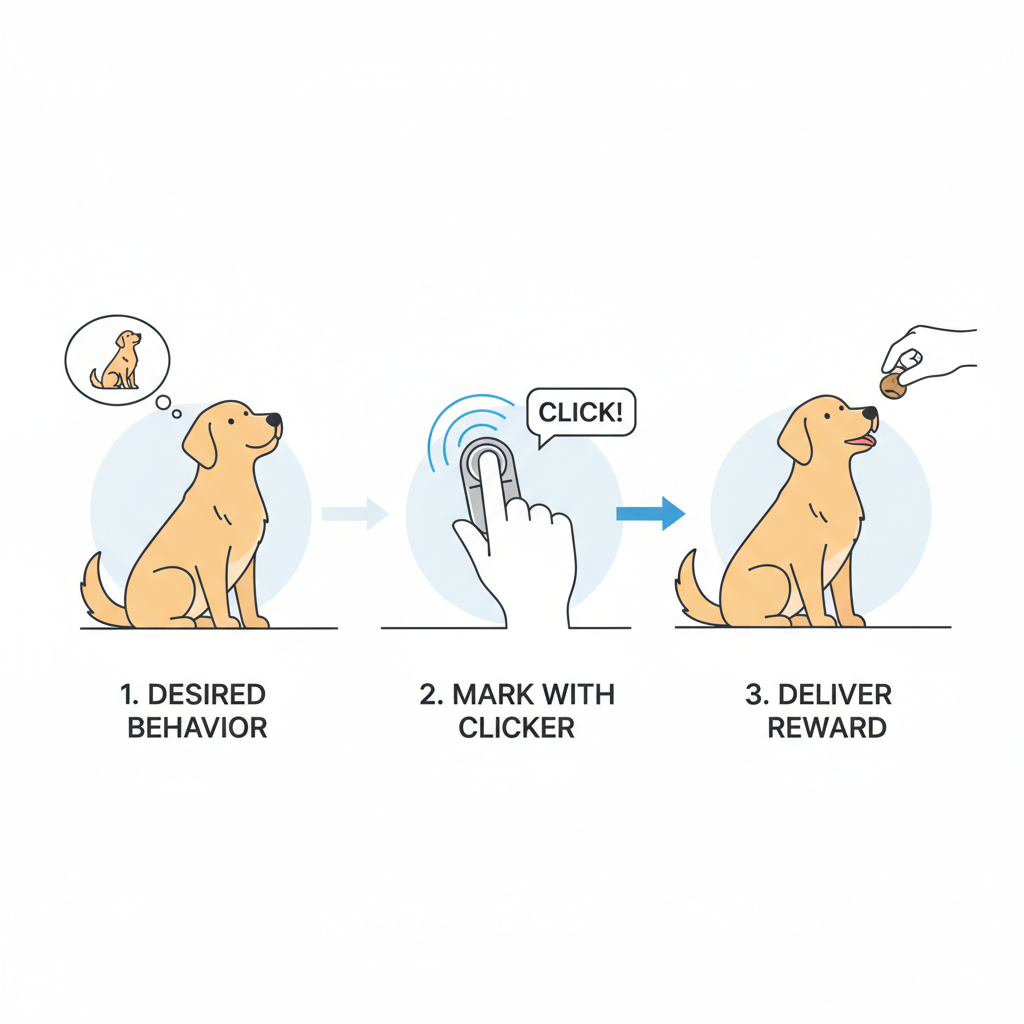
Also worth saying out loud: the click is not a remote control. It won’t “make” your dog sit. It simply tells your dog, “Yes, that moment, do that again.”
Quick Self-Check: Is a Clicker Set a Good Fit for Your Dog and Household?
Clickers work for most dogs, but your environment matters. Use this quick list to decide whether you should start with a clicker or a verbal marker like “yes.”
- Your dog startles easily (new rescue, noise-sensitive): start with a softer clicker or a verbal marker, then introduce the click later.
- Multiple family members train: a clicker set helps standardize timing, which reduces mixed signals.
- You train on walks: look for a kit with a secure strap and a quiet button clicker option.
- You struggle with coordination: use a treat pouch and pre-load treats in your clicker hand so click-and-feed feels automatic.
- You want trick training or shaping: a kit that includes a target stick can save time.
If your dog shows fear, shutdown behavior, or escalating reactivity, it may be smarter to get professional help early rather than “power through” training tools.
Choosing the Right Dog Training Clicker Set: A Practical Comparison Table
Here’s a simple way to match a set to your most common training situation.
| Situation | What to Look For | Why It Helps |
|---|---|---|
| Apartment or noise-sensitive dog | Soft button clicker, optional muffled sound | Less startling, easier to keep sessions calm |
| Outdoor leash training | Secure wrist strap + easy-press design | Reduces drops and late clicks while handling the leash |
| Family training plan | Multi-clicker pack, consistent sound across units | Keeps the marker consistent between people |
| Tricks and shaping | Target stick included, comfortable grip | Makes tiny progress steps easier to show and reward |
Step-by-Step: How to Use a Clicker Set Without Overthinking It
This is the part most people rush. If you slow down here, everything later feels easier.
1) “Charge” the clicker in 60 seconds
Click, then immediately feed a treat. Repeat 10–20 times. No cues, no asking for sit, nothing fancy. You’re building the association: click predicts reward.
- Keep treats pea-sized so you can do more reps without overfeeding.
- Feed right after the click, even if your dog moves, because the click already marked the moment.
2) Start with behaviors your dog already offers
Pick something easy: looking at you, sitting naturally, stepping onto a mat. Click the instant it happens, then reward.
3) Add the cue after the behavior looks predictable
When your dog repeats the behavior reliably, say the cue once, then wait. Click the moment the behavior happens, then treat. This prevents the cue from turning into background noise.
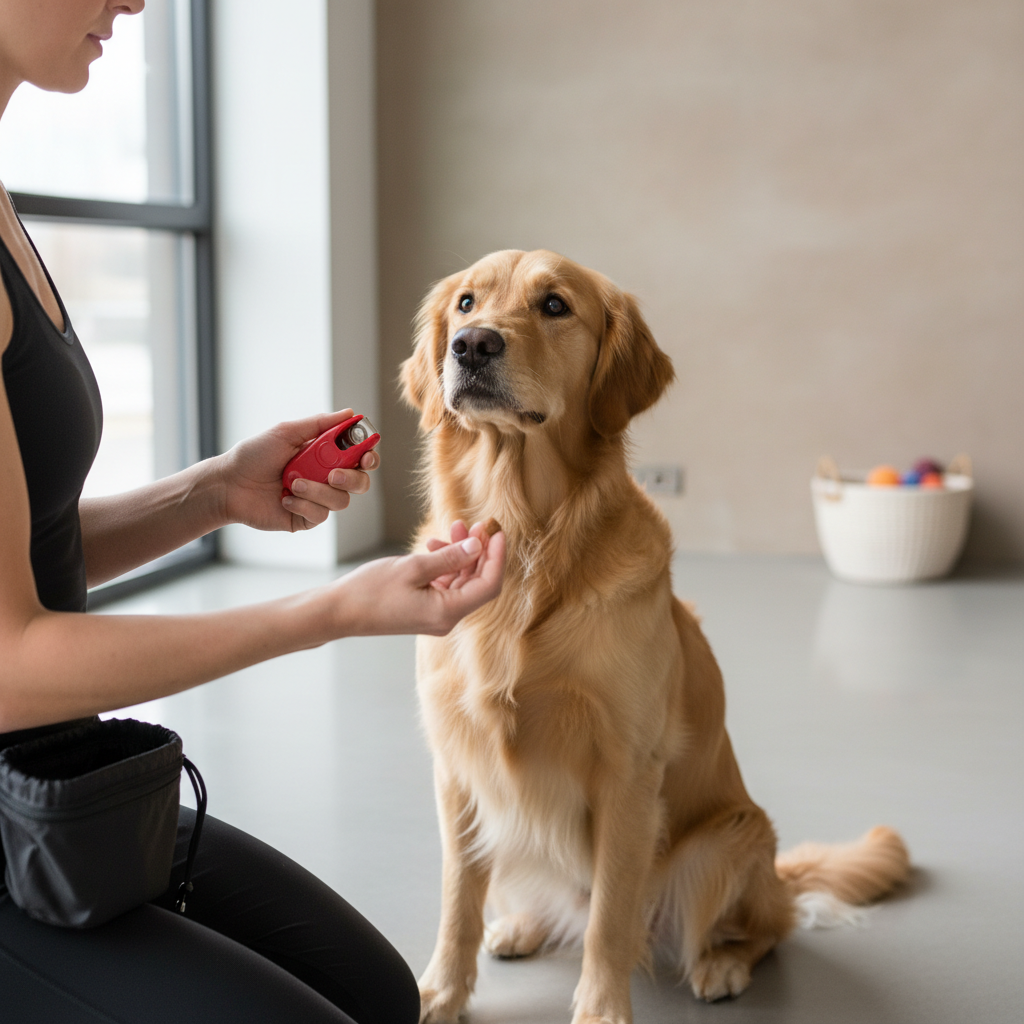
4) Keep sessions short on purpose
A good starting point is 3–5 minutes, 1–2 times per day. Stop while your dog still wants more. That “unfinished feeling” keeps motivation high next session.
Common Problems (and Fixes That Usually Work)
Most clicker issues aren’t “stubborn dog” issues, they’re mechanics and setup.
- Problem: My dog ignores the click.
Fix: Re-charge the clicker for a few mini-sessions, and use higher-value treats in distracting environments. - Problem: I click too late.
Fix: Lower your criteria. Click smaller steps, and practice clicking while watching a video or bouncing a ball, it builds timing without the pressure of training. - Problem: My dog gets bitey for treats.
Fix: Pause and reset. Feed from an open palm, use a “treat magnet” hand position, and reinforce calm mouth behavior. If arousal stays high, consider consulting a certified trainer. - Problem: My dog only works when the clicker is visible.
Fix: Hide the clicker behind your leg, click from a pocket, or alternate with a verbal marker so the dog responds to the cue, not the tool. - Problem: Everyone in the house clicks differently.
Fix: Agree on one marker system, one treat type for basic training, and one rule: click means treat, every time.
Key point: don’t use the click to “get attention.” If you click when nothing good follows, the marker becomes meaningless.
Safety, Ethics, and When to Get Professional Help
Clicker training is low-risk, but behavior situations can be high-stakes. If your dog has a bite history, shows fear aggression, or guards food or objects, DIY plans may backfire even with positive reinforcement.
- Look for a credentialed professional such as a CPDT-KA trainer or a board-certified veterinary behaviorist (DACVB), especially for aggression and severe anxiety.
- According to the American Kennel Club, keeping training sessions positive and consistent supports better learning and a stronger bond, which matters even more with sensitive dogs.
If you’re unsure whether a behavior is normal puppy chaos or a bigger issue, it’s reasonable to ask a professional for an assessment. A short consult can save weeks of frustration.
Conclusion: Make the Clicker Set Work for You, Not the Other Way Around
A dog training clicker set is most useful when it helps you stay consistent: clear timing, small steps, and rewards you can deliver fast. If you focus on those basics, the tool feels almost invisible, and your dog’s progress becomes easier to read.
Your next move: charge the clicker today, then pick one simple behavior to reinforce for three minutes. Tomorrow, repeat. That rhythm beats a one-hour “marathon session” almost every time.
FAQ
How long does it take for a dog to understand a clicker?
Many dogs connect click-to-treat in a single short session, but real training progress depends on repetition and how distracting the environment is. If your dog seems confused, re-charge the clicker for a couple days and keep tasks easy.
Can I use a verbal marker instead of a clicker?
Yes. A crisp “yes” can work well, especially if you forget tools. The clicker tends to be more consistent between people and easier for precise timing, which is why many households still prefer a set.
What treats work best with clicker training?
Soft, tiny treats are usually easiest because your dog can chew quickly and return to work. In high-distraction places, you may need higher-value food, just balance it with your dog’s diet and ask your vet if weight is a concern.
Is clicker training good for puppies?
Often, yes, because it rewards what you like before bad habits settle in. Keep sessions very short, avoid overwhelming cues, and watch for overstimulation, some puppies need more breaks than you expect.
Should I click when my dog stops barking?
Sometimes, but be careful about timing. If you click while the dog pauses mid-bark, you might accidentally reinforce the barking pattern. It’s usually cleaner to click calm behaviors you want instead, like looking at you or going to a mat.
Can a clicker help with leash pulling?
It can, as a marker for the moment the leash goes slack or your dog checks in with you. Pair it with structured setups: low-distraction starts, frequent rewards, and clear criteria for what earns a click.
What if my dog is scared of the click sound?
Try muffling the clicker in a pocket, switching to a quieter model, or using a verbal marker temporarily. If fear responses persist, it’s reasonable to consult a trainer who can guide a gradual desensitization plan.
If you’re trying to build a simple home routine and want fewer “what do I do next” moments, choose a clicker set you can hold comfortably, prep treats in advance, and run the same 3-minute drill daily until it feels automatic.