
best cat litter mats waterproof is the phrase most people end up searching after they’ve wiped up one too many mystery puddles near the box and realized a “regular” mat only solves half the problem.
A good waterproof litter mat does two jobs at once, it catches dry litter that sticks to paws, and it blocks moisture from soaking into your floors, baseboards, or grout lines. If you live in an apartment with laminate, or you’ve got a cat who sometimes misses the box edge, this small accessory can quietly save a lot of cleanup time.
Where shoppers get stuck is that “waterproof” gets used loosely. Some mats are water-resistant for splashes, others truly contain urine long enough for you to clean it up. This guide breaks down materials, features that matter in real homes, and how to choose based on your cat’s habits.
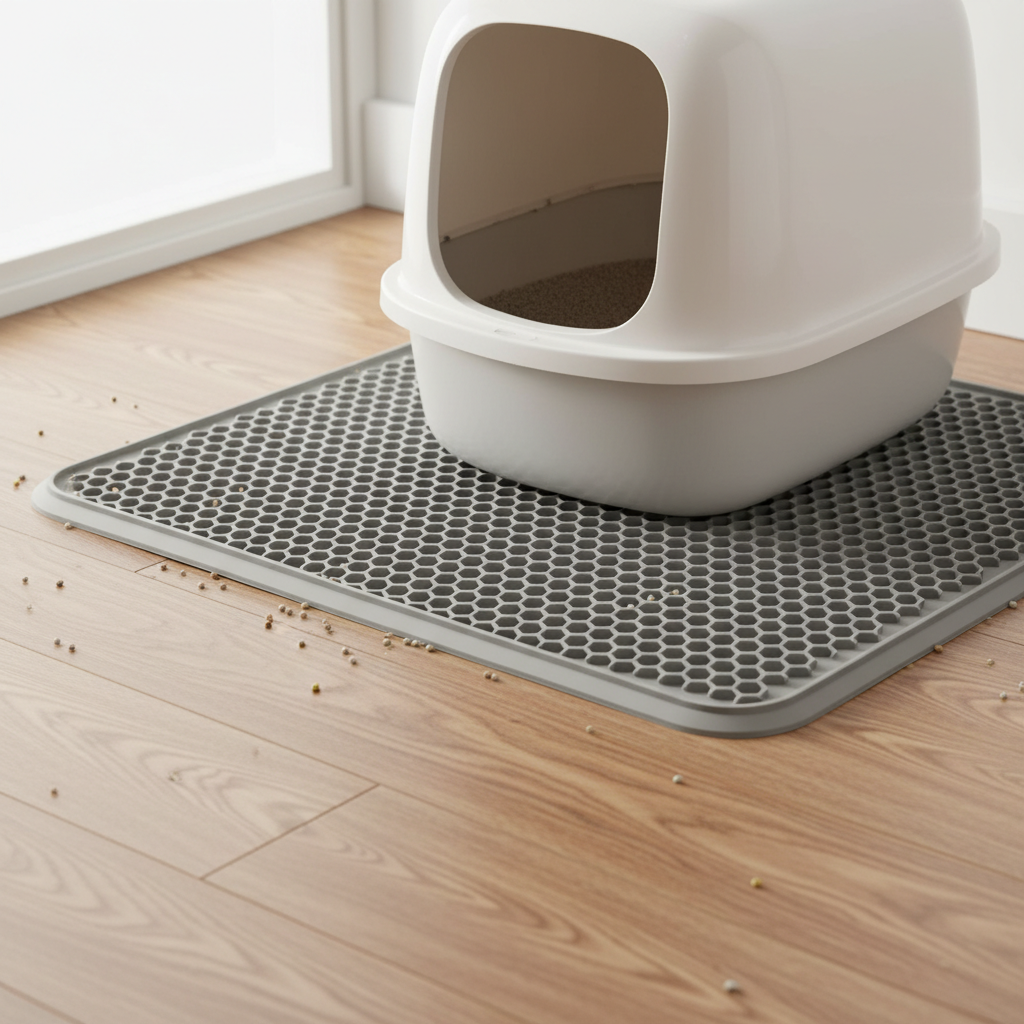
What “waterproof” really means for litter mats
In shopping listings, waterproof can mean anything from “won’t absorb a few drops” to “forms a sealed barrier.” For litter areas, the difference shows up fast because urine can seep under edges, and wet clumping litter can stain porous layers.
Here are the common types you’ll see:
- Fully waterproof (sealed base): Usually rubber, silicone, or EVA with a non-porous backing, moisture stays on top so you can wipe it up.
- Water-resistant (fabric top): Often has a coating, can handle small splashes, but soaking or repeated accidents may penetrate.
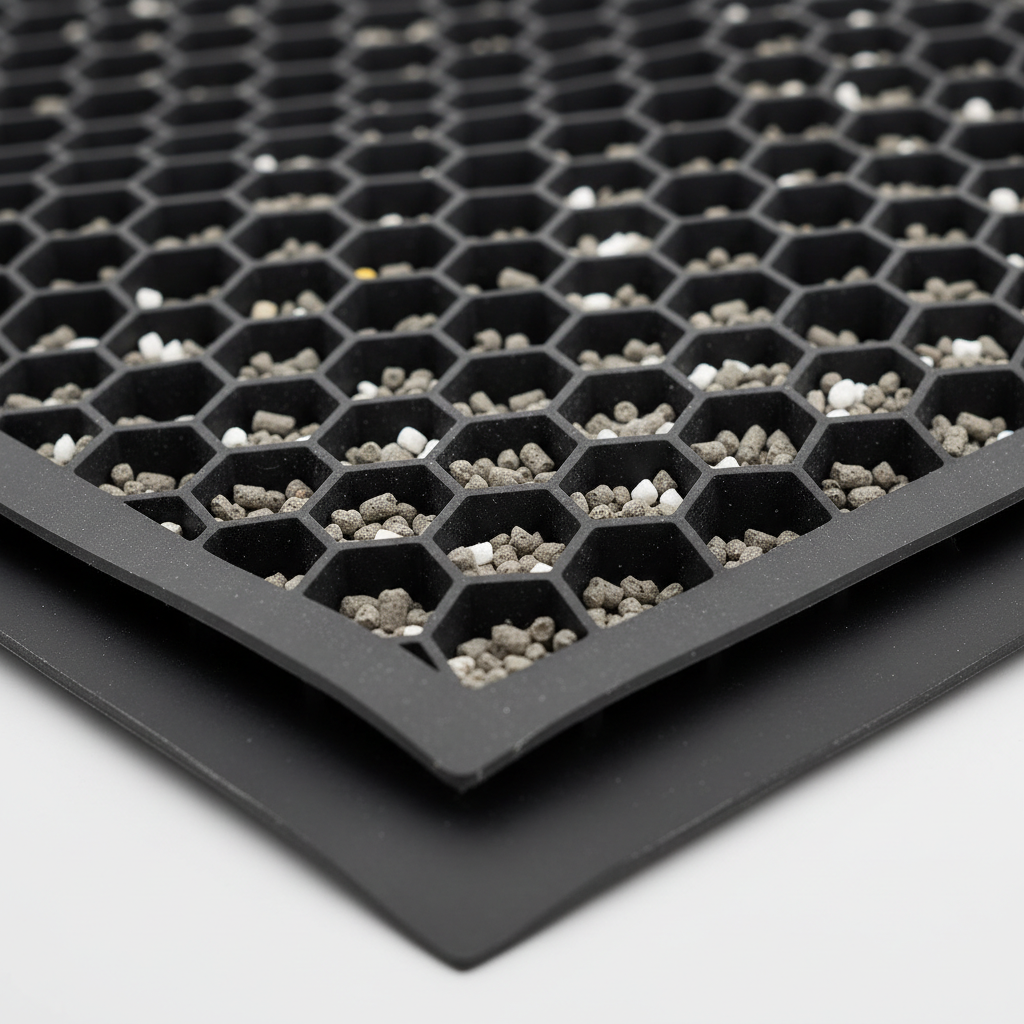
- Layered “honeycomb” mats: Great at trapping dry litter, but waterproof performance depends on whether the bottom layer is truly sealed.
According to the American Society for the Prevention of Cruelty to Animals (ASPCA), many litter box issues are tied to comfort and cleanliness, so if your mat makes the area uncomfortable or harder to keep clean, it can backfire even if it’s “waterproof.”
How to choose the right waterproof mat for your cat and home
Before comparing brands, decide what problem you’re solving: tracking, accidents, or both. The best cat litter mats waterproof for a tidy tracker-only situation can be different from what you want for a senior cat with occasional misses.
Size and coverage
- Go wider than the box opening, many cats exit from the same side, so extend at least 8–12 inches beyond that edge.
- If your cat jumps out, choose a mat that covers the landing zone, not just the box footprint.
- For corner setups, an L-shape or two smaller mats can fit better than one oversized piece that curls.
Material and surface feel
- Silicone: Truly waterproof, easy wipe-down, often grippy, can feel “sticky” to some cats.
- Rubber/PVC: Durable and sealed, may off-gas odors when new, airing out helps.
- EVA honeycomb: Excellent litter capture, usually easy to shake out, check that the bottom layer is non-porous.
- Microfiber/fabric: Soft under paws, but usually not what you want for repeated accidents unless it has a reliable waterproof membrane.
Floor type matters more than people think
Tile can tolerate occasional moisture, but grout and subfloor still suffer if urine creeps underneath. Hardwood and laminate are less forgiving, so prioritize a sealed, non-absorbent base and a mat that lies flat.
Quick comparison: common waterproof litter mat styles
If you want a fast shortlist, this table is the practical trade-off most households run into.
| Mat style | Waterproof performance | Litter capture | Cleaning effort | Best for |
|---|---|---|---|---|
| Silicone tray-style | High (sealed) | Medium | Wipe, rinse | Accidents near box, hard floors |
| Rubber/PVC textured mat | High (sealed) | Medium | Vacuum, wipe | Heavy boxes, high traffic areas |
| EVA honeycomb double-layer | Varies (check bottom) | High | Shake, rinse | Tracking problems, messy diggers |
| Fabric with waterproof backing | Medium | Low to medium | Wash or wipe | Sensitive paws, light tracking |
A practical checklist to tell if a mat is “good enough” for your situation
Use this as a quick self-test. If you check more boxes on the left, you should lean toward a more sealed, tray-like option rather than a purely trapping-style mat.
- You need stronger waterproofing if:
- Your cat sometimes pees over the edge or sprays
- You see wet clumps outside the box weekly
- Your floor is hardwood, laminate, or you rent and worry about stains
- You use a top-entry box and spills happen during cleaning
- You need stronger litter trapping if:
- You find grit in hallways or on the bed
- Your cat kicks litter like it’s a sport
- You use lightweight litter that tracks easily
- You should prioritize comfort if:
- Your cat hesitates at the box entrance
- You have a senior cat with tender paws
- Your cat slips when stepping out
One underrated feature: a slight lip. Even a low edge can buy you time to wipe up before liquid spreads under the mat, and that’s the difference between “annoying” and “floor damage.”
How to set up and use a waterproof litter mat (so it actually works)
Even the best cat litter mats waterproof won’t help much if the layout funnels paws around it, or if the mat keeps curling and creating gaps.
Step-by-step setup
- Degrease the floor first, wipe with mild cleaner so the mat grips instead of sliding.
- Place the mat so the main exit side has the largest landing area.
- If you use a liner or tray under the box, avoid stacking slippery layers, they drift.
- For cats that jump, add a second narrow runner where they land most.
Cleaning routine that stays realistic
- Daily or every other day: Shake outside or vacuum the top texture.
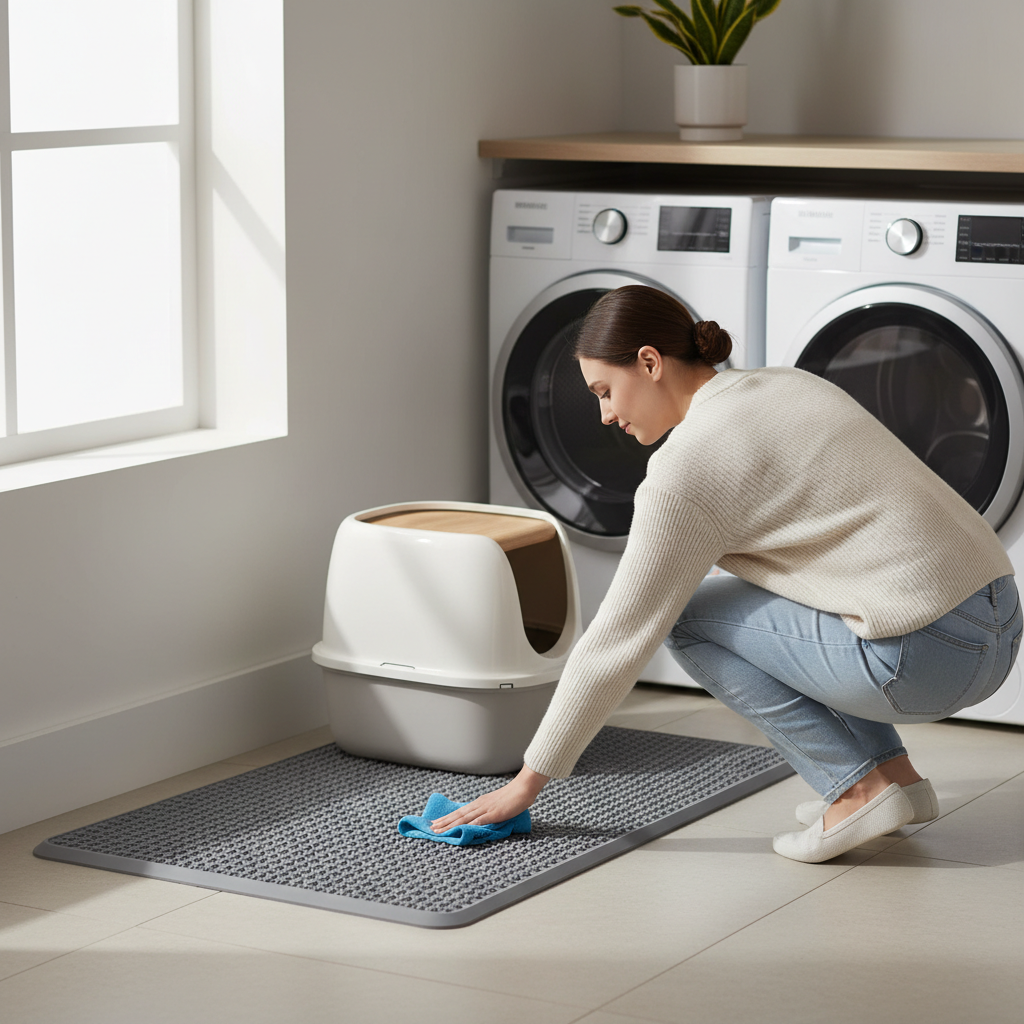
- Weekly: Wipe with warm water and mild soap, especially along edges.
- After accidents: Blot, then clean with an enzyme cleaner designed for pet urine, follow label directions and ventilation guidance.
According to the U.S. Environmental Protection Agency (EPA), cleaning products should be used as directed on the label to reduce exposure risks, which matters when you’re cleaning in small laundry rooms or bathrooms where litter boxes often live.
Common mistakes that make waterproof mats feel “useless”
A lot of frustration comes from small mismatches between mat design and cat behavior, not from the idea of a mat itself.
- Buying for aesthetics first: Plush looks nice, but if accidents happen, it can hold odor and stain.
- Too small to matter: A mat that only fits under the box catches almost nothing, because paws touch the floor before the mat.
- Ignoring edge gaps: If the mat curls or shifts, liquid migrates under it and you never see it until the smell shows up.
- Over-textured surfaces for sensitive cats: Some cats avoid sharp grid patterns, then they step around the mat, which defeats tracking control.
- Assuming “double layer” equals waterproof: Many honeycomb mats trap litter well, but you still need a sealed bottom layer if accidents are part of your reality.
When it’s time to go beyond a mat
If you’re repeatedly dealing with urine outside the box, a waterproof pad is helpful, but it may be a band-aid. Stress, medical issues, box placement, and litter preference can all play a role.
- If your cat suddenly starts missing the box, or urine volume changes, it’s worth calling a veterinarian to rule out medical causes, especially for older cats.
- If spraying is the issue, consider behavior support, more boxes, and environmental changes; a mat can protect the floor but won’t address the driver.
- If odor lingers even after cleaning, you may need to treat subfloor or replace damaged flooring, a professional cleaner or contractor can help assess without guesswork.
Key takeaways and a simple buying plan
If you want one clean decision path, start with your risk level. For frequent accidents or delicate flooring, choose a sealed, truly waterproof base with enough coverage. For heavy tracking with mostly dry mess, prioritize a trap-style surface, but still confirm the bottom layer blocks moisture.
- Measure the exit zone, not just the litter box footprint.
- Pick material based on your “worst day”, not your average day.
- Test for slipping and comfort in the first week, cats vote with their feet.
Once you’ve got the right mat style, the maintenance stays simple, shake or vacuum regularly, wipe edges weekly, and use enzyme cleaner when accidents happen.
Conclusion
The best waterproof litter mat is the one your cat will actually step on, that also keeps moisture from creeping into floors you can’t easily replace. If you’re deciding today, pick the style that matches your mess pattern, then size up a bit and commit to a quick weekly wipe-down, it’s usually the point where litter areas stop feeling like a constant chore.
FAQ
What makes a litter mat truly waterproof vs just water-resistant?
Truly waterproof mats use non-porous materials like silicone or rubber, so liquid stays on the surface. Water-resistant mats may have a coating, but saturation or repeated accidents can seep through seams or fabric layers.
Are EVA honeycomb mats waterproof enough for urine accidents?
Some are, many aren’t. The top layer traps litter well, but you need to confirm the bottom layer is sealed and non-absorbent. If product photos show a fabric-like backing, it may hold odor over time.
How big should a waterproof litter mat be?
Bigger than most people buy. Aim to cover the main exit side by 8–12 inches at minimum, more if your cat jumps out or kicks litter hard.
Do waterproof mats reduce odor?
They can help indirectly by preventing urine from soaking into floors or grout. Odor control still depends on prompt cleanup and an appropriate cleaner, especially after accidents.
Can a waterproof mat stop litter tracking completely?
Usually not completely. It can reduce tracking a lot, but litter type, paw fur length, and cat behavior matter. Pairing a trapping surface with good placement tends to work better than chasing a “magic” mat.
What’s the easiest waterproof mat to clean?
In many homes, silicone or rubber is easiest because you can wipe and rinse quickly. Honeycomb mats trap more litter, but you’ll spend extra time shaking out between layers.
Is it safe to use enzyme cleaners on litter mats?
Often yes, but it depends on the mat material and the product label. Follow directions, rinse if recommended, and if your cat has sensitivities, asking your veterinarian about safer cleaning options can be a smart move.
If you’re trying to choose without overthinking, start by matching the mat to your real mess, frequent accidents usually call for a sealed base, heavy tracking calls for a trapping surface, and if you want a more hands-off setup, pairing a waterproof mat with a high-sided box often reduces cleanup without changing your whole routine.