
Best pet gates for dogs and cats come down to three things most households feel immediately: the right fit for your opening, a latch you trust at 6 a.m., and a setup that stays put when your dog leans or your cat decides it can climb anything.
If you have both species at home, it gets trickier. A gate that blocks a dog might still offer toe-holds for a cat, and a small “cat door” can be an open invitation for a determined small dog. The goal usually is not “one gate forever,” it is choosing the right type for the right doorway, stair run, or kitchen boundary.
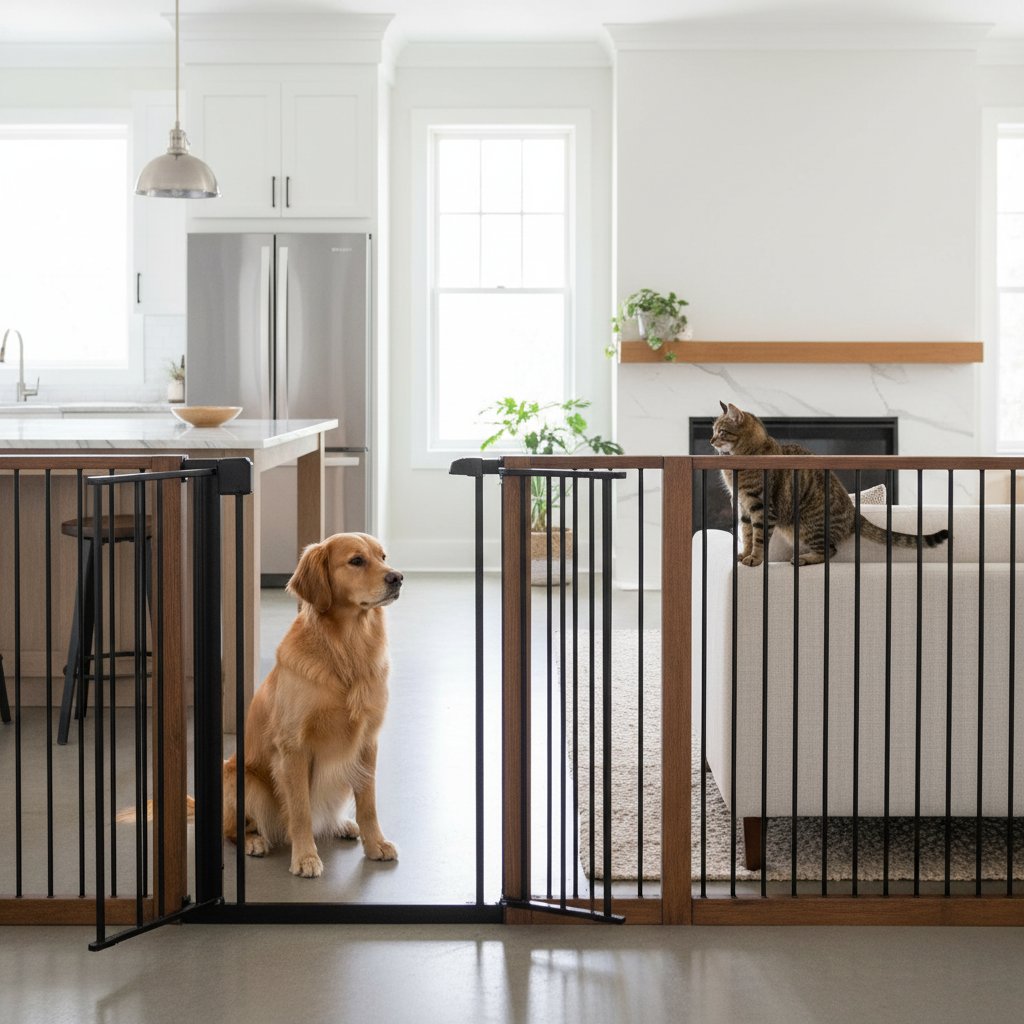
This guide focuses on what actually matters in 2026 shopping: pressure-mounted vs hardware-mounted, height and bar spacing, chew resistance, and real-world “cat behavior” features like climb deterrence and jump angles. You will also get a quick comparison table, a picking checklist, and install tips that prevent the classic wobble-and-pop failure.
What makes a pet gate “good” in real homes
A gate can look sturdy online and still feel flimsy in your hallway. In practice, durability and safety come from a few design choices, not marketing.
- Mounting method: Pressure-mounted gates are convenient for doorways, hardware-mounted gates are the safer default for stairs and high-force dogs.
- Height and climb risk: Taller gates deter jumping, but cats may treat horizontal bars like ladders.
- Bar spacing: Wider gaps can trap small pets or encourage squeezing. Very narrow spacing can be better, but may add weight and cost.
- Latch quality: A one-hand latch helps adults, but “simple lift-and-open” often fails with smart dogs.
- Pass-through options: Pet doors can be convenient, but they complicate multi-pet households.
According to the American Veterinary Medical Association (AVMA), preventing access to hazards and managing the home environment are important parts of pet safety. A gate is one of the simplest tools for that, when it fits the use case.
Quick comparison: common gate types (and who they suit)
Before picking brands, decide on the gate category. Most “bad purchases” happen because the category is wrong for the location.
| Gate type | Best for | Pros | Watch-outs |
|---|---|---|---|
| Pressure-mounted walk-through | Doorways, hall openings | Fast install, removable, usually has a door | Not ideal at top of stairs, can slip if poorly fitted |
| Hardware-mounted (screw-in) | Stairs, high-energy dogs | Most stable, handles pushing and leaning | Leaves holes, slower install, less “temporary” |
| Extra-tall gate | Jumpers, larger dogs | Better vertical deterrence | Cats may still climb if bars are horizontal |
| Retractable mesh | Low-force separation, tight spaces | Discreet, rolls away, good for odd layouts | Not chew-proof, can sag, some cats slip under |
| Freestanding / configurable panel system | Wide openings, room dividers | Flexible shapes, can block fireplaces | Can tip if not weighted, cats may jump between panels |
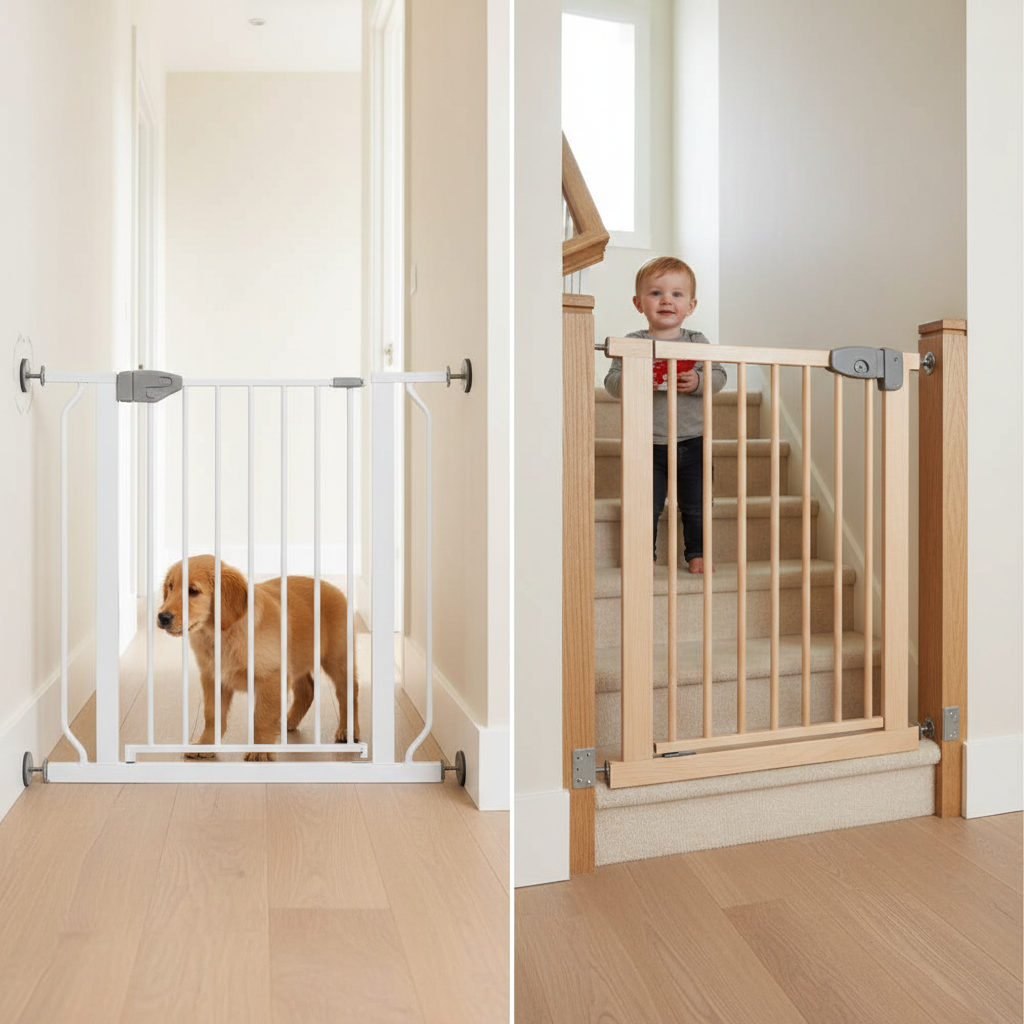
If you only remember one thing, make it this: for stairs, especially the top landing, hardware-mount tends to be the safer choice because a pressure gate can shift when a dog hits it at speed.
Top picks for 2026 (by situation, not hype)
There is no single “best” option for every home, so the most useful shortlist is scenario-based. These categories map to what people actually search for when they type best pet gates for dogs and cats.
1) Best for stairs: hardware-mounted, swing gate
Choose this when you need maximum stability, especially if your dog runs, jumps, or body-checks barriers. Look for a gate that swings open with a strong latch and has a stop that prevents opening over the stairs, depending on layout.
- Look for: all-metal frame, hardware brackets, adjustable swing, reliable dual-action latch
- Avoid: “pressure only” at the top of stairs, thin plastic latch components
2) Best everyday doorway gate: pressure-mounted walk-through
For kitchens, laundry rooms, and hallways, a pressure-mounted walk-through gate usually hits the sweet spot. You get quick removal, less wall damage, and a door that saves your shins.
- Look for: wide walk-through opening, auto-close that actually catches, wall cups for added grip
- Cat note: if your cat climbs, prefer vertical slats or smoother surfaces over ladder-like bars
3) Best for cats that climb: smooth panel or micro-bar design
Cats often defeat “dog gates” by treating horizontal bars like a gym. A smoother panel section or tight vertical bars can reduce footholds. It will not make climbing impossible, but it cuts down the easy wins.
- Look for: minimal horizontal crossbars, taller height, tighter spacing
- Reality check: some cats will still clear a tall gate from a nearby counter, so room setup matters
4) Best for wide openings: configurable panel system
Open-concept homes often need a gate that spans 6–12 feet. Panel systems can wrap around a fireplace, create a play zone, or block a dining area, but they work best when anchored or weighted.
- Look for: add-on panels, wall-mount option, non-slip feet, stable hinges
- Watch: cats using the “accordion” joints as step points
5) Best travel / temporary: retractable mesh (low-force)
Retractable gates shine in rentals and small spaces, but they are not for chewers or pushy dogs. If your goal is gentle separation, they can be a clean solution.
- Look for: lock mechanism that stays engaged, bottom rail that reduces gaps
- Avoid: using as the only barrier for a dog that charges doors
Self-check: choose the right gate in 3 minutes
If you feel overwhelmed by specs, run this quick checklist. It narrows choices fast and prevents the classic “I bought the wrong type” regret.
- Location: doorway, hallway, bottom of stairs, top of stairs, room divider
- Primary pet behavior: leaning, jumping, pawing latches, chewing, climbing
- Size and strength: small dog, medium dog, large dog, multiple dogs
- Cat access goal: keep cat out, let cat pass through, separate feeding areas
- Surface: drywall, plaster, tile, baseboards that could block a tight fit
- Daily use: how many times you open the gate per day, one-hand access needed or not
If stairs are involved, treat that as a separate decision. Many households buy a pressure gate because it is easy, then end up replacing it after a few scary shifts.
Practical setup tips that prevent slipping, wobble, and escapes
A decent gate installed poorly behaves like a cheap gate. These steps are simple, but the details matter.
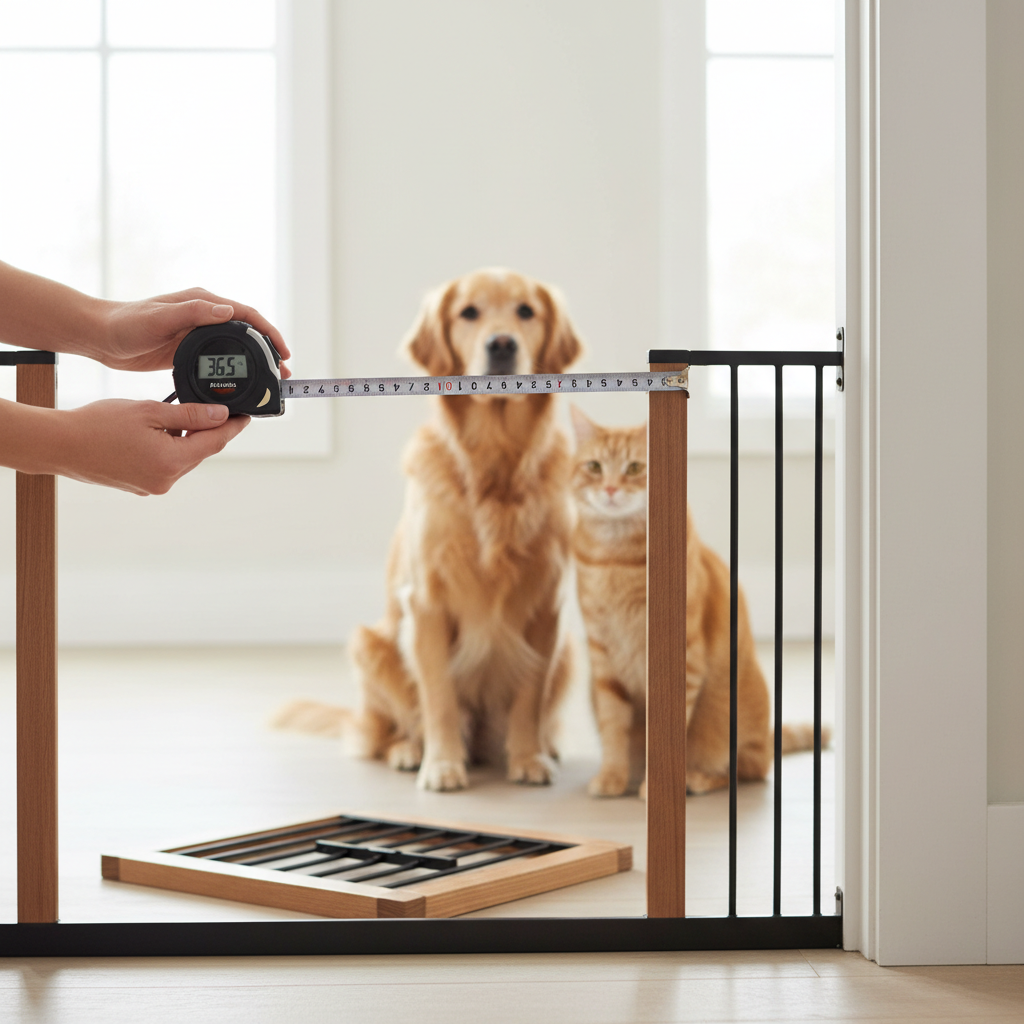
Measure and plan for trim
- Measure at three heights: floor, mid, and near the top, because many openings are not perfectly square.
- Account for baseboards. You may need wall protectors or adapter kits to keep the frame vertical.
For pressure-mounted gates: set tension, then test correctly
- Install wall cups or protectors if included, they reduce sliding on paint.
- Tighten until the frame feels solid, then push at the latch side and hinge side. Dogs rarely push straight in the center.
- Re-check after 24 hours. Temperature changes and settling can loosen tension.
For hardware-mounted gates: prioritize stud support when possible
- If you can hit a stud, do it. If not, use appropriate wall anchors for your wall type and avoid “tiny screw” kits.
- Align the swing so the gate does not open out over stairs if that creates a fall risk in your layout.
Reduce “cat launch points”
- Move stools, small tables, and storage bins away from the gate line.
- If the cat uses a nearby counter to hop over, you may need a different boundary choice, not a taller gate.
Safety notes and common mistakes (worth reading)
This is the part people skip, then wonder why the gate “didn’t work.” A few pitfalls show up constantly in mixed dog-and-cat homes.
- Using a pressure gate at the top of stairs: many manufacturers advise against it. If you need a stair gate, hardware-mount is usually safer.
- Relying on a small pet door: it can backfire if a small dog squeezes through, or if pets fight over access.
- Ignoring bar spacing: kittens and small dogs can get their head through gaps. If you are unsure, choose tighter spacing and monitor early on.
- Buying “extra tall” and calling it done: height helps, but a dog that paws latches or a cat that climbs will exploit weak points.
According to the U.S. Consumer Product Safety Commission (CPSC), household products can pose hazards if misused or installed incorrectly. With gates, that usually means instability, pinch points, or improper placement, so follow the manufacturer instructions and reassess when pets grow or behavior changes.
When to consider professional help (or a different solution)
If your dog has intense barrier frustration, or your pets show aggression around the gate line, a “stronger gate” may not solve the real issue. In many cases, you get better outcomes by combining management with training.
- If your dog repeatedly slams the gate, chews metal or plastic, or injures gums, consider talking with a veterinarian and a qualified trainer for a safer plan.
- If you need to block stairs for a mobility-limited pet, ask your veterinarian what home setup reduces fall risk, because gate height and step access can matter.
- If your opening is unusual, like angled walls or very wide spans, a handyman install or a custom gate might be more reliable than stacking extenders.
Conclusion: picking the “best” gate is really picking the right match
The best pet gates for dogs and cats are the ones that fit your space, match your pets’ habits, and stay stable day after day. If your home has stairs, start there and choose a hardware-mounted option, then add a pressure-mounted walk-through for everyday room boundaries if you need it.
If you want a quick next step, measure your main opening today, then write down one behavior you need to stop, jumping, climbing, or door-dashing. That single note will steer you toward the right category and save a lot of returns.
Key takeaways
- Stairs: hardware-mounted tends to be the safer default.
- Doorways: pressure-mounted walk-through works well when installed with proper tension.
- Cats: smooth panels or micro-bar designs reduce easy climbing, but room setup still matters.
- Wide layouts: panel systems add flexibility, but stability needs extra attention.