
How to stop puppy from crying in crate usually comes down to two things: meeting real needs (potty, comfort, safety) and teaching your puppy that the crate predicts calm, not isolation. The tricky part is that crying can mean “I’m scared,” “I’m uncomfortable,” or “I’ve learned this makes humans appear.”
If you address the wrong reason, you can accidentally reinforce the noise or miss an actual problem like needing to go out. If you address the right reason, most puppies improve faster than people expect, sometimes in days, often over a couple weeks.
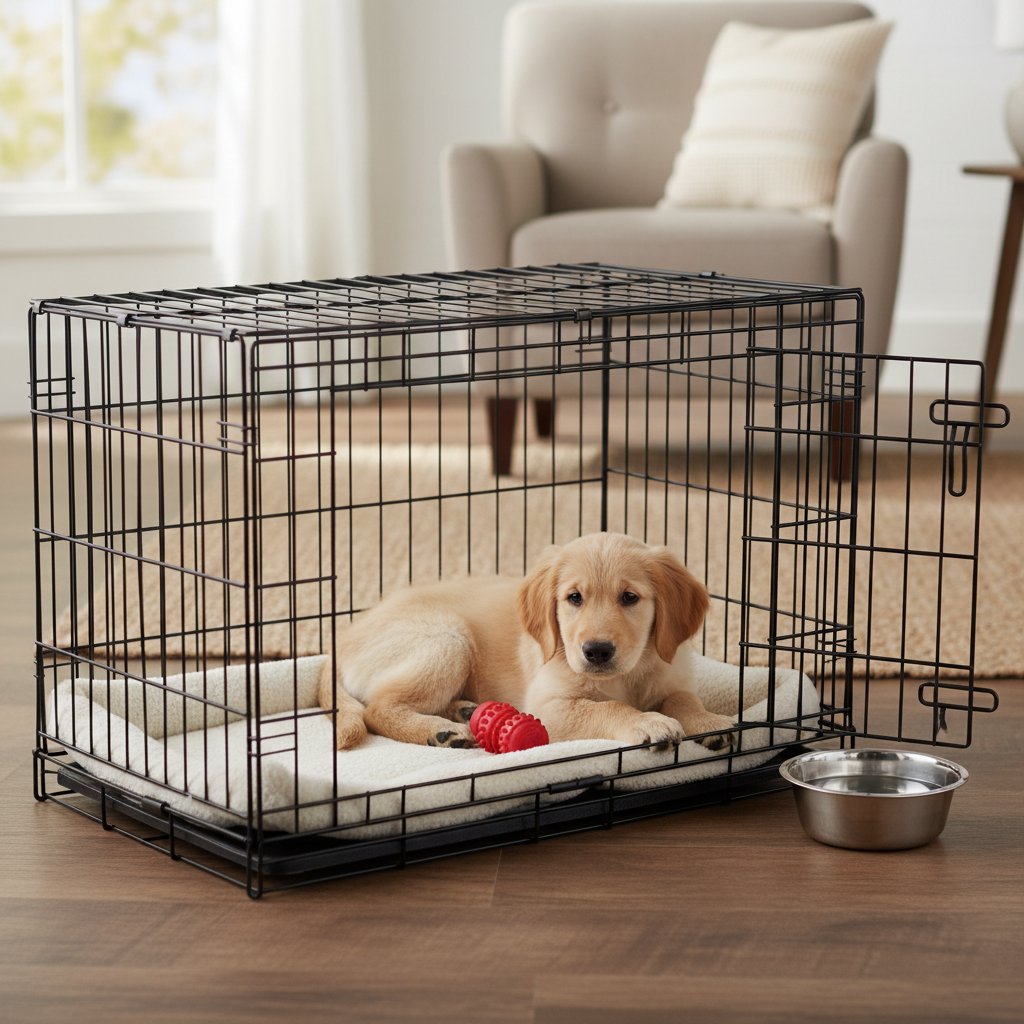
This guide focuses on practical, humane crate training. You’ll get a quick checklist to figure out why the crying is happening, a step-by-step plan for daytime and bedtime, and a few “don’t do this” traps that keep owners stuck in the same noisy loop.
Why puppies cry in the crate (and what it usually means)
Crate crying is communication. The same sound can mean different things depending on timing, body language, and your routine. Try to label the likely cause before you change the plan.
- Separation stress: Puppy feels unsafe alone, especially the first nights away from littermates.
- Too much freedom too fast: Long crate sessions before your puppy has learned how to settle.
- Potty need: Very common at night, and also after play, water, or waking up.
- Overtired “toddler brain”: Many puppies cry more when they actually need sleep and can’t switch off.
- Crate setup mismatch: Crate too big, too hot, too bright, too noisy, or placed far from you.
- Learned behavior: If crying has repeatedly resulted in being let out, it can become the go-to strategy.
According to the American Veterinary Society of Animal Behavior (AVSAB), early training should emphasize positive reinforcement and avoiding punishment-based methods, which can increase fear and anxiety in many dogs.
Quick self-check: what kind of crate crying is this?
Use this quick “spot check” to decide what to do next. You’re not aiming for perfection, just a reasonable read on the situation.
Look at timing
- Crying within 1–3 minutes of crating: often protest or fear, especially if the crate is new.
- Crying after 30–90 minutes: often potty or boredom, depending on age and prior activity.
- Crying in the middle of the night: commonly potty, sometimes startle/noise sensitivity.
Look at body language
- Pacing, pawing, drooling, frantic attempts to escape: may be panic-level stress, go slower and consider professional help.
- Intermittent whining, then pauses: more likely settling practice is working.
- Quiet when you’re nearby, loud when you leave: separation-related pattern.
Sanity check the basics
- Did your puppy potty right before crating?
- Did they get age-appropriate exercise and a little mental work, not just chaos play?
- Is the crate the right size (stand up, turn around, stretch out) without a huge extra potty corner?
Set the crate up to make calm easier
A lot of “training problems” improve when the environment stops working against you. This is the unglamorous part, but it matters.
- Location: Start with the crate near where you spend time. For nights, many puppies settle faster with the crate beside the bed.
- Cover (optional): A light cover can reduce visual triggers, but keep airflow good and watch for chewing.
- Comfort: Use simple bedding you can wash. Some puppies shred plush beds, so start plain if needed.
- Sound: Soft white noise can help if your home has sudden sounds.
- Chew option: Provide a safe chew (ask your vet if you’re unsure). Chewing is self-soothing.
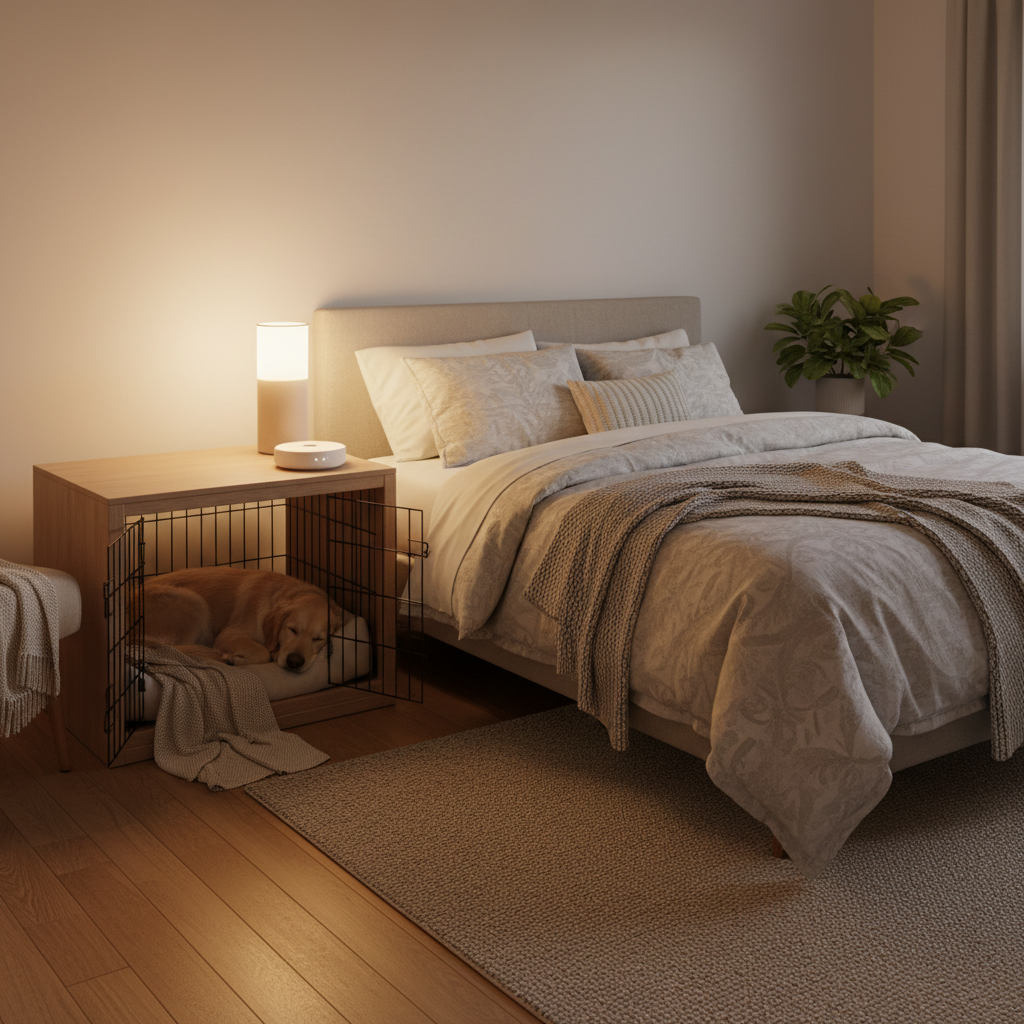
Key point: If the crate only shows up when you disappear, many puppies decide it’s the “lonely box.” Leaving it out with treats and naps changes that story.
Step-by-step plan for daytime crate training (no drama version)
To learn how to stop puppy from crying in crate, teach a “settle sequence” when you’re not desperate for sleep. Daytime reps prevent nighttime battles.
1) Make the crate pay
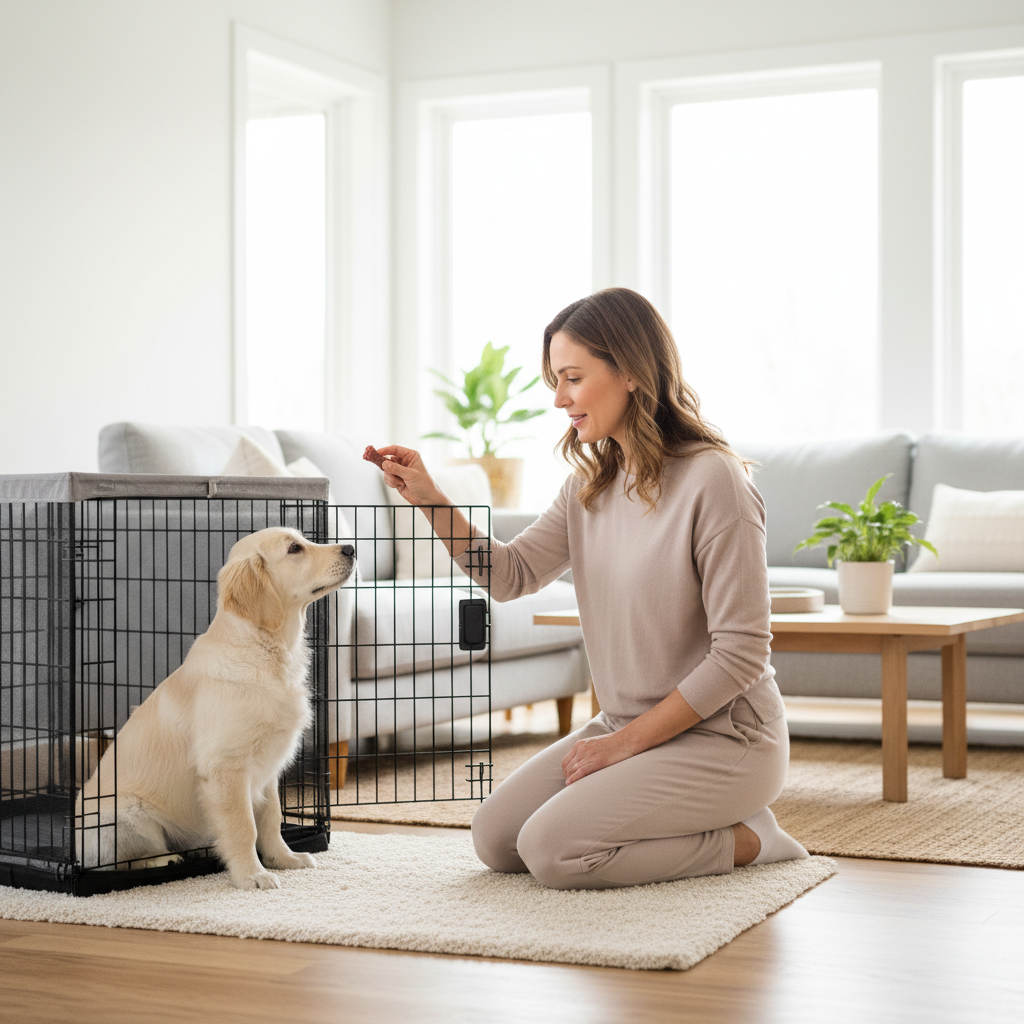
- Toss a treat in, let your puppy walk in and out freely.
- Feed meals at the crate entrance, then just inside, then all the way in.
- Add a cue like “crate” only after your puppy is reliably going in.
2) Add short door-close moments
- Close the door for 1–3 seconds, treat, open.
- Gradually build to 10–30 seconds while you sit nearby.
- If whining starts, wait for a tiny quiet moment (even one second), then reward calm.
3) Teach “I can relax even if you move”
- Stand up, sit down, take one step away, return, reward calm.
- Increase distance and time slowly, not in big leaps.
- Mix easy reps with harder reps, so your puppy keeps winning.
Practical rule: If your puppy cries every time, the step is too hard. Make it easier and stack more successful reps.
Nighttime strategy: reduce crying without reinforcing it
Night crying is where people feel stuck, because you’re tired and worried about neighbors. The goal is to separate “I need to potty” from “I want out.”
Use a simple bedtime routine
- Last potty break, then straight to crate.
- Low stimulation: dim lights, minimal talking.
- Offer one safe chew, then ignore small fussing.
When your puppy cries at night, do this decision tree
- If it’s been a while since the last potty (common for young puppies): take them out on leash, boring and fast, then back to crate.
- If they just went out and you suspect protest: wait for a brief quiet moment, then calmly reassure with your voice, not by opening the door.
- If crying escalates into panic: don’t “tough it out.” That can backfire. Lower the difficulty (crate closer, shorter durations) and rebuild.
According to the American Kennel Club (AKC), crate training works best when the crate is introduced gradually and paired with positive experiences, rather than used as punishment.
What to do when crying starts: a calm response table
In the moment, it helps to have a script. This table summarizes common scenarios and what usually works.
| What you see/hear | Most likely cause | What to do next | Avoid |
|---|---|---|---|
| Whining, then short pauses | Learning to settle | Wait for quiet, then reward calm; keep sessions short | Letting out during whining |
| Sudden crying after 1–2 hours | Potty need | Quick leash potty trip, no play, return to crate | Turning it into a fun break |
| Barking when you leave, quiet when you return | Separation-related | Practice short departures, reward calm, build duration slowly | Big goodbyes and excited reunions |
| Scratching, frantic panting, escape attempts | Panic/anxiety | Make it easier, re-introduce crate, consider professional support | “Cry it out” at high intensity |
| Crying after wild play | Overtired | Short decompression walk, then crate with chew and quiet | More stimulation |
Common mistakes that keep the crying going
This is where many well-meaning owners accidentally train more noise. A few adjustments usually make a real difference.
- Opening the crate during crying: your puppy learns “sound opens doors.” Wait for a brief quiet moment when it’s safe.
- Crating only when you leave: add short “crate breaks” while you’re home and calm.
- Too much crate time too soon: build duration like you’d build a workout plan, not like flipping a switch.
- Using the crate for time-outs: the crate should predict good things, not social exile.
- Over-exercising to force sleep: an overstimulated puppy can cry more, not less.
Key takeaway: Consistency beats intensity. A boring, repeatable routine is usually what teaches a puppy to relax.
When to get help (vet or trainer)
Some crate issues are bigger than “normal puppy whining.” If you see signs below, it’s smart to bring in support rather than trying to outlast it.
- Possible health issue: diarrhea, vomiting, repeated accidents after recent potty trips, or sudden new crying patterns. A vet can help rule out medical causes.
- Injury risk: bleeding gums, broken nails, or repeated attempts to escape that could cause harm.
- Severe anxiety signs: intense drooling, nonstop panic vocalizing, self-injury, or inability to settle even after gradual training.
For behavior help, look for a credentialed, reward-based professional. According to the American Veterinary Medical Association (AVMA), punishment-based methods can raise fear and may worsen behavior problems in some dogs, so it’s worth choosing a trainer who prioritizes humane techniques.
Conclusion: a realistic way to get quiet nights back
If you’re trying to figure out how to stop puppy from crying in crate, focus on the simple wins: meet needs first, make the crate feel safe, and practice short calm reps during the day. Nights get easier when the crate stops being a surprise and starts being a routine.
Your next two actions: move the crate closer to you tonight if needed, and tomorrow schedule 5 minutes of easy crate games so progress isn’t only happening at 2 a.m.
If you’d like a more hands-off approach, a local reward-based trainer or your veterinary team can help you tailor a plan to your puppy’s age, breed tendencies, and your living setup, especially when crying looks more like panic than protest.
Key points to remember
- Always rule out potty needs before assuming it’s “attention seeking.”
- Reinforce quiet, even if it’s just a one-second pause at first.
- Go slower when you see panic behavior, faster when your puppy can settle.