
Betta fish tank kit small is usually what people search when they want a neat desktop aquarium that looks good and feels “easy,” but still keeps a betta comfortable long-term. The tricky part is that many mini kits are built for convenience, not for stable water conditions, and bettas tend to suffer quietly when the setup is too cramped or unmanaged.
If you are setting up a tank for a home office, dorm, or kitchen counter, you are really buying two things at once: a piece of decor and a tiny life-support system. On a desk, temperature swings, noise, and evaporation matter more than most first-time owners expect.
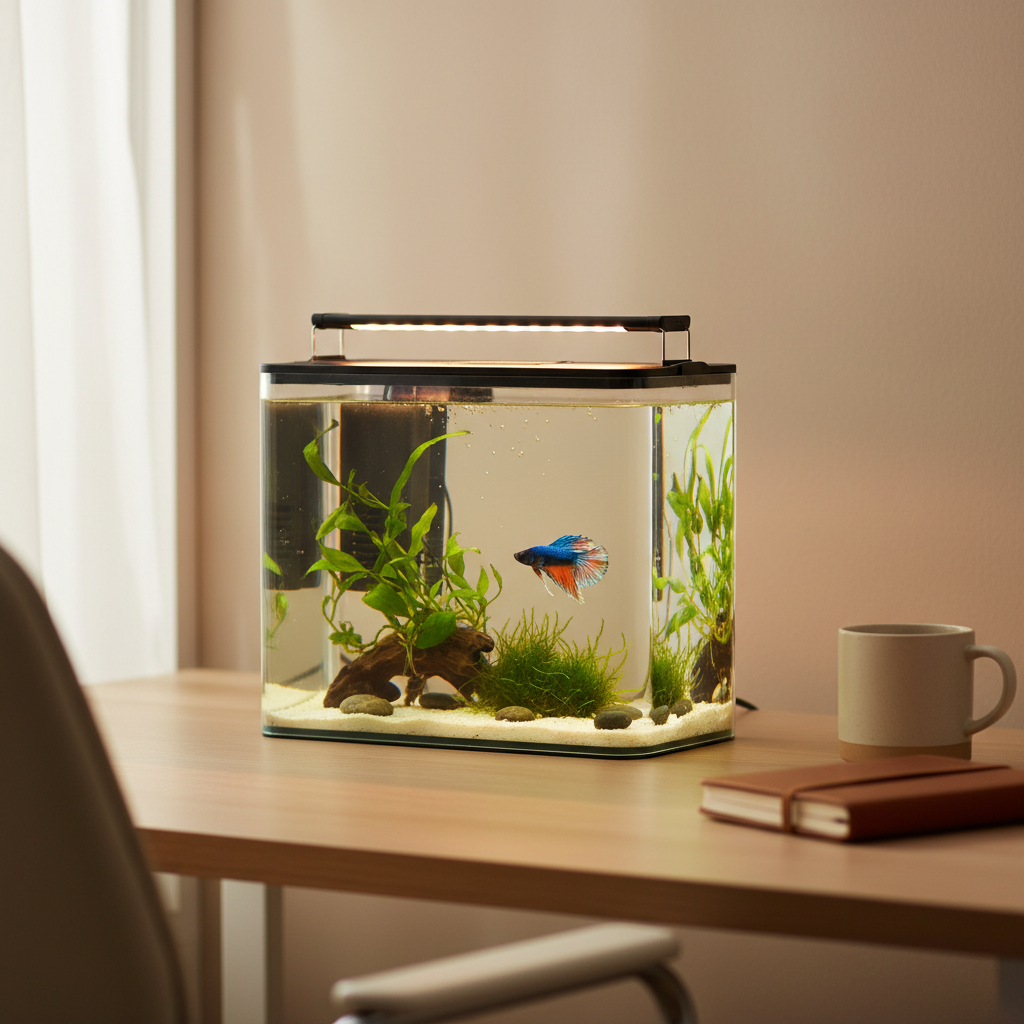
This guide stays practical: what size works on a desktop, what “kit” features are worth paying for, what you can ignore, and a setup routine that prevents most early problems. I will also call out common kit traps, like filters that push too hard for a betta, or lights that look nice but turn the tank into an algae box.
What “small” should mean for a desktop betta tank kit
For bettas, “small” often gets misused to mean “tiny.” In real-world desktop setups, the sweet spot is usually a tank that still gives you stable water parameters without swallowing your workspace.
- 2.5 gallons: can work in experienced hands, but it is less forgiving, water changes become frequent, and temperature stability is harder on a desk.
- 5 gallons: the common best compromise for most people, easier to heat evenly, easier to keep ammonia/nitrite at zero.
- 7–10 gallons: still “desktop” for some desks, often the easiest to keep stable, but footprint and weight become real constraints.
According to the American Veterinary Medical Association (AVMA) guidance on responsible pet ownership, proper housing and environmental conditions are part of basic animal welfare. In fish terms, that translates to space plus stable temperature and water quality, not just “a container with water.”
If you are deciding between a 3-gallon and a 5-gallon betta fish tank kit small, most of the time the 5-gallon wins because it buys you stability. The tank looks slightly bigger, but your weekly workload often feels smaller.
Why small kits fail: the issues that show up on real desks
People usually blame themselves when a betta struggles, but a lot of problems start with the kit design or the desktop environment. The most common failure modes look like this:
- Too much flow: many “all-in-one” filters create a constant current, bettas get stressed, hide, or tear fins.
- No heater (or an underpowered one): desk tanks swing with room temperature and HVAC cycles, especially near windows.
- Overbright lighting: great for retail display, not always great for a low-tech betta tank, algae blooms follow.
- Small volume instability: overfeeding or a missed water change spikes ammonia faster in tiny tanks.
- Placement problems: direct sun, vibration from speakers, or a drafty spot can create ongoing stress.
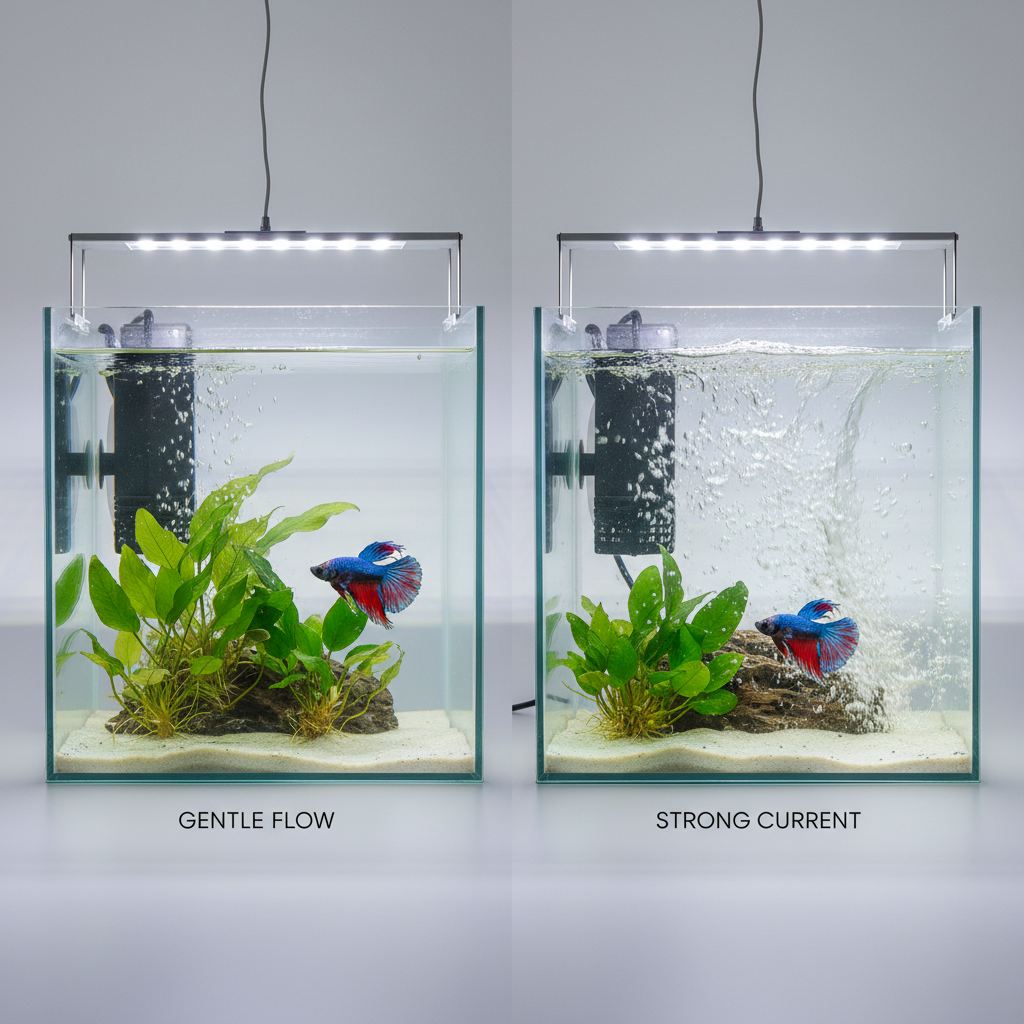
One more that gets overlooked: small desktop tanks are frequently topped off with random amounts of water, but topping off does not remove waste, it only dilutes it. If the kit encourages “just add water,” expect issues.
Quick self-check: are you picking the right kit for your space?
Before you buy, run through this checklist. It is boring, but it prevents 80% of regret purchases.
Desk and room constraints
- Footprint: do you have at least a 16 x 10 inch area for a 5-gallon style tank, plus space for cords?
- Weight: water weighs about 8.3 lb per gallon, so a 5-gallon setup can easily exceed 50 lb with glass, gravel, and decor.
- Temperature swings: is the tank near an exterior wall, AC vent, or sunny window?
- Noise tolerance: will a humming filter bother you on calls?
Kit feature must-haves
- Heater compatibility: either included or easy to add, with enough wattage for your room.
- Low-flow filtration: adjustable flow or a baffle option, plus room for sponge media.
- Lid: bettas can jump, and lids reduce evaporation, which helps stability.
- Simple maintenance access: you should be able to remove media and siphon without disassembling everything.
If you check “no” on heater or low-flow filtration, you are not necessarily stuck, but you should budget for upgrades immediately instead of hoping it works out.
What a good small desktop betta kit typically includes (and what you can skip)
Not every kit needs to be fancy, but a few components do heavy lifting for betta health. Here is a practical breakdown:
| Component | Worth prioritizing? | Why it matters on a desktop | Common kit “gotcha” |
|---|---|---|---|
| Tank size (5+ gal) | Yes | More stable temperature and water chemistry | Ultra-narrow “tall” tanks reduce swim space |
| Adjustable filter | Yes | Gentle flow supports fins and reduces stress | Fixed high-flow cartridges, costly replacements |
| Heater + thermometer | Yes | Rooms fluctuate, small water volumes swing fast | Weak preset heaters that cannot keep up |
| LED light | Depends | Helpful for plants and viewing | Too bright, no timer, algae spikes |
| Gravel + plastic plant pack | Optional | Decor comfort and hiding spots | Sharp plastic edges snag fins |
| “Quick start” bacteria bottle | Depends | May help jump-start cycling in some cases | Creates false confidence, cycling still needed |
According to the U.S. Food & Drug Administration (FDA), ammonia test kits are part of responsible aquarium care when managing water quality for fish. In practice, you do not need a lab setup, but you do need a basic liquid test kit for ammonia, nitrite, and nitrate, especially with a betta fish tank kit small.
Setup that actually works: a simple 7-step plan
This is the “do it once, do it right” approach. It is not the only way, but it prevents the common spiral of cloudy water, stressed fish, and repeated resets.
- Rinse substrate and hardscape with plain water, no soaps, no cleaners.
- Place the tank away from direct sun and not right under an AC vent, stable temperature beats aesthetics.
- Condition water with a dechlorinator, chlorine and chloramine can harm beneficial bacteria and fish.
- Start the filter and heater, then let the tank run so temperature settles and equipment proves itself.
- Cycle the tank before adding a betta when possible, cycling means growing beneficial bacteria that process waste.
- Add plants and hiding spots, bettas do better with cover and a resting place near the surface.
- Introduce the fish slowly, match temperature and reduce stress during acclimation.
According to the U.S. Geological Survey (USGS), chlorine and chloramine are commonly used in municipal water treatment, which is why most tap water needs conditioning before aquarium use. If your local water source differs, ask your water utility or a local fish store.
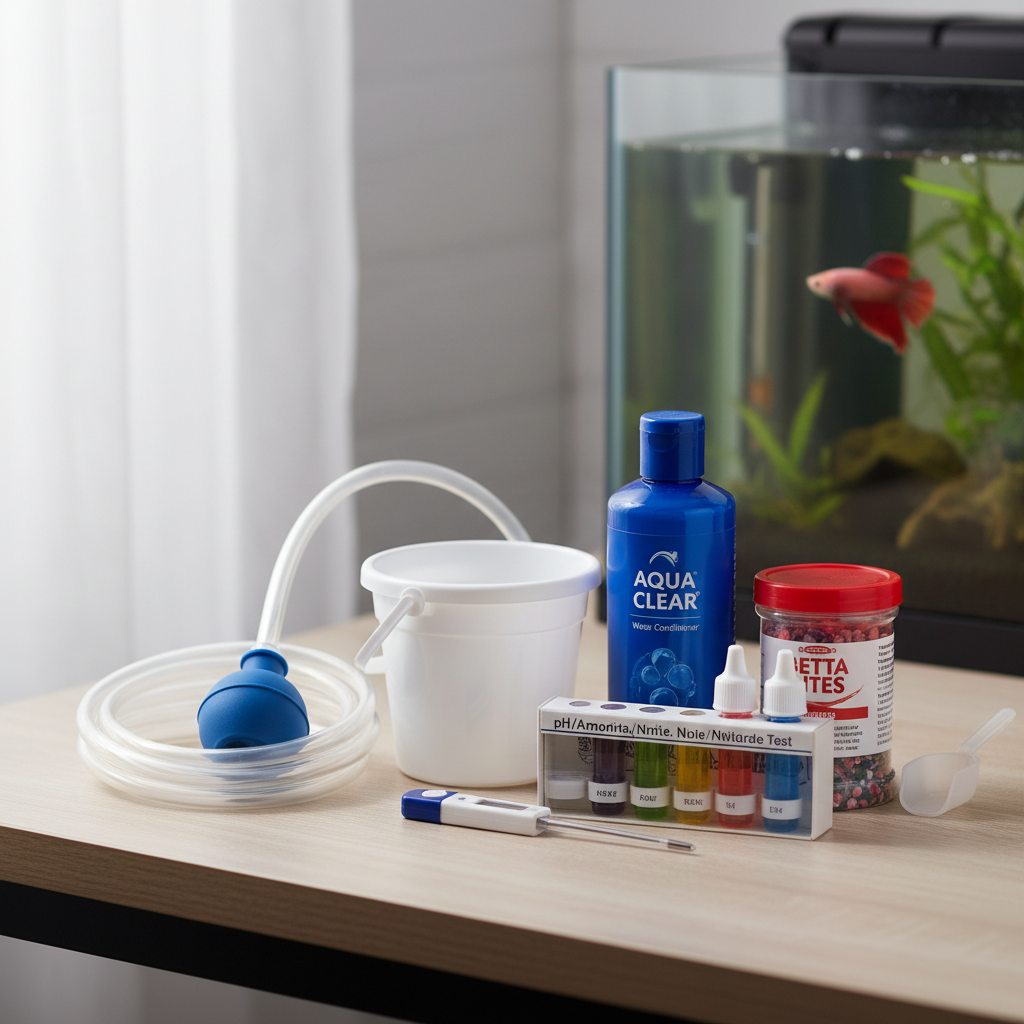
If cycling terminology feels like a lot, you are not alone. The key point is simple: in small tanks, skipping cycling often means you end up managing toxins with constant water changes, which is stressful for you and the fish.
Realistic maintenance for a small desktop tank (what to do weekly)
Small aquariums stay healthy through consistency, not perfection. A workable routine looks like this:
- Feed lightly, most desk-tank problems start with overfeeding because you see the fish all day.
- Test water at least weekly in the first 6–8 weeks, then reduce once your tank is stable.
- Partial water change on a schedule that fits your tank size and stocking, many 5-gallon betta tanks land around 25–40% weekly, but it varies.
- Clean gently, rinse filter media in removed tank water, not under tap water, to avoid killing helpful bacteria.
- Wipe algae early, it is easier when it is still a film.
If you want a quick rule that tends to hold: the smaller the kit, the more your routine matters. A betta fish tank kit small can be easy, but it is rarely “set and forget.”
Common mistakes with small betta kits (and how to avoid the loop)
These show up constantly in reviews and in troubleshooting threads, and most are fixable without buying a whole new aquarium.
- Replacing cartridges too often: many kits push cartridge replacements, but tossing media can remove beneficial bacteria, consider reusable sponge or media upgrades that keep bacteria in place.
- Chasing “perfect” pH: stable is usually safer than constant adjustments, dramatic swings can stress fish.
- Decor that damages fins: if it can snag pantyhose, it can snag fins, silk plants and smooth hardscape are safer.
- Too many tankmates: desktop tanks are small ecosystems, adding snails or shrimp can work sometimes, but it depends on the betta’s temperament and your filtration.
- Ignoring surface access: bettas breathe air occasionally, keep the surface calm and make sure the lid allows easy access to air.
If you are stuck in a cycle of cloudy water, odor, and frequent fish stress, pause the impulse to do a full teardown. In many cases, the fix is slower feeding, steadier partial changes, and improved filtration media, not a reset.
When it’s time to get help or rethink the setup
Desktop aquariums can be deceptively complex. If you see repeated fin rot, persistent lethargy, or the fish stops eating for more than a day or two, it may be time to consult a qualified aquatic veterinarian or an experienced fish health professional. Bettas can hide illness until the situation becomes serious, and online advice cannot replace a proper diagnosis.
Also consider upgrading if your kit has a fixed high-flow filter you cannot tame, or if you cannot keep temperature stable in your room. Moving from 2–3 gallons to 5–10 gallons often solves problems that no amount of “micro-management” fixes.
Key takeaways and a practical next step
A betta fish tank kit small works best when “small” still means stable: gentle filtration, reliable heat, a lid, and a routine you can maintain without resenting it. If you want one action that pays off quickly, pick the largest tank your desk realistically supports, then invest in controllable flow and basic water testing from day one.
If your kit is already purchased, your next step is simple: check temperature stability, reduce filter flow if needed, and commit to a steady weekly partial water change schedule for the first two months.
FAQ
What is the best size for a small desktop betta tank kit?
For most desks, 5 gallons is a practical baseline because it stays more stable than smaller volumes while still fitting in a workspace. Smaller can work, but it usually demands tighter maintenance.
Do I need a heater if my room stays warm?
Many homes still experience temperature dips at night or from AC cycles, and small tanks change temperature quickly. A heater and thermometer help keep conditions steady, which bettas generally handle better.
Can I use a kit with a strong filter if I add decorations?
Decor can break up flow a little, but if the output is still blasting, the fish may stay stressed. Many people end up adding a sponge pre-filter or a simple baffle to soften current.
How long should I cycle a small betta tank before adding the fish?
It varies with method and temperature, but cycling is typically measured in weeks, not days. If you cannot wait, research fish-in cycling carefully and consider getting help from a reputable local fish store, since mistakes can hurt the fish.
Are all-in-one cartridge filters bad for betta tanks?
Not always, but they often encourage frequent cartridge replacement, which can disrupt beneficial bacteria. Many owners switch to reusable sponge media to keep the biological filter more stable.
What should I put in a small betta tank besides the fish?
Think cover and comfort: smooth hideouts, silk or live plants, and a resting spot near the surface. Avoid sharp plastic plants because fin damage is common in small tanks where the fish brushes past decor often.
Why does my desktop tank get algae so fast?
Bright lights, long photoperiods, and window sunlight are frequent causes, especially in small volumes. Cutting light duration and reducing feeding usually helps more than scrubbing harder.
Can a betta live in a 1-gallon or bowl-style kit?
Some bettas survive in very small containers, but stability and welfare are harder to maintain, and problems escalate quickly. If you want the “small” look, a compact 5-gallon setup often ends up being simpler and kinder.
If you are trying to pick a desktop kit quickly, focus on the unglamorous parts: stable temperature, gentle flow, and easy maintenance access. If you want, share your desk dimensions and room temperature swings, and I can help narrow what size and feature set is most realistic for your space.